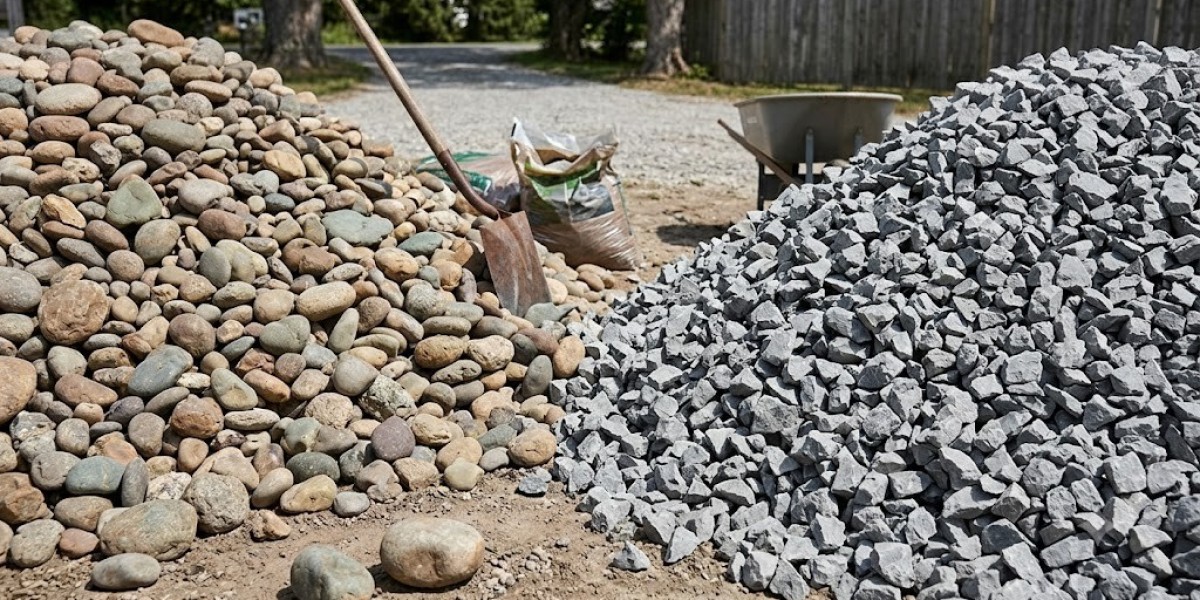

Have you ever noticed how some rocks roll under your feet while others seem to lock together? That small difference can change how a surface feels, drains, and holds up over time. If you are searching for river rock near me in California, it helps to know how rounded stones behave compared with angular crushed rock. Both materials have useful qualities, but they do not work the same way. Choosing the right one depends on where you plan to use it and what you expect it to do.
What Makes River Rock Different From Crushed Rock?
The biggest difference is the shape. River rock usually has smooth, rounded edges. Natural water movement gradually wears down these stones, giving them a softer look and feel.
Crushed rock is made by breaking larger rocks into smaller pieces. This process leaves sharp edges, rough surfaces, and uneven shapes.
Think about walking on both materials. Rounded river rock may shift beneath your shoes, while angular crushed rock tends to grip against nearby pieces. Neither material is automatically better. They simply behave differently, and that matters when planning a driveway, garden, pathway, or drainage area.
How Does Stone Shape Affect Stability?
Here is where things get interesting. When angular crushed rocks are placed together, their rough edges can catch against one another. This helps create a more stable layer when the material is properly placed and compacted.
River rock does not interlock in quite the same way. Its smooth surface allows individual stones to move more easily when people walk over them or when pressure is applied.
That movement is not always a problem. Around trees, garden beds, and decorative borders, a little movement may be perfectly fine. But for areas that need a firm, dependable base, angular crushed rock is usually the better choice.
If you are building a surface that needs to support regular traffic, do not choose material based on appearance alone. The stone shape can make a real difference.
Which Material Handles Water Better?
Water movement is another important difference. River rock often works well in drainage areas because the spaces between larger stones can allow water to pass through.
Picture a low spot in your yard where rainwater tends to collect. A properly designed drainage system using suitable river rock may help move water away from the area. The stone size, surrounding soil, and drainage design still matter.
Angular crushed rock can also support drainage. Its performance depends on the particle sizes and how tightly the pieces fit together. Smaller particles and fine material can fill the gaps between larger stones, changing how easily water moves.
So, do not assume that every type of rock drains the same way. The right choice depends on how much water needs to pass through and where that water is supposed to go.
Where Does River Rock Work Best?
River rock is a popular option when appearance matters just as much as function. Its smooth finish and natural colors can give outdoor spaces a clean, relaxed look.
You can use it for:
- Garden beds and decorative landscape borders.
- Dry creek beds and selected drainage areas.
- Ground cover around shrubs and trees.
- Accents around walkways and outdoor features.
It can also help cover bare soil and give a landscape a finished appearance. Just keep in mind that rounded stones may shift on sloped ground, especially during heavy rain.
When Should You Choose Angular Crushed Rock?
Angular crushed rock is often a better fit for driveways, pathways, and construction base layers where stability matters.
Its rough edges help the material hold together when the correct blend is compacted. This can reduce unwanted movement under normal use.
Still, not every crushed rock product is suitable for every project. Larger pieces, smaller particles, and fine material each affect the final result. For a strong base, the material must match the job, and proper preparation matters just as much.
How Can You Pick the Right Rock for Your Project?
Start by asking one simple question: does the area need to look attractive, stay firmly in place, or move water efficiently?
If you want a natural decorative finish, river rock may be the way to go. If you need a compacted surface that supports regular use, angular crushed rock is often more suitable. Some projects may even benefit from using both materials in separate areas.
Before ordering, check the stone size, intended use, and amount required. If you are comparing river rock near me in California, Western Materials can help you explore material options for landscaping, drainage, and other outdoor projects.
A little planning now can save you from moving the same rocks around later. And honestly, who wants to do that twice?
Frequently Asked Questions
1. Is river rock stronger than angular crushed rock?
Neither material is automatically stronger for every use. River rock is durable, but angular crushed rock often provides better stability in compacted base applications because its rough edges interlock.
2. Can river rock be used for a driveway?
It can be used for decorative driveway areas, but rounded stones may shift under vehicle tires. Angular crushed rock is generally a better choice for a stable driveway surface.
3. Does river rock provide good drainage?
Yes, appropriately sized river rock can help water move through drainage areas. The results depend on stone size, soil conditions, and the overall drainage design.
4. Why is angular crushed rock better for compacting?
Its uneven shapes and sharp edges help the pieces fit together and resist movement. The correct particle blend and proper compaction are still important.
5. How do we choose between river rock and crushed rock?
Consider the purpose of the area. River rock is often suitable for decorative landscaping and selected drainage uses, while angular crushed rock is commonly preferred for compacted bases and surfaces that need more stability.