
As your business grows, managing finances becomes more complex. Daily bookkeeping, payroll processing, tax compliance, financial reporting, and cash flow management require both time and expertise. At some point, every business owner faces an important question: Should you outsource bookkeeping and tax services or hire an in-house accountant?
Both options can help manage your finances, but they differ significantly in cost, flexibility, expertise, and scalability. While an in-house accountant offers dedicated support, outsourced bookkeeping and tax services provide access to a team of professionals without the overhead costs of a full-time employee.
In this guide, we'll compare bookkeeping and tax services vs hiring an in-house accountant to help you determine which option is the best fit for your business in 2026.
Understanding Bookkeeping and Tax Services
Bookkeeping and tax services are outsourced financial solutions that help businesses maintain accurate records, prepare taxes, and manage day-to-day accounting tasks.
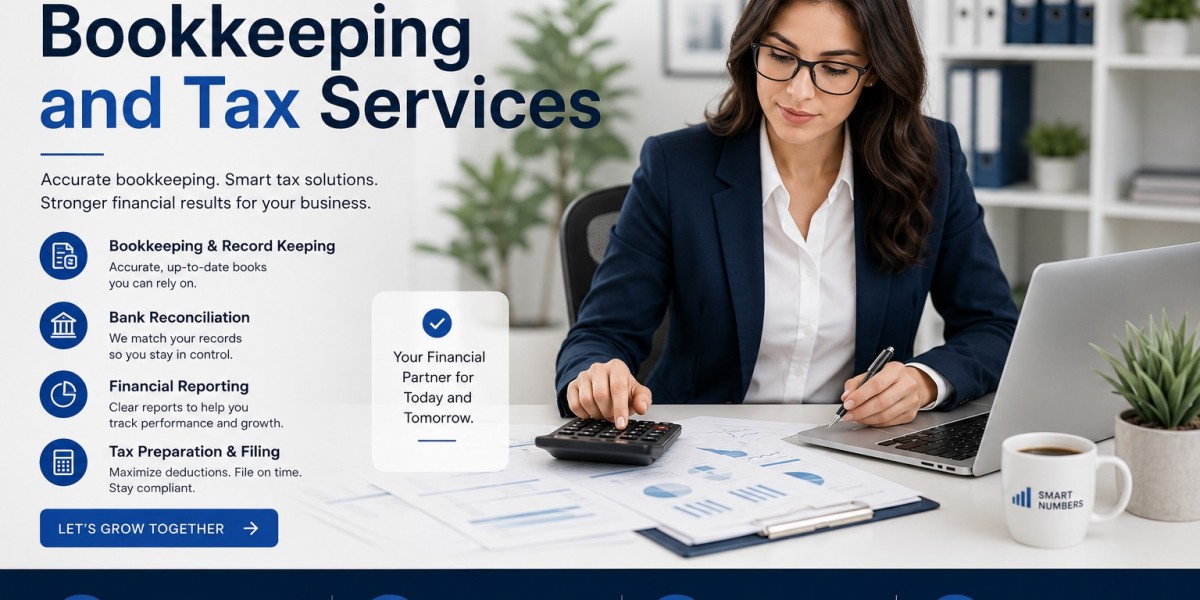
These services typically include:
- Bookkeeping
- Bank reconciliation
- Payroll processing
- Accounts payable (AP)
- Accounts receivable (AR)
- Tax preparation
- Tax planning
- Financial reporting
- Budgeting
- Cash flow analysis
- Virtual CFO services
Most providers use cloud-based accounting software, allowing business owners to access financial data in real time from anywhere.
What Does an In-House Accountant Do?
An in-house accountant is a full-time employee responsible for managing a company's financial operations internally.
Typical responsibilities include:
- Recording financial transactions
- Preparing financial reports
- Managing payroll
- Reconciling bank accounts
- Monitoring budgets
- Supporting tax preparation
- Maintaining compliance
- Assisting management with financial planning
Depending on the size of the business, one accountant may handle multiple tasks or work alongside a larger finance team.
Comparing Bookkeeping and Tax Services vs an In-House Accountant
| Feature | Bookkeeping and Tax Services | In-House Accountant |
|---|---|---|
| Cost | Lower monthly fees | Salary, benefits, and overhead |
| Expertise | Access to a team of specialists | Limited to one employee's expertise |
| Scalability | Easily expands with business growth | Requires hiring additional staff |
| Technology | Cloud-based accounting systems | Depends on company investment |
| Availability | Scheduled support and dedicated teams | Available during business hours |
| Payroll | Usually included | Managed internally |
| Tax Planning | Included in many service packages | May require external tax specialists |
| Business Advisory | Available through higher-tier plans | Depends on employee experience |
Benefits of Outsourcing Bookkeeping and Tax Services
1. Lower Overall Costs
One of the biggest advantages of outsourcing is affordability.
Hiring an in-house accountant involves expenses beyond salary, including:
- Employee benefits
- Payroll taxes
- Office space
- Computer equipment
- Accounting software
- Ongoing training
With outsourced services, businesses pay only for the support they need, making it a cost-effective solution for startups and growing companies.
2. Access to a Team of Experts
Outsourced accounting providers often employ professionals with specialized expertise in areas such as:
- Bookkeeping
- Payroll
- Tax planning
- Financial reporting
- Cash flow management
- Compliance
- Business advisory
Instead of relying on one individual, businesses gain access to an entire team of accounting professionals.
3. Scalable Services
As your business grows, accounting requirements become more complex.
Outsourced providers can easily add services such as:
- Payroll management
- Budget forecasting
- Financial planning
- Virtual CFO support
- Multi-entity accounting
There's no need to recruit additional employees as your financial needs evolve.
4. Access to Modern Technology
Most bookkeeping and tax service providers use cloud-based accounting software like:
- QuickBooks Online
- Xero
- Zoho Books
- FreshBooks
- NetSuite
These platforms provide:
- Real-time financial dashboards
- Automated bank feeds
- Secure document storage
- Digital invoicing
- Mobile access
Technology improves efficiency while reducing manual data entry and accounting errors.
5. Reduced Compliance Risk
Professional accounting firms stay updated on changing tax laws, payroll regulations, and accounting standards.
This helps businesses:
- Meet filing deadlines
- Avoid tax penalties
- Maintain accurate records
- Prepare reliable financial reports
Staying compliant protects your business from costly mistakes and legal issues.
Benefits of Hiring an In-House Accountant
Dedicated Financial Support
An in-house accountant works exclusively for your business and has a deep understanding of your daily operations.
This can be valuable for businesses with complex accounting needs or frequent financial decision-making.
Immediate Availability
Since they're part of your organization, in-house accountants are available for meetings, reports, and financial discussions during normal business hours.
This can improve communication and speed up decision-making.
Strong Internal Collaboration
An in-house accountant works closely with:
- Management
- Sales teams
- Human resources
- Operations
This collaboration can improve budgeting, forecasting, and financial planning across departments.
Drawbacks of Hiring an In-House Accountant
While beneficial for some businesses, hiring internally also comes with challenges.
Higher Costs
In addition to salary, businesses must cover:
- Health insurance
- Retirement benefits
- Payroll taxes
- Paid leave
- Recruiting expenses
- Training costs
- Office equipment
- Software licenses
These expenses can significantly increase the total cost of employment.
Limited Expertise
One accountant may not have advanced knowledge in every area of accounting, such as tax planning, payroll compliance, financial forecasting, and business advisory.
Businesses may still need to hire outside specialists when complex issues arise.
Scalability Challenges
As the business grows, one accountant may no longer be able to manage increasing workloads.
Additional hiring increases costs and requires more management oversight.
Which Businesses Benefit Most from Outsourcing?
Bookkeeping and tax services are often the best choice for:
- Startups
- Freelancers
- Small businesses
- E-commerce companies
- Professional service firms
- Retail businesses
- Healthcare practices
- Growing businesses seeking flexible financial support
Outsourcing provides professional accounting without the financial commitment of building an internal finance department.
When Does Hiring an In-House Accountant Make Sense?
An internal accountant may be a better option if your business:
- Has hundreds of employees
- Processes thousands of monthly transactions
- Requires daily financial analysis
- Needs continuous executive support
- Operates multiple business divisions
- Maintains a large finance department
Large organizations often benefit from having dedicated accounting personnel on-site.
Questions to Ask Before Deciding
Before choosing either option, consider:
- What is my accounting budget?
- How complex are my financial operations?
- Do I need year-round tax planning?
- How quickly is my business growing?
- Will I benefit from specialized accounting expertise?
- Do I need daily on-site financial support?
- Can outsourced services meet my reporting requirements?
Answering these questions will help you determine which solution aligns with your business goals.
Frequently Asked Questions
Is outsourcing bookkeeping cheaper than hiring an accountant?
In most cases, yes. Outsourcing eliminates expenses such as salaries, employee benefits, office space, software, and ongoing training while providing access to experienced accounting professionals.
Can outsourced bookkeeping handle payroll and taxes?
Yes. Many bookkeeping and tax service providers offer comprehensive packages that include payroll processing, tax preparation, tax planning, financial reporting, and ongoing accounting support.
Is an in-house accountant better for growing businesses?
Not necessarily. Many growing businesses find outsourced accounting more flexible and cost-effective because services can scale without the need to hire additional employees.
Can businesses combine both options?
Absolutely. Some companies use outsourced bookkeeping and tax services for routine accounting while employing an in-house accountant or finance manager to oversee strategic financial operations.
Final Thoughts
Choosing between bookkeeping and tax services and hiring an in-house accountant depends on your business's size, financial complexity, and long-term objectives. For most startups and small businesses, outsourcing provides an affordable, scalable solution that delivers access to experienced professionals, modern accounting technology, and comprehensive financial support without the high overhead costs of full-time employment.
As businesses expand, some may eventually benefit from hiring an in-house accountant or combining internal financial leadership with outsourced bookkeeping and tax expertise. By carefully evaluating your budget, operational needs, and future growth plans, you can choose the approach that strengthens your financial management, supports compliance, and positions your business for sustainable success in 2026 and beyond.