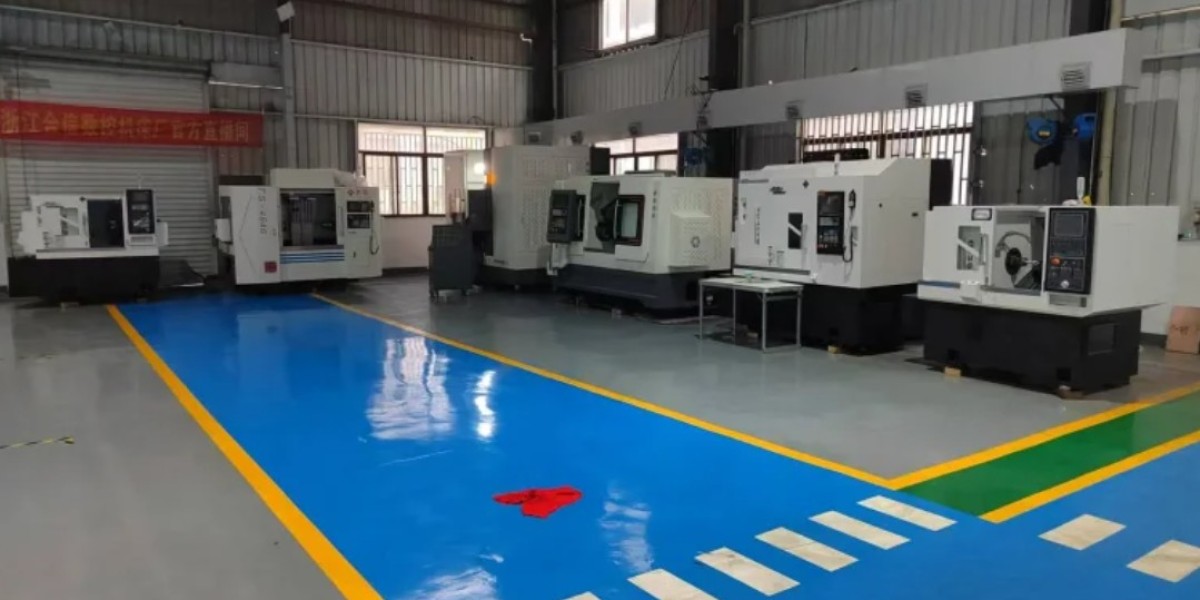

The dimensional deviations of the T-50W turret CNC lathe with a slanted bed turret are common quality issues during the processing, which not only result in scrapped workpieces and reduced production efficiency, but also increase manufacturing costs. To solve this problem, it is necessary to investigate the root causes from multiple dimensions such as the hardware of the machine tool, programming settings, clamping process, tool condition, and environment. The following is an analysis of the specific reasons:
Firstly, there is the problem of precision loss in the machine tool hardware. As the core carrier of processing, the geometric and dynamic accuracy of the machine tool directly determine the dimensional stability: one is the error of the spindle system, when the spindle bearing wears or the clearance is too large, the radial runout or axial runout will exceed the allowable range, and during the lathe of the outer circle, the diameter will fluctuate and the cylindricality will be out of tolerance, for example, if the radial runout of the spindle exceeds 0.01mm, when processing a 100mm diameter workpiece, the size fluctuation can reach 0.05mm or more; the second is the error of the feed system, the wear of the screw and nut pair, the uncorrected gap of the ball screw, improper setting of the servo motor gain, etc., will lead to the decrease in feed positioning accuracy, for example, after the Z-axis screw wears, the positioning error for every 100mm feed is up to 0.02mm, after continuous processing, the size will accumulate out of tolerance; in addition, the repetitive positioning accuracy of the tool turret is insufficient, and the tool position deviation during tool change will also cause the tool tip position deviation, which directly affects the workpiece size.
Secondly, programming and parameter settings are overlooked. Programming is the core instruction of processing, any minor error will cause dimensional deviations: one is the error in coordinate system setting, when setting the reference point for alignment with the workpiece blank instead of the precision processing reference point, or the offset of the G54-G59 coordinate system, it will cause overall size deviation of the workpiece; the second is that the compensation parameters are not updated regularly, and the compensation for tool wear, the uncorrected gap of the ball screw, improper setting of the servo motor gain, etc., will lead to a decrease in feed positioning accuracy, for example, after the Z-axis screw wears, the positioning error for every 100mm feed is up to 0.02mm, after continuous processing, the size may exceed the tolerance; the third is unreasonable setting of process parameters, the mismatch of feed rate and cutting speed, or incorrect parameters of the cutting cycle instructions, for example, the depth setting of the G94 end face cutting cycle is incorrect, it will cause the end face size to exceed the tolerance.
Thirdly, there are defects in the clamping and tooling rigidity. Workpiece clamping is the prerequisite for ensuring dimensional stability, improper clamping will cause workpiece deformation or positioning errors: one is the wear of the clamping jaws or the centering error, when the three-jaw chuck is worn, the eccentricity of the workpiece during clamping can reach 0.03mm, during the lathe of the outer circle, the diameter will be unbalanced and out of tolerance; the second is the deformation of thin-walled workpieces during clamping, for example, a 50mm diameter and 2mm wall thickness aluminum part, when the clamping force is too large, it will be deformed, after cutting and releasing, it will return to its original state, resulting in a size smaller than the programmed value by 0.05mm or more; the third is the incorrect positioning reference of the tooling, the wear of the tooling positioning pins or the scratched base surface will cause the workpiece to be misaligned, after continuous processing, the size will exceed the tolerance.
Fourthly, there is a problem of matching between the tool and the cutting process. The condition of the tool directly affects the processing accuracy and stability: one is that the tool wear is not replaced in time, when cutting quenched steel with hard alloy tools, after every 10 pieces of cutting, the wear of the tool tip can reach 0.03mm, if not compensated, the diameter size will be smaller; the second is that the tool rigidity is insufficient, when the extension length of the tool holder exceeds 5 times the diameter of the tool holder, the cutting force will cause the tool to move, resulting in an oversized diameter; the third is that the cutting parameters are unreasonable, too high cutting speed or excessive feed rate will cause tool vibration, not only poor surface roughness, but also dimensional fluctuation.
Finally, there are influences from the environment and human factors. Temperature fluctuations in the workshop will cause thermal deformation of the machine tool, for example, after the spindle rotates for 30 minutes, the temperature rises by 10℃, the thermal elongation of the spindle can reach 0.02mm, when processing long shafts, the diameter will be smaller; Human operational errors, such as mistakenly setting the X-axis compensation value to negative when setting the tool, or installing the tool head in the wrong position when changing the tool, can also cause dimensional deviations.
In conclusion, frequent dimensional deviations in CNC lathes require systematic investigation. By regularly maintaining the machine tool's accuracy, standardizing programming and tool setting, optimizing the clamping process and tool selection, the rate of deviations can be effectively reduced, ensuring processing stability.
T-50W turret CNC latheslant bed turret https://www.hexincnclathe.com/t-50w-inclined-bed-tailstock-linear-rail-turret-lathe.html