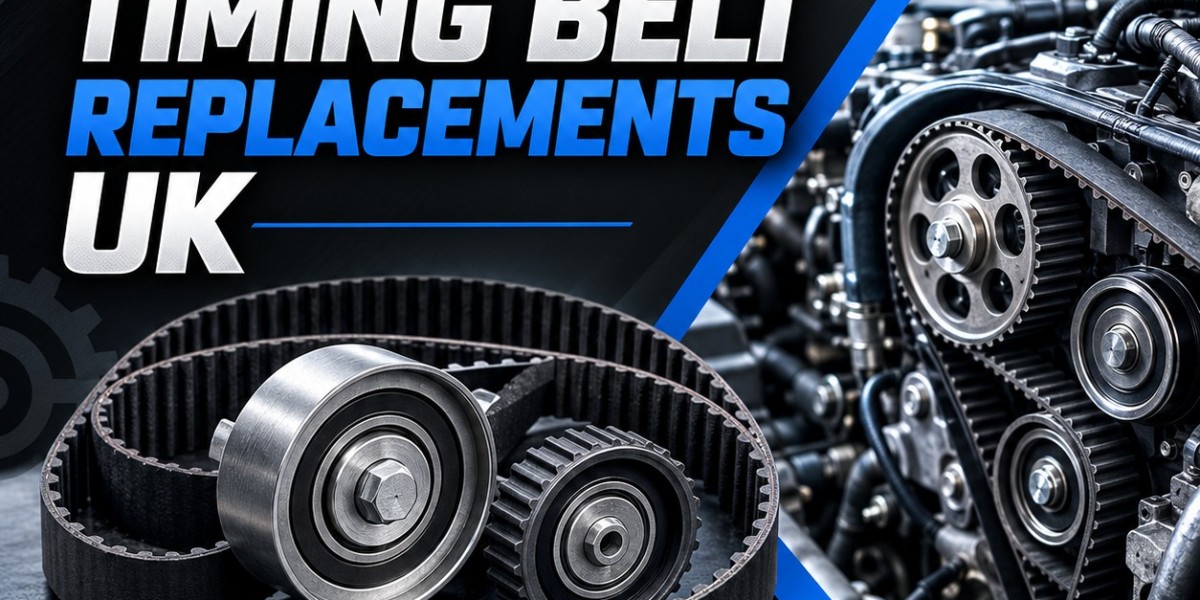

A vehicle’s engine depends on many components working together at precisely the right time. One of the most important is the timing belt, a reinforced belt that synchronises the movement of the crankshaft and camshaft. Although it may look like a relatively simple component, its condition can have a major effect on engine reliability.
Unlike tyres or brake pads, a timing belt is not always easy for a driver to inspect visually. It can deteriorate internally through age, mileage, heat and repeated engine cycles. For this reason, understanding replacement intervals, warning signs and maintenance requirements can help vehicle owners avoid unexpected breakdowns and potentially expensive engine damage.
For drivers researching Timing Belt Replacements UK, the key consideration is not simply when the belt looks worn. Manufacturer recommendations, vehicle age, mileage and engine design should all be considered when planning replacement.

Why Is the Timing Belt So Important?
The timing belt controls the relationship between the crankshaft and camshaft. In many modern engines, this synchronisation allows the pistons and valves to operate without interfering with one another.
If the belt becomes excessively worn or breaks while the engine is running, this precise relationship can be lost immediately. Depending on the engine design, pistons and valves may collide, potentially resulting in bent valves, damaged pistons or other internal engine problems.
A timing belt therefore plays a preventive-maintenance role. Replacing it at the appropriate interval can be considerably more practical than waiting for a failure.
Several factors influence belt deterioration, including:
- Vehicle mileage
- Vehicle age
- Engine temperature
- Driving conditions
- Oil or coolant contamination
- Belt material and construction
- Manufacturer-specific replacement schedules
Vehicles used frequently for short journeys, heavy loads or demanding driving conditions may experience different levels of wear compared with vehicles mainly used for longer motorway journeys.
When Should a Timing Belt Be Replaced?
There is no single replacement interval that applies to every vehicle. Some manufacturers specify a particular mileage, while others provide both a mileage and an age limit.
For example, a manufacturer might recommend replacement after a certain number of miles or after a specific number of years, whichever occurs first. This means a relatively low-mileage vehicle may still require a belt replacement because of its age.

Vehicle owners should check:
- The manufacturer’s service schedule.
- The vehicle handbook.
- Previous service records.
- The current mileage.
- The age of the existing timing belt.
- Whether the belt has previously been replaced.
A common problem occurs when a used vehicle changes ownership and there is no clear record showing when the timing belt was last replaced. In such circumstances, confirming the belt’s history can be important before assuming it is still within its recommended service interval.
Professional Timing Belt Replacements Services can also include inspection of related components to determine whether additional parts should be renewed during the same repair.
What Happens During a Timing Belt Replacement?
A timing belt replacement is more involved than simply removing an old belt and fitting a new one. Access to the timing system can vary considerably between vehicle models and engine layouts.
A typical procedure may involve removing covers and other components to reach the timing belt. The engine must then be positioned correctly so that the crankshaft and camshaft remain accurately synchronised.
Once the old belt is removed, the replacement belt is installed according to the manufacturer’s specifications. Correct tension and alignment are essential because even a small timing error can affect engine operation.

Depending on the vehicle and engine, technicians may also recommend replacing associated components such as:
- Timing belt tensioners
- Idler pulleys
- Water pump
- Seals where appropriate
- Other components included in the manufacturer’s timing-belt procedure
Replacing related wear components at the same time can reduce the likelihood of having to dismantle the timing system again shortly afterwards.
For this reason, a complete timing-belt service should be considered as a system-level maintenance job rather than simply a belt replacement.
Wet Timing Belts and Replacement Costs
Some modern engines use a wet timing belt, sometimes called a belt-in-oil system. Unlike a conventional dry timing belt, the belt operates inside the engine and is exposed to engine oil.
This design can offer engineering and efficiency advantages, but it also creates additional considerations for maintenance. Oil quality, correct lubrication and compatibility with the specified belt material can be particularly important.

Drivers researching wet timing belt replacement cost should avoid looking at the belt alone. The overall price can depend on the vehicle model, engine design, labour time, accessibility and the number of components being replaced.
Other factors that can influence the cost include:
- Manufacturer parts requirements
- Labour hours
- Water pump replacement
- Tensioners and pulleys
- Seals and ancillary components
- Engine access
- Additional work discovered during inspection
A cheaper initial estimate does not necessarily represent the lowest overall maintenance cost. Comparing what is included in a quotation can provide a more meaningful comparison than comparing the headline figure alone.
Common Signs of Timing Belt Problems
Timing belts do not always provide obvious warning signs before failure. In many cases, a belt can fail without giving the driver a clear indication that something is wrong.
However, certain symptoms may justify professional inspection. These can include unusual engine noises, difficulty starting, irregular engine operation or visible signs of contamination when the timing system is inspected.

It is important not to rely on symptoms alone. A timing belt may appear to be functioning normally while still approaching the end of its recommended service life.
For this reason, preventative replacement according to the vehicle manufacturer’s schedule remains one of the most reliable approaches.
Choosing the Right Approach to Timing Belt Maintenance
For motorists considering Timing Belt Replacements Trowbridge or elsewhere in the UK, several practical steps can make the process easier.
Check the vehicle history
If purchasing a used car, look for documented evidence of previous timing-belt replacement. An invoice or detailed service record is generally more useful than an informal verbal assurance.
Confirm the correct interval
Replacement intervals differ significantly between engines. Always establish the correct recommendation for the specific make, model, engine and year.
Ask what the quotation includes
A useful quotation should make clear whether it covers only the belt or also includes tensioners, pulleys, water pump and other relevant components.
Consider the whole timing system
If a technician identifies wear in associated components, replacing them during the same job may make practical sense.
Do not ignore age
Mileage is only one part of the equation. A vehicle that covers relatively few miles each year can still require replacement based on the age of its timing belt.

Keep documentation
After replacement, retain the invoice and service information. This provides useful evidence for future maintenance and can be valuable if the vehicle is sold later.
S&M Auto Service provides an example of a local automotive service provider offering timing belt replacement information for motorists in Trowbridge and the surrounding area.
The Wider Trend Toward Preventative Vehicle Maintenance
Modern vehicles increasingly rely on complex engines, electronics and tightly engineered components. As a result, preventative maintenance has become increasingly important.
Vehicle owners are also keeping cars for longer periods, making scheduled maintenance more relevant throughout the vehicle’s life. Rather than waiting for components to fail, drivers can use manufacturer service schedules and documented maintenance records to plan major work.
Timing belts are a particularly good example of why preventative maintenance matters. The belt itself may represent only one part of the overall repair, but its failure can have consequences far beyond the component.

Regular servicing, correct engine oil, appropriate replacement intervals and professional inspections can all contribute to long-term reliability.
Final Takeaway
Timing belt maintenance is an important part of responsible vehicle ownership. Because belts can deteriorate with both mileage and age, waiting for obvious symptoms is not always a safe strategy.
Drivers should check the manufacturer’s recommended replacement schedule, establish the history of a used vehicle and understand exactly what is included in any timing-belt quotation. Wet timing belt systems may require additional consideration because the belt operates within the engine’s lubrication environment.
Whether researching Timing Belt Replacements UK, comparing Timing Belt Replacements Services, or investigating wet belt maintenance, the most useful approach is to focus on the vehicle’s specific requirements rather than relying on a generic interval or price.
Good maintenance is ultimately about preventing avoidable problems. A correctly planned timing-belt replacement can help preserve engine reliability, reduce the risk of unexpected failure and provide greater confidence in a vehicle’s long-term service life.
- Read More :
Timing Belt Replacement Costs: What UK Car Owners Should Know
What to Check Before Your MOT: A Complete Driver’s Guide
Wet Timing Belt Replacement Trowbridge: What Drivers Should Know
Car Diagnostic Test UK: Common Faults and Practical Solutions
Affordable Car Clutch Replacement: A Complete Guide for UK Drivers