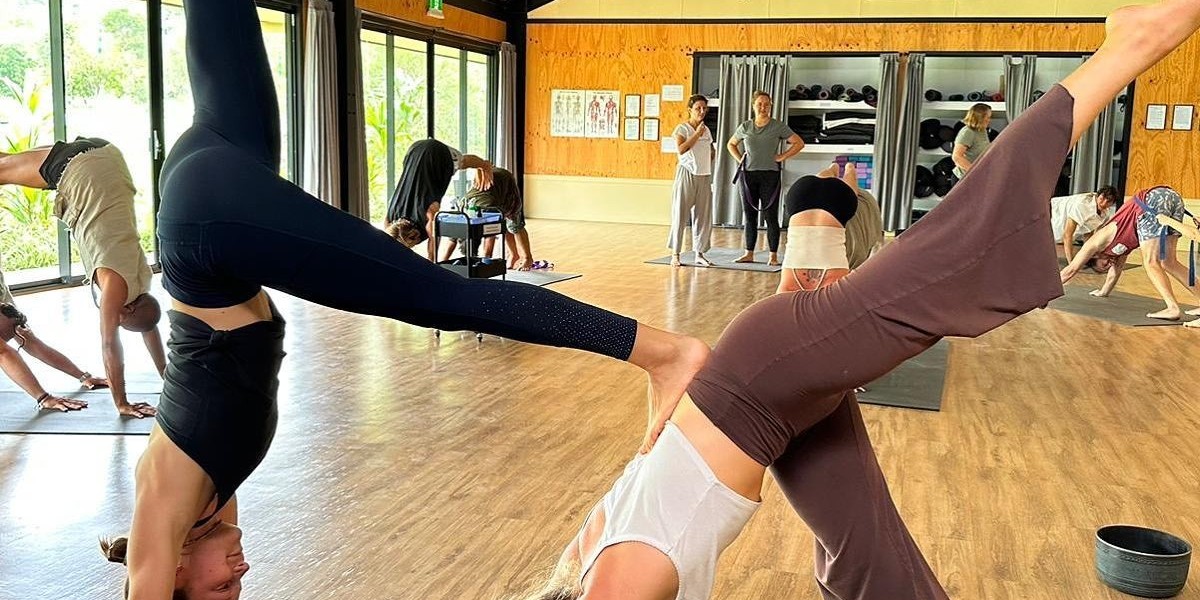

Yoga is often associated with movement, strength, flexibility, and physical fitness. However, there is another side of yoga that invites practitioners to slow down, become more aware, and create space for stillness. Yin Yoga is one such practice. With its longer-held poses, quiet atmosphere, and focus on mindful awareness, Yin Yoga offers a different approach to connecting with the body and mind.
For people who want to take their yoga practice further and learn how to guide others, Yin Yoga Teacher Training can provide an opportunity to explore this slower and more reflective style of yoga in greater depth. The training is not only about learning poses. It can also involve understanding anatomy, mindfulness, sequencing, teaching methods, meditation, and the principles that make a Yin Yoga class safe and meaningful.
What Is Yin Yoga?
Yin Yoga is a slower-paced style of yoga in which poses are generally held for several minutes. Rather than continuously moving from one posture to another, practitioners spend more time observing sensations and allowing the body to settle into each position.
Many Yin Yoga poses are performed close to the floor and use support from props such as bolsters, blocks, blankets, and cushions. The intention is not to force the body into a particular shape. Instead, practitioners are encouraged to find an appropriate level of sensation while maintaining awareness and allowing themselves to remain present.
Yin Yoga is often associated with qualities such as patience, acceptance, stillness, and mindfulness. It can complement more active forms of exercise and yoga by providing an opportunity to pause and observe rather than constantly striving for progress.
Why Consider Yin Yoga Teacher Training?
Practising Yin Yoga and teaching Yin Yoga are two different experiences. A practitioner can follow a class and enjoy the benefits of stillness, but a teacher needs to understand how to create an environment where other people can practise safely and comfortably.
A dedicated training program can help aspiring teachers develop the knowledge and confidence required to lead Yin Yoga sessions. Depending on the program, students may study subjects such as:
- Yin Yoga philosophy and principles
- Functional anatomy
- Yin Yoga postures and variations
- Use of props and modifications
- Mindfulness and meditation
- Class sequencing
- Teaching methodology
- Verbal cues and communication
- Understanding individual differences
- Creating a supportive and inclusive class environment
The training can therefore become a journey of both professional development and personal exploration.
Understanding the Principles of Yin Yoga
One of the most important parts of becoming a Yin Yoga teacher is understanding that the practice is not simply about holding yoga poses for a long time.
Yin Yoga has its own approach to movement and sensation. Students are often encouraged to find an appropriate edge in a posture, become still when it feels suitable, and remain attentive to what they are experiencing.
This approach can help move the focus away from achieving a perfect-looking posture. Bodies differ in proportions, mobility, previous injuries, age, and physical experience. As a result, the same pose may look and feel very different from one person to another.
A knowledgeable Yin Yoga teacher learns to work with these differences rather than expecting every student to fit into the same shape.
The Role of Mindfulness in Yin Yoga
Mindfulness is an important part of a Yin Yoga practice. When a pose is held for several minutes, there is more opportunity to notice thoughts, emotions, breathing patterns, and physical sensations.
For beginners, this stillness may initially feel unfamiliar. The mind may become busy, and students may discover how difficult it can be to simply remain present. Over time, however, the practice can encourage greater awareness.
For teachers, learning how to guide this experience is an important skill. A teacher may use calm verbal instructions, breathing awareness, periods of silence, or simple mindfulness techniques to help students remain connected with the present moment.
The objective is not to force students to stop thinking. Instead, the practice can encourage them to notice what is happening without immediately reacting to every thought or sensation.
Learning Functional Anatomy
Anatomy is another valuable part of Yin Yoga teacher education. Understanding the body helps teachers make more informed decisions about posture, movement, modifications, and the use of props.
Yin Yoga often focuses on how a posture feels rather than whether it looks identical to a traditional illustration. Functional anatomy can help teachers understand why two students may experience completely different sensations while performing the same pose.
For example, differences in bone structure, joint mobility, muscle length, and body proportions can influence how a person experiences a posture.
This knowledge can encourage teachers to provide options instead of insisting on a single version of a pose. Props and variations can also make a class more accessible to people with different levels of experience.
Learning to Use Props Effectively
Props can be particularly useful in Yin Yoga because they allow practitioners to adjust postures according to their individual needs.
Bolsters can provide support during resting positions, blocks can help reduce unnecessary strain, and blankets can provide additional comfort or support. A teacher may also suggest changing the height or position of a prop depending on the student's body and the posture being practised.
Learning how and when to use these tools is an important teaching skill.
Rather than viewing props as something that makes a pose easier, teachers can introduce them as tools that help students explore a posture with greater awareness and comfort.
Developing Better Teaching Skills
A good yoga teacher does more than demonstrate poses. Teaching involves communication, observation, patience, and the ability to respond to different students.
During teacher training, students can practise giving clear instructions and learn how to structure a class from beginning to end.
This may include learning how to:
- Introduce the intention of a class
- Explain postures clearly
- Offer accessible variations
- Guide transitions
- Use appropriate verbal cues
- Create moments of silence
- Observe students without distracting them
- Offer modifications when needed
- End a session in a calm and meaningful way
These skills can help teachers develop their own teaching voice and become more comfortable leading groups.
Creating a Transformative Teaching Experience
The word "transformative" can mean different things to different people. For one student, transformation may involve developing greater body awareness. For another, it may simply mean finding a quiet moment during a busy week.
A Yin Yoga teacher does not need to promise a particular emotional or physical outcome. Instead, the teacher can create conditions that allow students to explore their own experience.
A thoughtfully structured class can provide time for slowing down, noticing sensations, practising patience, and becoming aware of the relationship between body and mind.
This is one reason Yin Yoga teaching can feel different from more physically demanding yoga styles. The emphasis may be less on achievement and more on awareness.
Yin Yoga and Personal Practice
Teacher training can also deepen the student's own relationship with yoga.
While learning how to teach others, trainees spend significant time practising themselves. They may become more familiar with their own physical patterns, habits, limitations, and responses to stillness.
This personal practice is important because teaching from personal experience can help create authenticity. At the same time, teachers should remain aware that their own experience does not automatically represent the experience of every student.
A strong teacher continues learning, listens to students, and remains open to different approaches.
How Yin Yoga Can Complement an Active Lifestyle
Modern lifestyles can involve long working hours, digital screens, commuting, exercise routines, and constant mental stimulation. Many people spend much of their day moving quickly from one responsibility to another.
Yin Yoga offers a contrasting experience.
Instead of focusing primarily on movement and intensity, a Yin practice creates space for slowing down. It can be incorporated alongside other forms of yoga, strength training, running, dancing, or other physical activities.
For this reason, some practitioners explore Yin Yoga not as a replacement for active exercise but as a complementary practice.
A teacher training program can help instructors understand how Yin Yoga may fit into a broader yoga practice and how to design sessions that are appropriate for different students.
Building Confidence as a Yoga Teacher
For new teachers, confidence can take time. Knowing a sequence intellectually is different from standing in front of a group and guiding a real class.
Teacher training provides an opportunity to practise teaching in a structured environment. Receiving feedback from trainers and fellow students can help trainees identify areas for improvement.
Over time, repeated practice can make instructions clearer and help teachers become more comfortable with pauses, silence, unexpected situations, and different student needs.
Confidence does not necessarily mean knowing everything. A responsible teacher also knows when to modify an instruction, acknowledge a limitation, or encourage a student to seek appropriate professional guidance when necessary.
Choosing the Right Yin Yoga Teacher Training Program
There are many yoga training programs available, so prospective students should take time to research their options before enrolling.
Important factors to consider include the course curriculum, trainer experience, teaching approach, practical teaching hours, anatomy education, class size, training format, and certification requirements.
Students may also want to consider whether they prefer an intensive residential course, an in-person program spread over several weeks, or an online format.
The right choice depends on the student's goals, schedule, previous yoga experience, and preferred learning environment.
It is also useful to look beyond the title of the course. A program that provides a detailed curriculum and meaningful practical teaching experience may offer a more complete learning experience than one focused mainly on completing a certificate.
What You May Learn During Training
Although every school structures its program differently, a comprehensive Yin Yoga teacher training may include a combination of theory, practice, observation, and teaching.
A typical learning journey may cover:
Yin Yoga Philosophy
Students may explore the principles behind Yin Yoga and how the practice relates to broader yoga traditions and mindfulness.
Anatomy and Physiology
Trainees may study basic anatomy and learn how individual anatomical differences can affect postures.
Yin Postures
Students learn common Yin postures, their variations, possible sensations, and ways to use props.
Sequencing
Trainees learn how to organise poses into balanced and purposeful classes.
Meditation and Breath Awareness
Mindfulness, meditation, and breath awareness may be incorporated into Yin Yoga classes to support a calm practice environment.
Teaching Practice
Students get opportunities to teach portions of classes or complete sessions while receiving feedback.
Ethics and Professional Development
A responsible training program may also discuss teacher-student relationships, boundaries, communication, inclusivity, and professional responsibilities.
Who Can Benefit From Yin Yoga Teacher Training?
Yin Yoga teacher training can be suitable for different types of practitioners.
Existing yoga teachers may choose it to expand the range of classes they can offer. Yoga practitioners who have developed a strong interest in Yin may want to deepen their personal understanding of the practice. Wellness professionals may also explore Yin Yoga as an additional area of education, depending on their professional scope and qualifications.
Previous teaching experience can be helpful, but the specific entry requirements depend on the training provider.
Anyone considering a program should review its prerequisites carefully before enrolling.
Beyond the Certificate
Completing a teacher training course is an important milestone, but teaching development does not necessarily end with certification.
Yoga teachers can continue learning through workshops, additional training, personal practice, observation, reading, mentoring, and teaching experience.
Yin Yoga itself encourages qualities such as patience and awareness, and these qualities can also become part of a teacher's professional development.
Instead of focusing only on collecting certifications, teachers can focus on improving their ability to serve students responsibly and create thoughtful learning environments.
Final Thoughts
Yin Yoga Teacher Training can be much more than learning how to lead a series of long-held poses. It can provide an opportunity to explore stillness, anatomy, mindfulness, communication, and the art of creating space for individual experience.
For aspiring teachers, the training can build practical teaching skills while encouraging deeper personal awareness. For experienced yoga instructors, it can introduce another perspective on sequencing, anatomy, and mindful teaching.
Most importantly, Yin Yoga reminds both teachers and students that progress does not always have to look like doing more. Sometimes progress can mean slowing down, paying attention, listening to the body, and becoming comfortable with simply being present.
A well-rounded Yin Yoga education can help teachers approach their classes with patience, curiosity, and respect for individual differences. With continued learning and practice, these qualities can contribute to teaching that feels authentic, supportive, and meaningful.