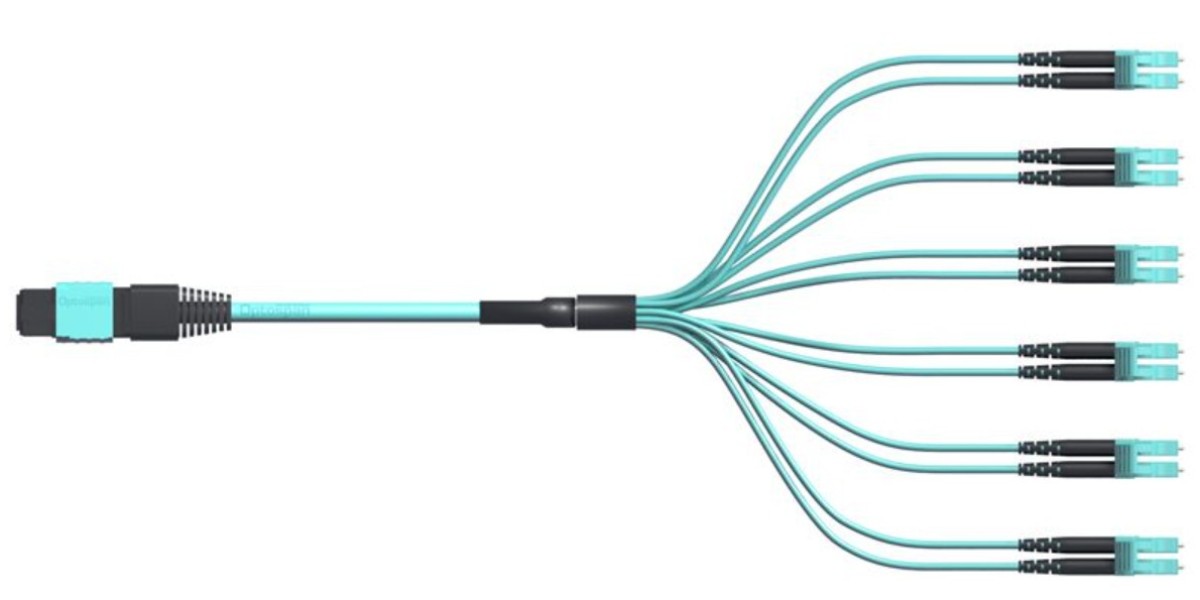

High-density data center connections increasingly rely on multi-fiber connectors that need to interface with individual, standard connector equipment.
As fiber optic cable demand grows steadily, according to recent industry data, an MPO breakout cable bridges this gap by splitting a single multi-fiber connector into individual LC or SC connections.
Why This Conversion Is Necessary in Many Setups
Modern high-density switches often use MPO connectors for trunk cabling, while individual servers or patch panels commonly use single-fiber LC connectors, creating a real need for breakout cables to bridge them.
How Fiber Count Affects Breakout Cable Selection
Breakout cables come in various fiber counts, and matching the count to the actual MPO trunk configuration avoids wasted capacity or insufficient connections.
What to Confirm When Ordering
Fiber count matching the MPO trunk cable exactly.
Correct polarity configuration for the specific network setup.
Connector type matching the equipment on the breakout end.
Why Fan-Out Length Affects Installation Flexibility
The length of the individual fan-out legs on a breakout cable determines how far apart the terminated ends can reach once split from the main MPO trunk. A fan-out that is too short forces awkward cable routing, while excessive length creates unnecessary slack to manage within the rack. Matching fan-out length to the actual physical distance between the MPO connection and the individual ports avoids both problems.
Measuring the intended installation path before ordering, rather than estimating, helps confirm the right fan-out length for a specific rack layout. This detail is easy to overlook next to more prominent specifications like fiber count and connector type, but it directly affects how clean the finished installation looks and functions.
How Breakout Cables Support a Phased Network Migration
Facilities migrating gradually from lower-density to higher-density equipment can use breakout cables to bridge old and new hardware during the transition period, rather than replacing everything at once. This approach lets a facility spread migration cost and disruption over time instead of a single disruptive cutover.
Planning which connections will eventually move to native MPO equipment, and which breakout cables serve only a temporary bridging function, keeps the migration organized rather than accumulating undocumented workarounds. Facilities that document this transition plan avoid confusion for whoever manages the network once the migration is complete.
MPO breakout cables solve a real, common compatibility gap in high-density network designs. Getting fiber count and polarity right avoids the frustration of a cable that looks correct but does not actually connect properly.










