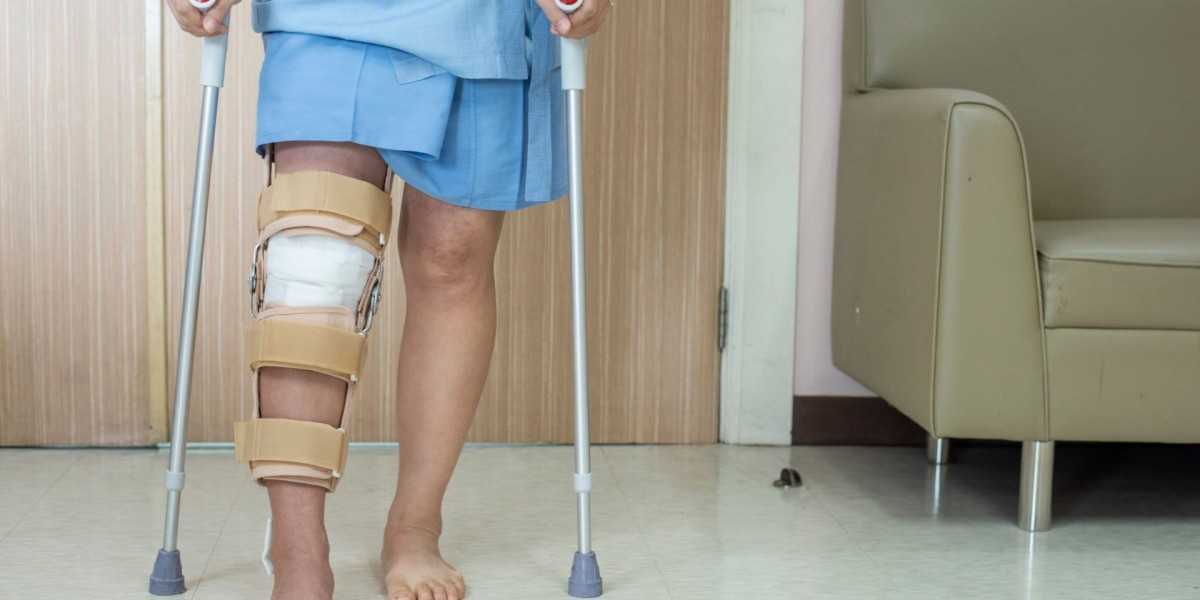

An anterior cruciate ligament (ACL) injury can significantly affect knee stability, mobility, strength, and confidence during everyday activities and sports. The ACL helps control the movement of the knee during walking, running, jumping, landing, pivoting, and changes of direction. When it is injured, activities that once felt natural may become difficult.
A structured rehabilitation program can help address limitations in mobility, muscle strength, coordination, and functional movement. Current clinical guidance emphasizes exercise as a central component of ACL reconstruction rehabilitation, with progression based on individual physical and functional criteria rather than time alone.
For people looking for Acl Injury Treatment Dubai, physiotherapy can form an important part of rehabilitation before or after ACL surgery and, in selected cases, during non-operative management. Vitruvian Italian Physiotherapy Center provides physiotherapy and sports rehabilitation services designed around individual movement and rehabilitation needs.
Understanding An ACL Injury
The ACL is one of the major ligaments inside the knee. It contributes to knee stability, particularly during movements involving changes in direction, jumping, landing, and rapid acceleration or deceleration.
ACL injuries commonly occur during sports such as football, basketball, tennis, and other activities involving pivoting or sudden changes in movement. An injury may involve a partial tear, complete tear, or associated damage to other structures within the knee.
The appropriate treatment pathway depends on several factors, including the extent of the injury, symptoms, activity level, associated injuries, and personal goals. Some people undergo ACL reconstruction, while others may be managed without surgery through structured rehabilitation. Clinical consensus recognizes both operative and non-operative pathways as options for appropriate patients, with progressive rehabilitation forming an important component of successful management.
Why Rehabilitation Is Important After An ACL Injury
ACL rehabilitation is not simply about allowing the knee to rest until discomfort improves. The process involves progressively rebuilding the physical qualities required for normal movement and the individual's desired activities.
Rehabilitation may focus on:
- Restoring knee range of motion
- Managing swelling and discomfort
- Rebuilding quadriceps and hamstring strength
- Improving balance and coordination
- Developing neuromuscular control
- Restoring functional movement
- Progressing toward running and sport-specific activities
Clinical guidelines recommend combining strength and motor-control training during ACL rehabilitation rather than relying on one type of exercise alone.
This makes a structured Acl Injury Treatment Dubai program particularly relevant for individuals who want to progressively regain functional knee capacity.
Step One: Initial Assessment And Treatment Planning
The rehabilitation process begins with a detailed assessment. A physiotherapist considers the individual's injury history, symptoms, movement limitations, strength, mobility, activity level, and rehabilitation goals.
Following ACL reconstruction, assessment may also consider the surgical procedure and any additional procedures performed on the knee. These factors can influence the exercises and progression that are appropriate.
At Vitruvian Italian Physiotherapy Center, an individualized approach to physiotherapy allows rehabilitation to be adapted to the patient's physical condition and goals. This can be especially important for athletes who eventually want to return to demanding movements such as running, jumping, and changing direction.
A clear treatment plan also helps patients understand that ACL rehabilitation is progressive rather than a single short treatment period.
Step Two: Restoring Knee Movement
Regaining knee range of motion is an important early rehabilitation objective. Following an injury or surgery, swelling and discomfort can restrict movement, while reduced activity may contribute to stiffness.
Early rehabilitation may therefore include appropriately selected mobility exercises and other physiotherapy techniques. The exact exercises depend on the individual's condition and any instructions provided by the treating orthopedic team.
Clinical guidance highlights restoration of knee range of motion as an important component of rehabilitation and includes full knee extension among the criteria considered before progression to running.
Improving mobility helps establish a foundation for later strengthening and functional training.
Step Three: Rebuilding Muscle Activation And Strength
ACL injuries and surgery can affect the muscles surrounding the knee, particularly the quadriceps. Reduced muscle activation and strength can make walking, climbing stairs, squatting, and other movements more difficult.
Strength rehabilitation is therefore a major component of Acl Injury Treatment Dubai. Exercises can be introduced progressively according to the individual's current ability.
Depending on the rehabilitation stage, strengthening may involve:
- Quadriceps exercises
- Hamstring strengthening
- Hip strengthening
- Calf strengthening
- Squatting patterns
- Step exercises
- Resistance-based exercises
- Progressive single-leg exercises
Current ACL rehabilitation guidance supports combining different forms of strengthening, including concentric and eccentric training, while also incorporating motor-control exercises.
The goal is to progressively restore strength rather than immediately placing the knee under high physical demands.
Step Four: Improving Balance And Neuromuscular Control
Strength alone does not completely describe knee function. The body also needs to coordinate the muscles around the hip, knee, and ankle during movement.
Balance and neuromuscular exercises can help individuals develop better control of the affected leg. These may progress from simple controlled movements toward more challenging single-leg activities.
As rehabilitation advances, exercises may involve changes in direction, landing control, balance challenges, and other movements relevant to the person's daily or sporting activities.
Clinical recommendations emphasize the importance of combining strength and motor-control training during ACL rehabilitation.
At Vitruvian Italian Physiotherapy Center, sports rehabilitation can incorporate exercise therapy, clinical strengthening, biomechanical analysis, and movement-focused rehabilitation according to individual needs.
Step Five: Developing Functional Movement
Once basic strength and mobility have improved, rehabilitation can become increasingly functional.
Functional training connects individual exercises with movements that people actually perform in daily life or sport. Depending on the person, this might include controlled squats, step-downs, lunges, single-leg movements, balance exercises, or progressive jumping activities.
For an athlete, functional rehabilitation eventually needs to reflect the demands of their sport. A football player, for example, may eventually need controlled acceleration, deceleration, directional changes, and sport-specific drills.
The progression should be based on demonstrated physical readiness rather than simply the number of weeks since injury or surgery. Current guidance specifically recommends criteria-based progression, with time since surgery considered necessary for healing but not sufficient by itself for advancing rehabilitation.
Step Six: Progressing Toward Running
Running is an important milestone for many people recovering from ACL injury or reconstruction. However, returning to running should occur after appropriate rehabilitation progress rather than simply at a predetermined date.
The Aspetar clinical guideline proposes several criteria for beginning running after ACL reconstruction, including near-full knee flexion, full extension, minimal or no swelling, appropriate quadriceps strength, and pain-free hopping activities.
A physiotherapist can assess whether the individual's movement quality and physical capacity are appropriate for progressing toward running.
At this stage of Acl Injury Treatment Dubai, rehabilitation may begin incorporating more dynamic exercises while continuing to develop strength and control.
Step Seven: Introducing Jumping And Landing Exercises
Jumping and landing require considerable control from the hip, knee, and ankle. They can therefore become an important part of later-stage rehabilitation for people whose goals involve running or sport.
Exercises may begin with controlled low-level activities before progressing toward more demanding jumping patterns.
The emphasis is generally placed on movement quality, appropriate force control, strength, and coordination. These exercises should be introduced according to the individual's rehabilitation status and goals.
Clinical ACL rehabilitation recommendations include jump-performance and movement-quality assessments when considering progression toward demanding sporting activities.
Step Eight: Sport-Specific Rehabilitation
Returning to everyday activity and returning to competitive sport are not necessarily the same stage of rehabilitation.
An athlete may need to demonstrate sufficient strength and movement control before progressing into sport-specific training. This can involve drills that replicate the running patterns, jumping, acceleration, deceleration, and directional changes required by their sport.
A structured progression may move from individual exercises to controlled drills, then to more complex training situations.
Vitruvian Italian Physiotherapy Center's sports rehabilitation services include clinical strengthening, exercise therapy, biomechanical analysis, screening, injury-prevention programs, and return-to-play preparation. These services can support a progressive rehabilitation pathway for active individuals.
Step Nine: Assessing Strength And Functional Performance
Before returning to demanding activities, physical performance can be evaluated rather than relying only on how the knee feels.
Assessment may include:
- Quadriceps and hamstring strength
- Single-leg strength
- Jump performance
- Movement quality
- Balance and control
- Knee range of motion
- Swelling and symptoms
- Sport-specific performance
Clinical guidance proposes objective measures of strength, jumping performance, movement mechanics, and sport-specific training as part of return-to-sport decision-making.
This type of assessment helps identify areas that may still need development before progressing to higher physical demands.
Step Ten: Gradual Return To Sport And Activity
Returning to sport is a process rather than a single event. Once an individual has progressed through rehabilitation and meets appropriate criteria, training can gradually increase in complexity and intensity.
The final stages may include sport-specific drills, controlled practice, progressive exposure to higher-speed movements, and eventually unrestricted training when appropriate.
Clinical guidance distinguishes completion of rehabilitation from a full return to competition and recommends a transition involving progressive and controlled exposure to the athlete's sport.
This gradual approach can help individuals rebuild both physical capacity and confidence in demanding movements.
How Physiotherapy Supports ACL Rehabilitation
Physiotherapy provides a structured framework for progressing from basic movement toward higher-level physical activity.
Depending on the rehabilitation stage, treatment may include:
- Mobility exercises
- Strength training
- Manual therapy when appropriate
- Balance and coordination exercises
- Motor-control training
- Functional movement exercises
- Running preparation
- Jump and landing training
- Sport-specific rehabilitation
- Movement assessment
Exercise is considered the mainstay of rehabilitation following ACL reconstruction, while other physiotherapy modalities may be used as supportive measures in appropriate early-stage situations.
At Vitruvian Italian Physiotherapy Center, an individualized rehabilitation approach can help organize these elements according to the person's condition and goals.
Understanding Acl Injury Treatment Cost In Dubai
The Acl Injury Treatment cost in Dubai can vary considerably because ACL rehabilitation is individualized. The overall cost may depend on the number of physiotherapy sessions, treatment duration, rehabilitation stage, assessment requirements, and complexity of the injury.
A person undergoing a straightforward rehabilitation program may have different requirements from an athlete recovering from ACL reconstruction who needs extensive strength, movement, running, and sport-specific training.
When discussing Acl Injury Treatment cost in Dubai, patients can ask about the expected number and frequency of sessions, the types of rehabilitation included, progress assessments, and home exercises.
It is also important to understand that rehabilitation duration is not identical for every patient. Clinical guidance recommends progression according to individual criteria and functional readiness rather than applying one fixed timetable to everyone.
The Role Of Home Exercises During ACL Rehabilitation
Physiotherapy sessions are only one part of rehabilitation. Patients are often given exercises to perform between appointments according to their individual treatment plans.
A home program can help reinforce mobility, strength, and movement-control work introduced during supervised sessions.
However, exercises should be individually prescribed and progressed appropriately. Clinical guidance notes that even when patients perform rehabilitation independently, their programs should be individually prescribed and monitored to support appropriate progression.
Consistency can be especially important during longer rehabilitation programs because strength and functional capacity generally require progressive training over time.
Why Patience Matters During The Rehabilitation Process
ACL rehabilitation can take time, particularly when reconstruction has been performed or when an athlete is aiming to return to a demanding sport.
Research-based guidelines describe rehabilitation as a staged process involving impairment-focused work, sport-specific preparation, and return-to-play progression. One evidence-based guideline recommends postoperative rehabilitation continuing for approximately 9–12 months, with progression guided by functional testing rather than time alone.
This means that feeling better does not automatically mean the knee is ready for every activity. Strength, movement quality, control, and sport-specific capacity may still need to be developed.
Creating A Personalized ACL Rehabilitation Plan
Every ACL injury is different, so rehabilitation should reflect the individual's circumstances.
A personalized plan may consider:
- Whether surgery was performed
- The type of surgical procedure
- Additional knee injuries
- Current range of motion
- Muscle strength
- Pain and swelling
- Daily activity requirements
- Previous fitness level
- Sporting goals
- Progress during rehabilitation
This individualized approach is particularly relevant when choosing Acl Injury Treatment Dubai, because the requirements of an office worker returning to normal daily movement can differ significantly from those of an athlete preparing for competitive sport.
Vitruvian Italian Physiotherapy Center can incorporate exercise-based rehabilitation, clinical strengthening, biomechanical assessment, and sports rehabilitation according to the patient's rehabilitation objectives.
Planning For Long-Term Knee Function
ACL rehabilitation should not necessarily end when a person can walk comfortably. For active individuals, maintaining strength, coordination, and movement quality can remain important after returning to sport.
A continued exercise routine can help maintain the physical qualities developed during rehabilitation. Sports-specific conditioning and strength training may also remain part of an athlete's ongoing training program.
Clinical recommendations support continuing strength and movement-focused training as individuals transition back toward full activity.
Long-term rehabilitation and conditioning can therefore become part of a broader approach to maintaining functional knee performance.
Final Thoughts On ACL Rehabilitation In Dubai
ACL rehabilitation is a progressive journey that can involve assessment, mobility restoration, strength development, balance training, functional movement, running preparation, and sport-specific conditioning.
For individuals seeking Acl Injury Treatment Dubai, physiotherapy can provide structured support throughout these stages. A personalized program can help address the individual's physical limitations while gradually developing the strength and movement capacity required for everyday activities or sport.
Vitruvian Italian Physiotherapy Center can be part of this rehabilitation journey through physiotherapy, clinical strengthening, exercise-based rehabilitation, biomechanical assessment, and sports rehabilitation.
Understanding the rehabilitation process can also help patients plan for the Acl Injury Treatment cost in Dubai and discuss their treatment requirements more clearly. Since rehabilitation needs differ from person to person, treatment frequency and duration should be established according to the individual's assessment and progress.
Ultimately, successful ACL rehabilitation is a gradual process. With appropriate assessment, progressive exercise, consistent participation, and objective monitoring, patients can work toward restoring mobility, strength, stability, and confidence in their movement.