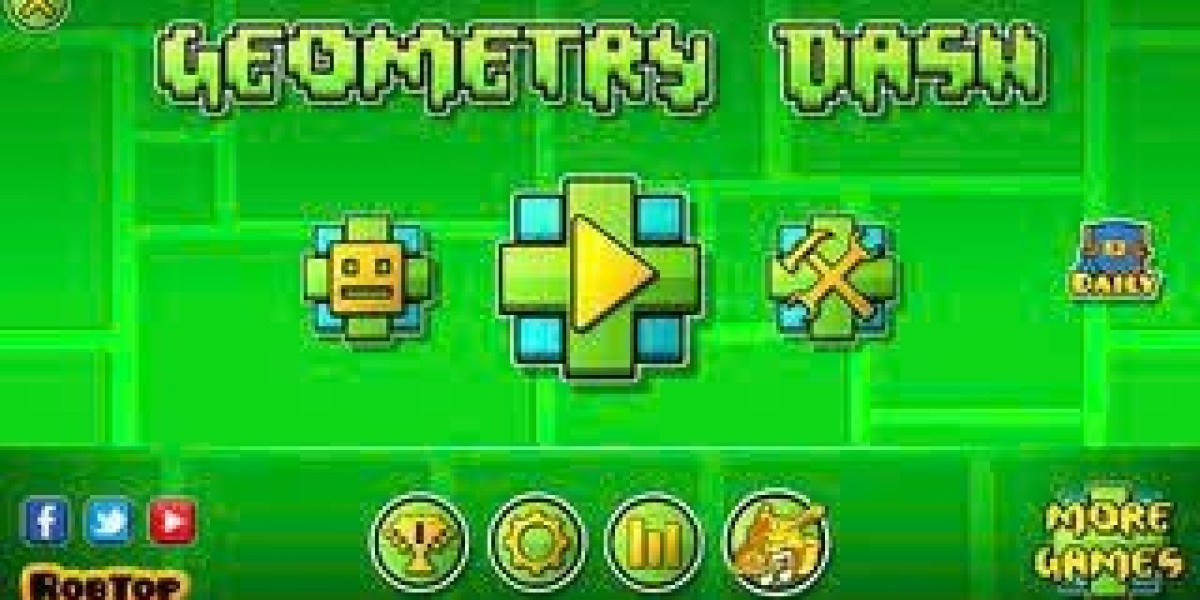

There's a particular kind of joy that comes from a game that looks impossibly simple, then quietly consumes your entire evening. Geometry Dash is exactly that game. A neon cube slides across a flat plane, a spike appears, and you press a button. That's it. And yet millions of players have lost hundreds of hours to it — and, more surprisingly, keep coming back voluntarily.
What You're Actually Doing
At its core, a geometry jump game is a rhythm game disguised as a platformer. Your character moves forward automatically at a fixed speed. You only control one thing: when to jump (or, in some modes, when to hold). Every obstacle, every spike, every floating platform is placed to a beat. When you crash, you restart from the beginning.
On the surface, that sounds punishing. In practice, it's the whole point. Each attempt teaches you something — a jump you timed late, a rhythm you misread, a section you now understand. You are not really playing the level so much as memorizing and internalizing it, the way a musician learns a difficult passage by repeating it until the fingers know it better than the mind does.
If you want a concrete reference point, Geometry Dash is the genre's defining example — the game that turned this formula into a worldwide phenomenon and inspired a generation of level creators.
The Gameplay Loop, Step by Step
A typical run goes like this. You start a level, and within the first ten seconds you hit a spike and die. You restart instantly — there's no loading screen, no penalty, no life counter. You try again. This time you survive a little longer, until a new obstacle catches you off guard. You die. You restart. Again. Again.
Somewhere around attempt thirty or forty, something shifts. Your hands start anticipating the jump before your eyes consciously register the obstacle. You're not thinking anymore; you're feeling the rhythm. That moment — often called "flow" — is the entire appeal of the genre.
The progression is usually structured like this:
Easy levels teach you the timing of basic jumps, simple spikes, and short gaps.
Medium levels introduce moving platforms, gravity portals, and shifting speeds.
Hard and demon levels combine everything at once, often requiring hundreds or thousands of attempts.
Crucially, the difficulty isn't arbitrary. Good levels are built with a clear rhythm underneath, and once you find that rhythm, formerly impossible sections suddenly feel obvious.
Practical Tips for New Players
If you're picking up a geometry jump game for the first time, a few habits will save you a lot of frustration.
Start easier than you think you should. It's tempting to jump straight into the flashiest, hardest level you've seen online. Don't. Every experienced player built their reflexes on simple levels first. Difficulty in this genre is cumulative — skills from an easy level are prerequisites for a hard one.
Use practice mode. Almost every game in this genre offers a mode where you can place checkpoints and slow things down. It's not cheating; it's studying. Learning a level in pieces and then stitching them together is how serious players approach difficult content.
Turn the music up. This sounds like minor advice, but it genuinely matters. The obstacles are synchronized to the soundtrack. Listening closely — really listening — often tells you when to jump more reliably than watching the screen.
Watch a video of the level before grinding it. Seeing someone else clear a hard section teaches you what the intended timing looks like. There's no shame in it. Most players do this.
Take breaks. This is the most overlooked tip. Frustration degrades your timing. When you find yourself dying repeatedly at the same early obstacle you've passed fifty times before, that's a signal to stop for the day, not to push harder. Your brain consolidates the pattern overnight, and more often than not, you'll clear it on the first few tries the next morning.
Don't compare your progress to others. Some people clear their first demon level in a weekend; others take months. Both are fine. The genre rewards persistence far more than talent.
Why the Frustration Is Worth It
Here's what makes a geometry jump game different from a typical action game: the challenge is completely fair. There's no random damage, no bad luck, no unfair enemy. Every failure is a timing error, and every timing error is fixable. That clarity is strangely comforting.
It also means the reward is entirely yours. When you finally clear a level you've died on two thousand times, nobody carried you. The feeling is closer to finishing a marathon than winning a lottery — earned, personal, and oddly moving.
And there's a social side most newcomers don't expect. The community around these games is enormous and largely welcoming. Players share custom levels by the millions, offer tips on stubborn sections, and celebrate each other's clears. Posting a run on a forum often brings genuine encouragement rather than gatekeeping.
A Final Word
You don't need to be good at geometry jump games to enjoy them. You need patience, a decent sense of rhythm, and the willingness to fail a few hundred times without taking it personally. If that sounds like a fair trade, you'll find something here that very few games offer: a challenge so pure that beating it feels like beating yourself, in the best possible way.
Start small. Turn up the music. And try one more time.