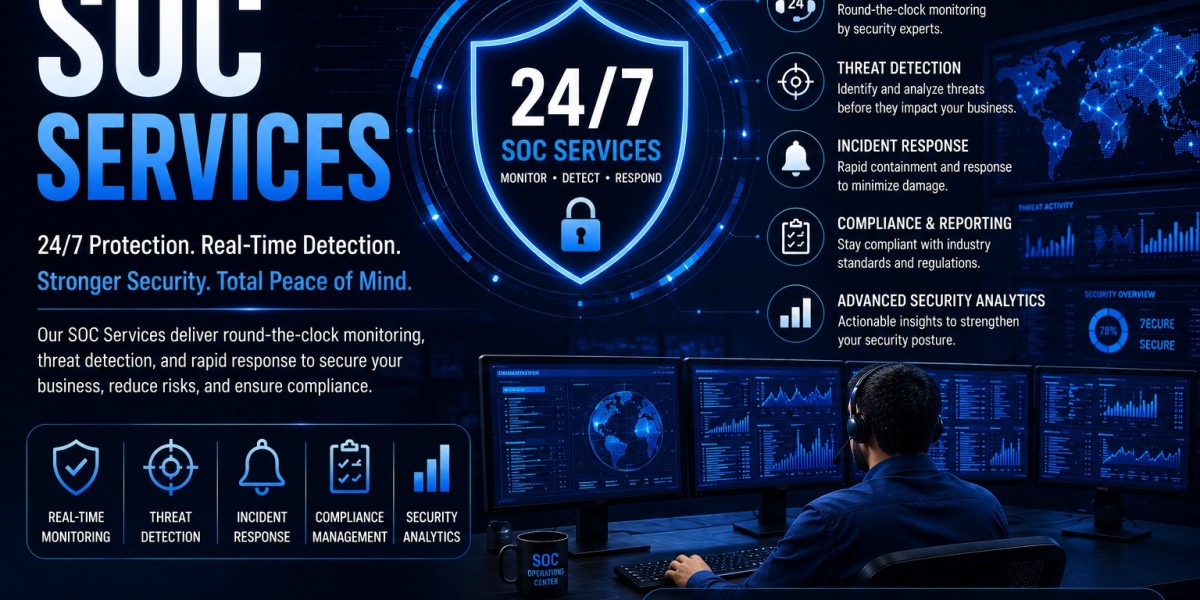

What Should ICT Businesses Look for in SOC Services?
India's ICT sector supports communication networks, digital platforms, technology infrastructure, software services, and connected business environments. As these systems become more interconnected, security teams need visibility into activity across a wider technology landscape.
That makes the choice of soc services more than a technology purchase. ICT organizations need to consider how monitoring, threat detection, investigation, escalation, and reporting will fit into their existing security operations.
A provider that looks suitable on paper may not necessarily match an organization's infrastructure, operational model, or security priorities. A structured evaluation can help ICT businesses identify what they actually need before selecting a service.
Why do ICT businesses need SOC services in India?
ICT environments can contain multiple interconnected systems, users, applications, endpoints, and network components. An issue affecting one part of the environment can potentially create security concerns elsewhere.
Security monitoring helps organizations identify unusual activity and investigate events that may indicate compromise. It also provides a defined process for escalating incidents instead of leaving individual IT teams to determine how every alert should be handled.
For ICT businesses, the challenge is often not a lack of security information. It is determining which information matters and how quickly it should be investigated.
What do SOC services actually provide?
SOC services typically bring together security monitoring, event analysis, threat detection, alert investigation, incident escalation, and reporting.
The exact scope depends on the service model. Some organizations may need extensive monitoring across their technology environment, while others may require support for specific systems or security operations activities.
A useful SOC model should therefore be evaluated against actual operational requirements rather than a generic checklist of features.
How should ICT businesses evaluate SOC services companies in India?
SOC services companies in India can differ significantly in their operating models, monitoring coverage, technologies, escalation procedures, and responsibilities.
An ICT business should first document the environments that require visibility. These may include critical infrastructure, applications, endpoints, network systems, cloud environments, and identity-related activity.
The organization should then establish what it expects the SOC to monitor, investigate, report, and escalate.
Questions worth addressing include:
- Which systems and environments will be monitored?
- What types of security events will be investigated?
- How are suspicious alerts prioritized?
- What happens after a potential incident is identified?
- Who receives escalations?
- What responsibilities remain with the internal ICT team?
- What security reports are provided?
- How is monitoring coverage reviewed over time?
This evaluation helps separate genuine operational capability from a service description that only lists technologies.
What makes outsourced SOC monitoring different from an internal model?
An internal SOC gives an organization direct control over its security operations team, processes, and technology decisions. However, building and maintaining an internal capability can require ongoing investment in people, processes, monitoring infrastructure, and operational expertise.
An external SOC model shifts defined responsibilities to a service provider. This can help organizations access specialized security operations capabilities without building every function internally.
The decision should not be treated as simply "outsourced versus internal." ICT organizations can also use a hybrid approach in which an external SOC supports monitoring and investigation while internal teams retain control over business decisions and remediation.
The important consideration is whether the chosen model provides the required coverage and accountability.
Which SOC capabilities matter most for ICT environments?
The answer depends on the organization's risk profile, but several operational areas deserve close attention.
Monitoring coverage
A SOC is only as useful as the environments it can observe. ICT businesses should understand which systems can be integrated into the monitoring process and whether important security events are being captured.
Alert investigation
Large numbers of alerts do not automatically indicate effective security operations. Organizations should understand how alerts are reviewed, prioritized, investigated, and escalated.
Incident handling
Potential incidents require defined procedures. The ICT organization should know how the SOC communicates findings and what happens when a serious security event is identified.
Reporting
Security reporting should provide useful information rather than simply produce large quantities of technical data. Management may need visibility into significant events, recurring issues, monitoring coverage, and operational trends.
What mistakes should ICT businesses avoid when selecting a SOC?
One common mistake is choosing a service based primarily on the number of features listed in a proposal.
Another is failing to define responsibilities before implementation. If both the provider and internal team assume the other party will handle an incident, response can become unclear at the moment it matters most.
Organizations can also overlook integration requirements. A SOC needs relevant security data to monitor effectively, so compatibility with the existing technology environment should be discussed before deployment.
A further mistake is treating monitoring as a one-time implementation. Security environments change as organizations introduce new applications, infrastructure, users, and services. Monitoring requirements need periodic review.
How can ICT businesses prepare before engaging a SOC?
Preparation can make the evaluation process more productive.
Start by identifying critical technology assets and the security events that matter most to them. Review existing logging and monitoring capabilities and identify areas where visibility is limited.
Next, define escalation requirements. Decide which events should reach internal security or IT leadership and what information they need to make decisions.
It is also useful to document existing incident-response procedures. The SOC should fit into those procedures rather than operate as a separate process disconnected from the organization's wider security program.
This gives potential providers a clearer understanding of the environment and allows the ICT business to compare service models on relevant criteria.
Can SOC services support compliance requirements?
Security monitoring can support broader information-security and governance activities. Depending on the organization, applicable requirements may involve logging, access management, incident management, data protection, and security controls.
ICT businesses may also use frameworks such as ISO/IEC 27001 as part of their information-security management approach. Where Indian data-protection requirements apply, organizations should consider how security monitoring supports their wider controls and responsibilities.
A SOC does not automatically establish compliance. Compliance depends on the complete set of policies, controls, processes, governance arrangements, implementation, and evidence maintained by the organization.
What should a practical SOC evaluation checklist include?
Before signing an agreement, ICT leaders should be able to explain exactly what they are buying and how it will operate.
A practical evaluation should cover:
- Technology and environment coverage
- Monitoring scope
- Alert triage and investigation
- Threat detection processes
- Incident escalation
- Communication channels
- Reporting requirements
- Internal and provider responsibilities
- Integration requirements
- Service review and improvement processes
The goal is to establish operational clarity before security monitoring begins.
Frequently Asked Questions
Are SOC services companies in India suitable for ICT businesses?
They can be, provided the service model matches the organization's technology environment, monitoring requirements, and operational responsibilities.
Should an ICT business build an internal SOC or use an external provider?
The choice depends on factors such as internal capabilities, required coverage, operational requirements, and available resources. A hybrid model can also combine internal oversight with external monitoring support.
What is the most important factor when evaluating a SOC service?
Monitoring coverage and clearly defined responsibilities are fundamental. An organization should know what will be monitored, how incidents will be investigated, and who is responsible for each response step.
For ICT businesses, selecting a SOC service should be treated as an operational decision rather than a simple technology purchase. The right approach starts with understanding the environment, defining monitoring requirements, establishing escalation responsibilities, and evaluating how the service fits into existing security processes. soc services can then become a practical part of a broader cybersecurity strategy instead of another disconnected security capability.
Contact Us:
IND- 02067680404
IBN Technologies Ltd.
E-mail: - [email protected]