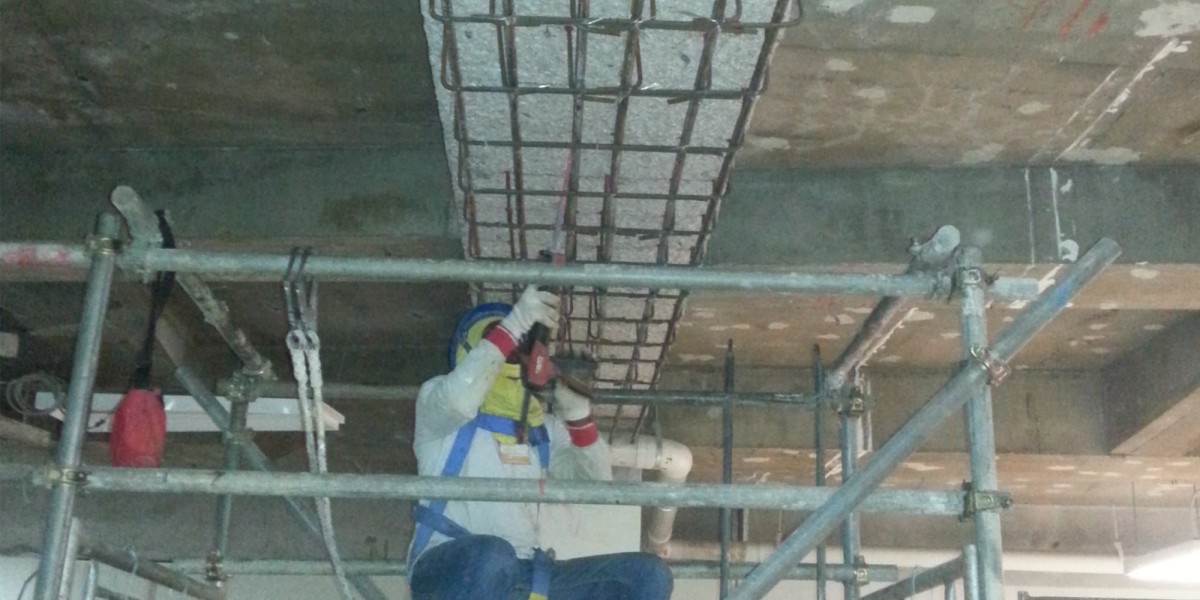

Structural damage can develop gradually in industrial buildings, commercial facilities, warehouses, plants, bridges, and other infrastructure assets. Cracks, concrete deterioration, reinforcement corrosion, water ingress, spalling, and weakened structural members can affect performance when they are not addressed properly. Structural repair services focus on identifying the cause of damage, restoring affected areas, and improving the overall condition of existing structures through suitable engineering and repair methods.
Choosing suitable structural repair contractors is important because structural damage is rarely limited to what appears on the surface. A visible crack may be associated with corrosion, movement, moisture penetration, overloading, poor construction, or deterioration of concrete. Treating only the visible symptom may provide temporary improvement without resolving the underlying problem. A proper repair approach therefore begins with inspection, assessment, diagnosis, and selection of an appropriate repair methodology.
What Are Structural Repair Services?
Structural repair services involve engineering and construction activities carried out to restore damaged or deteriorated structural elements. Depending on the condition, repairs may involve concrete restoration, crack treatment, reinforcement corrosion repair, strengthening, grouting, jacketing, shotcreting, or protective systems. The objective is not simply to make a damaged surface look better, but to restore the required structural performance and protect the repaired area from further deterioration.
Existing structures can experience deterioration because of environmental exposure, moisture, chemical attack, reinforcement corrosion, ageing materials, operational conditions, accidental damage, or changes in loading. Industrial and infrastructure structures may face particularly demanding conditions because of continuous operations and exposure to aggressive environments. Professional structural repair contractors evaluate these conditions before recommending a repair system suitable for the structure, damage mechanism, and intended service requirements.
Why Structural Repairs Should Not Be Delayed
Small structural defects can become more difficult to manage when deterioration continues over time. For example, moisture entering through cracks can contribute to reinforcement corrosion, while corrosion can cause expansion and subsequent concrete cracking or spalling. Similarly, damaged concrete around beams, columns, slabs, or other RCC members can expose reinforcement to environmental conditions. Timely structural repair can help control deterioration before the affected area becomes more extensive.
Delaying structural maintenance can also create operational challenges for industrial and commercial facilities. Extensive repairs may require access restrictions, equipment shutdowns, temporary protection, or changes to normal operations. Early assessment allows property owners and facility managers to understand the condition of the structure and plan repair activities more systematically. This approach can support better maintenance planning while reducing the possibility of unexpected deterioration affecting important structural or operational areas.
Common Signs of Structural Damage
Visible cracks are among the most common signs that a structure requires closer evaluation. However, not every crack has the same cause or significance. Cracks may occur because of shrinkage, thermal movement, settlement, overloading, corrosion, or structural distress. Their location, width, direction, pattern, and progression can provide useful information during an engineering assessment. Cracks in beams, columns, slabs, foundations, and critical connections should therefore receive appropriate technical attention.
Concrete spalling is another important indication of deterioration. Spalling occurs when portions of concrete break away from a structural surface, sometimes exposing reinforcement underneath. Rust staining, exposed reinforcement, damp patches, leakage, honeycombing, surface deterioration, and damaged concrete edges may also indicate underlying problems. In industrial environments, chemical exposure and continuous moisture can accelerate deterioration. Identifying these conditions early helps structural repair contractors determine whether localized repair, strengthening, protection, or rehabilitation is required.
Structural Inspection Before Repair Work
A successful structural repair project should begin with an understanding of the existing condition. Inspection may involve visual assessment, documentation of defects, measurements, evaluation of structural members, and investigation of environmental or operational conditions. Depending on the project, additional testing may be considered to understand concrete quality, reinforcement condition, cracking, or other factors. The information gathered during assessment helps establish the extent and nature of the required repair.
The repair methodology should be connected to the actual cause of deterioration rather than selected only because a particular technique is commonly used. For example, a surface crack caused by one mechanism may require a different treatment from a structural crack associated with movement or loading. Similarly, concrete damaged because of reinforcement corrosion requires attention to both the deteriorated concrete and the reinforcement condition. Engineering assessment therefore plays an important role in developing an appropriate repair strategy.
Concrete Repair and Restoration
Concrete repair is commonly required when structural members have damaged, cracked, deteriorated, or missing concrete. The repair process may involve removing unsound concrete, preparing the affected surface, treating reinforcement where necessary, and reinstating the section using an appropriate repair material. The selection of repair material depends on factors such as repair depth, location, structural requirements, exposure conditions, access, and project specifications.
Concrete repair should also consider compatibility between the existing concrete and the repair material. Poorly selected materials or inadequate surface preparation can affect the performance of the repaired area. For industrial structures, repair planning may additionally consider operating conditions, chemical exposure, temperature, moisture, and access limitations. A properly planned concrete restoration system can help return affected areas to the required condition while supporting the long-term performance of the structure.
Structural Crack Repair
Crack repair requires understanding why the crack developed before selecting the treatment. Depending on the crack characteristics and engineering assessment, repair methods may include crack sealing, injection systems, epoxy-based treatments, polyurethane injection, or other specialized techniques. The purpose may be to restore continuity, prevent moisture ingress, protect reinforcement, or address a particular structural requirement. The method should always be selected according to the actual condition rather than appearance alone.
Injection grouting can be useful in selected structural repair applications where cracks or voids require controlled filling. Epoxy injection may be considered for suitable cracks where structural bonding is required, while polyurethane injection can be used in appropriate moisture-related applications. These systems are not interchangeable in every situation. Structural repair contractors should evaluate crack movement, moisture conditions, width, depth, and surrounding concrete before determining the most suitable injection repair approach.
Reinforcement Corrosion and Concrete Damage
Reinforcement corrosion is a major concern in reinforced concrete structures because corrosion can reduce reinforcement performance and contribute to concrete cracking and spalling. Water, carbonation, chlorides, and other environmental conditions can contribute to reinforcement deterioration. Once reinforcement becomes exposed, simply covering the area without addressing the affected steel and surrounding concrete may not provide an appropriate long-term repair. The repair strategy should consider the cause and extent of corrosion.
Corrosion-related repair generally requires careful preparation of the affected area and appropriate treatment based on the condition identified during inspection. Damaged concrete may need removal, reinforcement may require cleaning or treatment, and the section may need suitable repair material. Additional protective measures can also be considered depending on exposure conditions. Concrete Deterioration Control Mapping can be used as a useful planning concept when documenting affected zones and prioritizing repair activities across larger structures.
Structural Strengthening vs Structural Repair
Structural repair and structural strengthening are related but serve different purposes. Repair generally focuses on restoring damaged or deteriorated structural elements, whereas strengthening aims to improve structural capacity or performance when existing capacity is inadequate for current or future requirements. A structure may require one or both approaches depending on its condition. For example, deteriorated concrete may first require repair before a strengthening system is installed.
Strengthening may become necessary when structural loads increase, the use of a facility changes, design deficiencies are identified, deterioration has reduced capacity, or additional performance requirements arise. Techniques can include carbon fiber reinforced polymer systems, jacketing, steel strengthening, or other engineered methods. The appropriate solution depends on structural calculations, existing member capacity, site conditions, access, and project requirements. Strengthening should therefore follow technical assessment rather than being treated as a standard repair activity.
Carbon Fiber Strengthening for Existing Structures
Carbon fiber reinforced polymer systems can be used in selected structural strengthening applications involving beams, columns, slabs, and other structural members. These systems can provide additional strengthening without requiring significant changes to the dimensions of the existing member. Their application requires appropriate surface preparation, material selection, detailing, installation procedures, and quality control to achieve the intended performance.
Carbon fiber strengthening is not a universal solution for every damaged structure. Its suitability depends on the structural requirement, substrate condition, loading, environmental exposure, and design considerations. If the existing concrete is severely deteriorated, the substrate may require repair before strengthening. Structural repair contractors should therefore treat carbon fiber systems as part of an engineered strengthening strategy rather than simply applying them over visibly damaged surfaces.
Jacketing and Structural Rehabilitation
Jacketing is another method used in selected structural rehabilitation and strengthening projects. Depending on the design requirement, reinforced concrete, micro-concrete, or steel systems may be used to improve the performance of structural members. Jacketing can be considered for certain columns, beams, and other members where additional capacity or restoration is required. The design must account for the existing member, new materials, load transfer, reinforcement arrangement, and construction sequence.
Structural rehabilitation can involve multiple repair activities rather than one isolated treatment. A deteriorated industrial structure may require concrete repair, corrosion treatment, crack repair, waterproofing, strengthening, and protective coating as part of a coordinated rehabilitation plan. The sequence of these activities matters because one treatment can affect another. Proper project planning helps ensure that repair work addresses the structural problem as a complete system rather than as disconnected surface-level improvements.
Role of Waterproofing in Structural Maintenance
Water is one of the major contributors to deterioration in many concrete structures. Continuous moisture exposure can promote corrosion, leakage, surface damage, and deterioration of construction materials. Waterproofing may therefore form part of a broader structural maintenance strategy where moisture is contributing to the observed problem. However, waterproofing should not be considered a replacement for structural repair when structural damage already exists.
The correct waterproofing approach depends on the source and path of water movement. Depending on the structure, solutions may involve membrane systems, injection treatment, protective coatings, or other specialized waterproofing methods. For industrial and commercial facilities, the repair plan should consider operational conditions and the areas exposed to water or chemicals. Controlling moisture after structural repair can help protect repaired areas and reduce the conditions that contributed to deterioration.
Structural Repair for Industrial Structures
Industrial structures often require specialized repair planning because work may take place around operating equipment, production areas, storage systems, pipelines, machinery, or other critical assets. Structural repair contractors working in such environments need to understand access limitations, safety requirements, operational schedules, and site-specific exposure conditions. Repair planning should aim to maintain safety while coordinating construction activities with the facility's operational requirements.
Industrial structural repair can involve RCC buildings, warehouses, process structures, cooling towers, chimneys, foundations, platforms, and other concrete or steel assets. Each structure may experience different deterioration mechanisms depending on its function and environment. A repair solution suitable for one industrial structure may not be suitable for another. This is why site-specific inspection and engineering evaluation remain important before selecting repair materials, techniques, and execution procedures.
Structural Repair for Commercial and Infrastructure Assets
Commercial structures and infrastructure assets can also experience deterioration due to ageing, environmental exposure, water ingress, heavy usage, and inadequate maintenance. Structural repair services can support the rehabilitation of existing facilities while helping owners address specific areas of deterioration. Depending on the asset, repairs may involve concrete restoration, crack treatment, corrosion control, strengthening, grouting, protective coatings, or other specialized construction methods.
Infrastructure structures can present additional challenges because they may be large, exposed, difficult to access, or essential to transportation and public operations. Bridges, dams, jetties, tunnels, and other infrastructure assets require repair strategies based on their structural configuration and exposure conditions. Professional assessment helps determine the condition of individual members and prioritize repair requirements. Planned rehabilitation can then be organized around structural needs, site constraints, safety requirements, and project schedules.
How to Select Structural Repair Contractors
When selecting structural repair contractors, project owners should look beyond general construction experience. Important considerations include experience with similar structural conditions, technical capabilities, engineering assessment procedures, repair technologies, safety practices, quality control, and completed project experience. Contractors should also be able to explain why a particular repair method is being recommended and how it relates to the identified structural problem.
A practical evaluation can include reviewing previous structural repair projects, understanding the proposed methodology, checking the scope of inspection, discussing material specifications, and confirming the expected execution process. For industrial and commercial projects, it is also useful to discuss operational constraints and project coordination requirements. For organizations planning rehabilitation work, Gubbi Civil Engineers Limited can be considered when evaluating structural repair contractors for industrial, commercial, and infrastructure applications based on the project's technical requirements.
Importance of Planned Structural Maintenance
Structural repair should not always begin only after significant damage becomes visible. Planned inspection and maintenance can help identify developing problems before they become extensive. Regular monitoring of cracks, concrete condition, reinforcement exposure, leakage, corrosion, and other visible changes can provide useful information about the performance of an existing structure. Maintenance planning is particularly relevant for assets that remain operational for long periods.
A preventive maintenance approach can also help facility managers prioritize repair requirements according to severity and operational importance. Instead of treating every defect in the same manner, structural assessment can help distinguish cosmetic deterioration from conditions requiring engineering attention. This supports better allocation of repair resources and can reduce the possibility of emergency intervention. For large industrial and infrastructure assets, maintaining records of inspections and completed repairs can further support future rehabilitation decisions.
Structural Repair Cost Considerations
The cost of structural repair services varies according to several factors, including the extent of damage, affected structural elements, repair materials, access conditions, testing requirements, strengthening needs, site location, and project complexity. There is no single standard cost for structural repair because two structures with similar visible defects may require completely different repair approaches after technical assessment.
A detailed inspection can help develop a more realistic repair scope and cost estimate. Owners should be cautious about choosing a contractor solely on the basis of the lowest initial quotation, especially when the repair involves critical structural members. A proposal should clearly explain the repair methodology, materials, quantities, execution requirements, testing, protection systems, and other relevant work. Understanding the complete scope makes it easier to compare proposals based on the actual requirements of the project.
Why Engineering-Based Repairs Matter
Structural repair is fundamentally an engineering activity supported by construction expertise. A successful repair should address the cause of deterioration, restore the required condition, and consider how the repaired structure will perform under its intended environment. Surface finishing alone may hide visible damage without resolving the underlying issue. Engineering-based repair instead connects inspection, diagnosis, design considerations, material selection, execution, and quality control.
The right repair strategy can vary significantly between structures because every project has different conditions. An ageing industrial building, a damaged bridge, a commercial RCC facility, and a deteriorated infrastructure asset cannot necessarily be treated using the same methodology. Structural repair contractors with relevant technical experience can help project owners understand these differences and develop repair plans based on actual site conditions rather than relying on generic solutions.
Structural repair services play an important role in maintaining existing industrial, commercial, and infrastructure structures. From concrete deterioration and reinforcement corrosion to cracks, leakage, damaged structural members, and reduced capacity, different problems require different engineering responses. Early inspection, accurate diagnosis, suitable materials, and controlled execution can help restore affected areas and support the continued performance of existing assets without automatically resorting to complete reconstruction. Choosing experienced structural repair contractors is therefore an important part of planning any rehabilitation project. A suitable contractor should understand the structure, identify the deterioration mechanism, recommend an appropriate repair methodology, and execute the work with attention to safety, quality, and operational requirements. Whether the requirement involves concrete restoration, crack repair, corrosion treatment, strengthening, jacketing, grouting, or rehabilitation, the repair approach should be based on the actual needs of the structure.