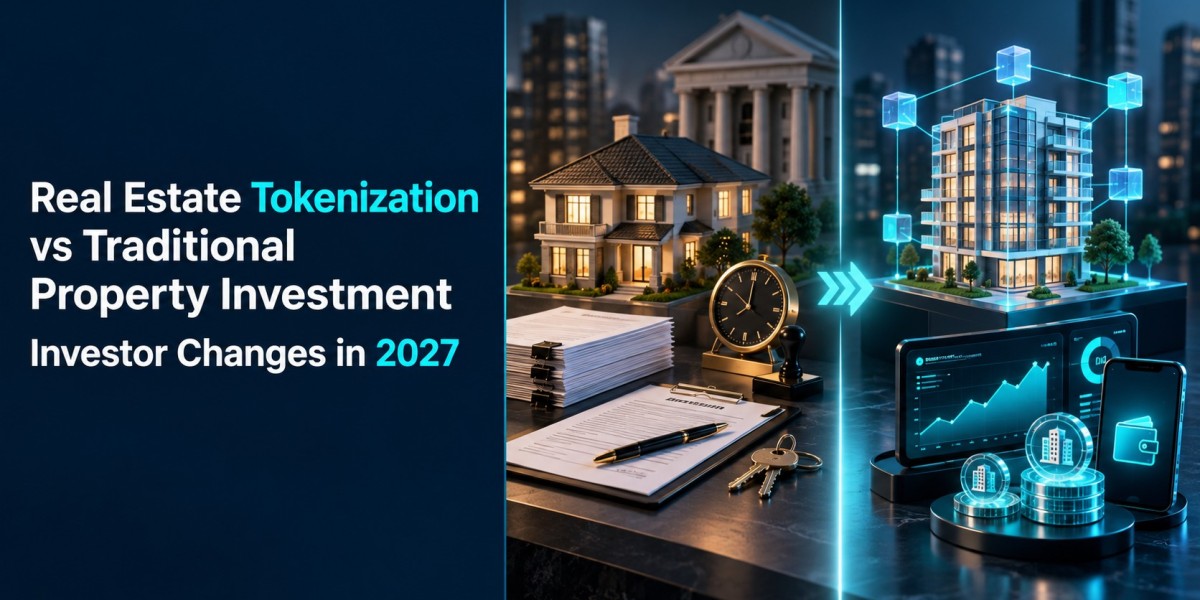

Real estate has traditionally been viewed as a long-term investment where buyers purchase physical properties, hold them for several years, collect rental income, and eventually sell them for a possible gain. While this model continues to attract investors, digital asset infrastructure is introducing another way to participate in property markets. Real estate tokenization converts rights associated with a property or property-holding entity into digital tokens that can be issued, transferred, and recorded through blockchain networks.
By 2027, investors could see a wider choice between conventional property ownership and tokenized property exposure. The difference may involve how investors enter a deal, how ownership records are handled, how transfers occur, how income is distributed, and how investors monitor their holdings. Neither approach is suitable for every investor, since legal structures, property quality, market conditions, taxation, liquidity, and investor eligibility can differ significantly.
How Traditional Property Investment Works
Traditional property investment generally involves purchasing an entire property or obtaining an ownership interest through a legal entity. Investors may purchase residential units, commercial buildings, land, warehouses, hospitality properties, or development projects. The investment often requires a considerable amount of capital, particularly when an investor wants direct ownership of a property.
The process normally includes property selection, legal due diligence, financing, documentation, registration, payment, possession, and ongoing property management. Investors may receive rental income while holding the property and may benefit from an increase in market value when they sell. However, selling a property can take weeks or months because buyers must conduct their own assessment, arrange financing, complete legal procedures, and register the transfer.
Traditional ownership can also involve costs beyond the purchase price. Maintenance, insurance, property taxes, brokerage fees, legal expenses, management charges, and financing costs can influence the actual return. Investors therefore need to evaluate the full cost of holding a property rather than focusing only on its expected market value.
What Real Estate Tokenization Could Change
Real estate tokenization introduces a digital representation of ownership rights, economic interests, or claims connected with a property or property-holding structure. The exact structure depends on the jurisdiction and legal arrangement. A property may be held by a company or special-purpose vehicle, while digital tokens represent defined interests in that entity or in specific economic rights.
A real estate tokenization company may provide the technology and services needed to issue these tokens, manage investor records, connect eligible investors, and support transactions. In some models, investors could purchase smaller token positions rather than acquiring an entire property.
This could change the minimum amount required to participate in certain property opportunities. For example, instead of purchasing a complete commercial building, an investor might purchase tokens representing a fractional interest in the underlying structure. The investment would still depend on the legal rights attached to the tokens and the performance of the underlying property.
Investment Entry Could Become More Flexible
One major difference between the two models is the potential entry size. Traditional property investment often requires substantial capital because an investor may need to acquire a whole property or a large ownership stake.
Tokenized property models can divide an investment opportunity into smaller units. A real estate asset tokenization company may create a token structure where multiple eligible investors hold portions of the same asset or property-holding entity.
For investors, this could make certain property opportunities accessible without purchasing an entire building. However, lower entry amounts do not automatically make an investment safer or more profitable. Investors still need to examine the property, legal structure, income model, fees, issuer, and risks before purchasing tokens.
Liquidity Could Be Different in 2027
Traditional real estate is often considered relatively illiquid because property sales involve significant documentation, negotiation, financing, and settlement procedures. An owner cannot normally sell a small fraction of a building whenever they want.
Tokenized property markets could offer a different transfer process. If tokens are legally transferable and supported by an appropriate marketplace, investors may have more opportunities to transfer their holdings without selling the entire underlying property.
However, tokenization does not automatically create liquidity. A token may be technically transferable while still having very few buyers. Market depth, investor participation, regulatory restrictions, trading venues, asset quality, and issuer policies will influence whether a token can actually be sold efficiently.
This distinction may become particularly important in 2027 as investors compare tokenized property offerings with traditional real estate funds, REITs, and direct ownership.
Property Income Could Be Distributed Digitally
Rental income is one of the major reasons investors purchase income-producing real estate. In traditional property investment, rental payments usually reach the property owner or management company before income is distributed to investors.
A tokenized model may use digital records and smart contracts to organize distributions according to the rights attached to token ownership. For example, rental income collected from a property could be allocated among eligible token holders based on their holdings and the terms of the investment.
The actual distribution process depends on the legal structure, banking arrangements, tax requirements, and smart contract design. Blockchain technology can record transactions, but it does not replace legal agreements or financial controls.
Ownership Records Could Become More Digital
Property ownership has traditionally depended on government registries, deeds, contracts, corporate records, and other legal documents. Tokenization introduces blockchain-based records into part of this process.
A real estate tokenization platform development project may include investor identity management, token issuance, ownership records, transfer restrictions, compliance checks, payment processing, reporting, and administrative functions.
This does not mean blockchain records automatically replace government property registries. In many jurisdictions, legal ownership still depends on established property laws and official records. The relationship between blockchain records and legal ownership therefore needs to be defined carefully.
Investor Access May Depend More on Digital Compliance
As tokenized property markets grow, investor onboarding may involve digital identity verification, anti-money laundering checks, accreditation requirements where applicable, jurisdiction restrictions, and other compliance procedures.
A real estate tokenization development company may incorporate these requirements into the platform architecture. Investors could be required to complete identity verification before purchasing or transferring certain property tokens.
By 2027, platforms may place greater attention on investor eligibility and transaction monitoring because tokenized assets can involve investors from multiple jurisdictions. The regulatory treatment of security tokens, property interests, investment contracts, and digital assets can vary considerably between countries.
Traditional Property Still Offers Direct Ownership Rights
Direct property investment has one major distinction from many tokenized models: the investor may hold direct legal ownership of the physical asset. This can provide rights related to possession, use, leasing, development, or sale depending on the property and applicable laws.
A token holder may instead own shares, units, contractual claims, or other interests associated with a legal entity holding the property. Therefore, investors should not assume that buying a property token is identical to buying the property itself.
Before investing, investors should examine the offering documents and determine exactly what the token represents. The difference between direct title and an economic interest in a property-holding entity can have significant legal and financial consequences.
Investment Costs Could Follow Different Structures
Traditional property investment can involve brokerage fees, registration charges, taxes, maintenance expenses, legal fees, financing costs, and property management expenses.
Tokenized investments may introduce another set of costs, such as platform fees, token issuance expenses, custody charges, transaction fees, compliance costs, management fees, and marketplace charges. These expenses can vary considerably between platforms and investment structures.
Businesses working on real estate tokenization platform development need to consider these costs when designing their commercial model. Investors, meanwhile, should compare the total fees rather than assuming that digital transactions will always be cheaper.
What Real Estate Token Development Could Mean for Developers
Property developers may also find new financing structures through tokenization. Instead of relying only on banks, private investors, or institutional capital, a developer could potentially create a legally compliant tokenized investment structure for an eligible investor group.
Real estate token development can involve defining token rights, creating smart contracts, arranging investor onboarding, establishing compliance rules, connecting payment systems, and preparing reporting functions.
The technology is only one part of the process. Legal structuring, property valuation, financial modelling, investor protection, taxation, and regulatory approvals remain important. A digital token cannot compensate for weak property fundamentals or an unsuitable investment structure.
How Real Estate Tokenization Platforms May Develop by 2027
A real estate tokenization platform development company may focus on several areas when preparing platforms for the 2027 market. These can include digital identity checks, token issuance, investor dashboards, asset reporting, payment processing, smart contract administration, document management, compliance controls, and secondary transfer functions.
The platform may also support different property categories. Residential buildings, commercial offices, hotels, warehouses, infrastructure projects, land, and development projects could all use different investment structures.
Businesses researching the market may compare Top real estate tokenization companies and Best real estate tokenization companies based on their technology, legal partnerships, supported jurisdictions, property types, investor onboarding processes, and platform capabilities rather than relying only on the number of projects or features offered.
What Investors Could Watch in 2027
Investors considering tokenized property may need to examine several factors before committing funds. The first is the underlying asset. A tokenized investment is still connected to a real-world property, meaning location, occupancy, rental income, debt, valuation, maintenance, and market demand remain important.
The second factor is the legal structure. Investors should understand whether they are purchasing direct property interests, shares in a company, fund units, debt instruments, revenue rights, or another type of financial interest.
The third factor is the platform and issuer. Investors may review the company's operating history, compliance arrangements, custody model, smart contract design, fees, reporting practices, and transfer policies.
Tokenization Does Not Remove Property Market Risks
Digital property investment may change the transaction process, but it does not remove the risks associated with real estate. Property values can fall. Tenants can leave. Rental income can decline. Construction projects can face delays. Interest rates can affect financing costs. Regulatory changes can affect ownership and transfers.
Technology introduces its own risks as well. Smart contract errors, cybersecurity incidents, platform failures, custody problems, and limited trading activity can affect token holders.
For this reason, investors should treat tokenized real estate as a different investment structure rather than assuming it is automatically safer or more profitable than traditional property ownership.
Traditional Investment and Tokenization Could Coexist
The development of tokenized property does not necessarily mean traditional real estate investment will disappear. Both models could serve different investor groups and investment objectives.
Direct property ownership may remain attractive to investors seeking physical assets and direct legal ownership. Traditional funds and REITs may continue serving investors who want exposure to property markets without managing individual buildings.
Tokenized real estate could become another route for investors seeking fractional participation, digital records, or alternative transfer mechanisms. The market in 2027 may therefore contain several models operating alongside one another.
What Businesses Need Before Launching a Tokenized Property Platform
Businesses considering real estate tokenization development need to begin with the legal and financial structure rather than the technology alone. The property type, ownership arrangement, investor category, target jurisdiction, token rights, income model, and transfer rules should be defined before technical development begins.
A real estate tokenization development company may then work on smart contracts, investor interfaces, compliance systems, property dashboards, payment functions, and administrative tools. The final platform should reflect the legal and financial structure of the offering.
Businesses should also evaluate whether a tokenized model genuinely adds value to their property strategy. If the target investors do not need fractional ownership or digital transfers, a conventional investment structure may remain more suitable.
Conclusion
Real estate tokenization could introduce meaningful differences in how investors access, hold, transfer, and monitor property-related investments in 2027, particularly through fractional ownership structures, digital investor records, automated income distribution, and blockchain-based transaction systems. Traditional property investment will continue to offer direct ownership and established legal processes, while tokenized models may provide another route for participating in selected real estate opportunities. The actual value of either model will depend on the underlying property, legal rights, investor protections, market conditions, fees, regulations, and platform design. Investors should therefore compare the structure behind an investment rather than focusing only on the presence of blockchain technology. Businesses planning these models also need appropriate legal, financial, compliance, and technical planning before launch. Blockchain App Factory provides Real estate tokenization development services.
FAQs
1. What is real estate tokenization?
Real estate tokenization is the process of representing ownership rights, economic interests, or other legally defined interests related to real estate through digital tokens. The structure can vary depending on the property, jurisdiction, and legal arrangement.
2. How is tokenized real estate different from traditional property investment?
Traditional property investment generally involves direct ownership of a property or an interest through established investment vehicles. Tokenized real estate can divide defined property-related interests into digital tokens that may be held and transferred by eligible investors.
3. Can tokenized real estate provide fractional ownership?
Yes, certain tokenization structures can divide an investment into smaller units. Investors may purchase a portion of the economic interest associated with a property or property-holding entity instead of purchasing the entire asset.
4. Will real estate tokens always be easy to sell?
No. Tokenization does not guarantee liquidity. The ability to sell tokens depends on applicable laws, investor demand, marketplace availability, transfer restrictions, and the structure of the tokenized investment.
5. What does a real estate tokenization company do?
A real estate tokenization company may provide services covering token design, smart contracts, platform development, investor onboarding, compliance functions, property dashboards, token issuance, and other technology-related requirements.
6. What is involved in real estate token development?
Real estate token development can include defining token rights, preparing smart contracts, integrating identity verification, setting transfer rules, connecting payment systems, creating investor interfaces, and supporting reporting functions.
7. Is tokenized property the same as owning a physical property?
Not necessarily. A token may represent shares in a property-holding company, revenue rights, debt, fund units, or another legally defined interest. Investors should review the legal documents to understand what the token actually represents.
8. What should investors check before purchasing property tokens?
Investors should examine the underlying property, legal structure, issuer, token rights, fees, income model, valuation, regulatory status, transfer conditions, custody arrangements, and potential risks before making an investment decision.
9. Why could real estate tokenization platform development grow in 2027?
Growing interest in digital ownership records, fractional investment structures, blockchain-based settlement, and online investor management could encourage businesses to consider real estate tokenization platform development. Adoption will also depend on regulation and investor demand.
10. What is a real estate asset tokenization company?
A real estate asset tokenization company generally works on converting legally defined interests in real estate assets into digital tokens and may provide technology, smart contracts, investor management, and related platform services.