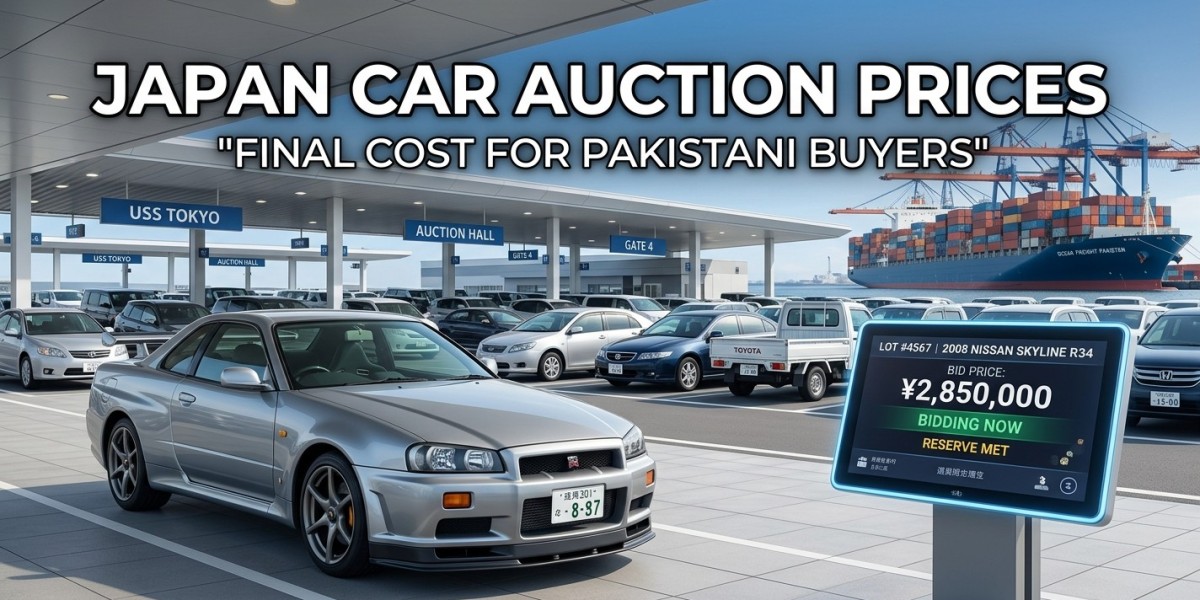

Buying a vehicle from a Japanese auction can appear straightforward when the auction listing shows an attractive price. However, the amount paid at auction is only one component of the final expense. For Pakistani buyers, the overall cost can change considerably after auction fees, inland transportation, shipping, customs duties, taxes, currency fluctuations, and registration-related expenses are considered.
Understanding this cost structure is particularly important when using a Japan car auction online for Pakistan, where buyers may initially compare vehicles based only on their hammer price. A car that appears inexpensive in Japan may not necessarily remain inexpensive after reaching Pakistan.
The Auction Price Is Only the Starting Point
The winning auction bid represents the amount paid for the vehicle at the Japanese auction. It does not normally represent the complete cost of acquiring and importing the car.
Several expenses can be added after the successful bid, including auction-related charges, documentation, inland transportation to the export port, export handling, and international shipping. Depending on the vehicle and shipping arrangement, these charges can make a noticeable difference to the final figure.
This is why Japanese car prices should be evaluated using the complete import calculation rather than the auction bid alone.
For buyers researching available options, the Japanese automobile market in Pakistan provides useful context on imported vehicles and the broader purchasing process.
1. Vehicle Model, Grade, and Specification
The vehicle itself is one of the biggest determinants of its auction price. Make, model, year, mileage, grade, engine size, transmission, drivetrain, and equipment can all influence bidding activity.
Two cars of the same model may sell for substantially different amounts because one has lower mileage, a higher auction grade, better interior condition, additional safety equipment, or desirable factory options.
Hybrid vehicles can also have different pricing dynamics because buyers consider fuel economy, battery condition, specification, and market demand alongside the vehicle's age and mileage.
Consequently, comparing cars solely by model name can produce a misleading estimate.
2. Auction Grade and Vehicle Condition
Japanese auction sheets contain information that can materially affect the value of a vehicle. Exterior condition, interior condition, accident history, repair history, mileage, rust, paint quality, and mechanical observations all matter.
A vehicle with an attractive auction price may require closer scrutiny if the auction sheet identifies previous repairs or other defects. Conversely, a cleaner vehicle with a stronger grade may command a higher auction price but potentially involve fewer risks after purchase.
For this reason, the auction car price Japan should always be considered alongside the vehicle's grade, condition, mileage, and inspection information.
3. Auction and Export-Related Charges
After winning a vehicle, buyers may encounter several charges associated with purchasing and exporting it from Japan. These can include auction fees, documentation charges, inland transportation, port handling, and other export-related costs.
The exact amount depends on the auction, vehicle location, shipping arrangement, and exporter. Therefore, a quotation based only on the winning bid does not provide a complete picture of the purchase.
A transparent cost breakdown should distinguish the vehicle price from subsequent fees so that buyers can identify where the money is going.
4. Shipping From Japan to Pakistan
International freight is another major component of the landed cost. Shipping charges can vary according to the vehicle, port, shipping method, departure location, and prevailing freight rates.
A car purchased at a relatively low auction price can therefore have a considerably different final cost depending on its logistics arrangements.
Shipping estimates should also be considered in relation to the destination port and any additional transportation required after the vehicle arrives in Pakistan.
5. Customs Duties and Taxes in Pakistan
Customs duties and taxes can have a substantial effect on the final import cost. Pakistan's customs valuation framework considers the customs value of imported goods, and the valuation process can include relevant transportation, handling, and insurance components under applicable rules.
The applicable duty and tax structure depends on factors such as vehicle type, engine capacity, age, import scheme, and other applicable regulations.
The Federal Board of Revenue states that Pakistani nationals residing abroad can import certain used vehicles under Personal Baggage, Gift, and Transfer of Residence schemes, subject to the applicable conditions. Its published guidance also specifies age limits and duty-and-tax structures for eligible vehicles.
Because customs rules and applicable notifications can change, buyers should verify the current requirements before committing to a purchase. FBR's active import SRO listings show that customs-related notifications and amendments continue to be issued.
6. Japanese Yen to Pakistani Rupee Exchange Rates
Currency movements can quietly alter the final cost of an imported vehicle. Japanese auctions operate in yen, while Pakistani buyers ultimately calculate their expenditure in rupees.
If the yen strengthens against the rupee between quotation and payment, the rupee equivalent of the vehicle and related charges can increase. Conversely, a more favorable exchange rate can reduce the local-currency cost.
This makes Japan car rates difficult to treat as permanently fixed figures. Buyers should consider the exchange rate used in the quotation and whether additional currency conversion charges apply.
7. Port, Documentation, and Registration Expenses
The landed price does not necessarily end when the vehicle reaches a Pakistani port. Documentation, customs processing, port-related charges, clearing services, registration, and other local expenses may also contribute to the total expenditure.
These costs vary according to the vehicle, import route, location, and applicable regulations. A realistic budget should therefore include a contingency rather than assuming that the auction price plus shipping represents the complete amount required.
How Pakistani Buyers Should Calculate the Real Cost
A practical calculation can be divided into several stages:
Auction purchase price + auction/export charges + inland transportation in Japan + shipping + insurance where applicable + customs duties and taxes + port/clearing expenses + registration and local costs = estimated final expenditure.
This approach gives buyers a much clearer picture than comparing auction bids alone.
For example, a vehicle with a lower auction bid may become more expensive after freight, taxes, and other charges are included. Another vehicle with a slightly higher auction price may produce a more predictable overall budget because of its condition, specifications, or logistics.
Final Thoughts
Japan car auction prices are shaped by far more than the number displayed beside a vehicle in an auction listing. Vehicle condition, grade, mileage, specifications, auction charges, inland transportation, international freight, currency movements, customs valuation, duties, taxes, and local expenses can all influence the amount ultimately paid in Pakistan.
The most reliable approach is to evaluate the complete import cost rather than focusing on the auction bid alone. Buyers who understand each stage of the calculation can compare vehicles more rationally, establish a realistic budget, and reduce the possibility of unexpected expenses after the purchase.
In a market where Japanese imports remain an important option for Pakistani motorists, understanding the difference between an auction price and a true landed cost is essential for making an informed purchasing decision.