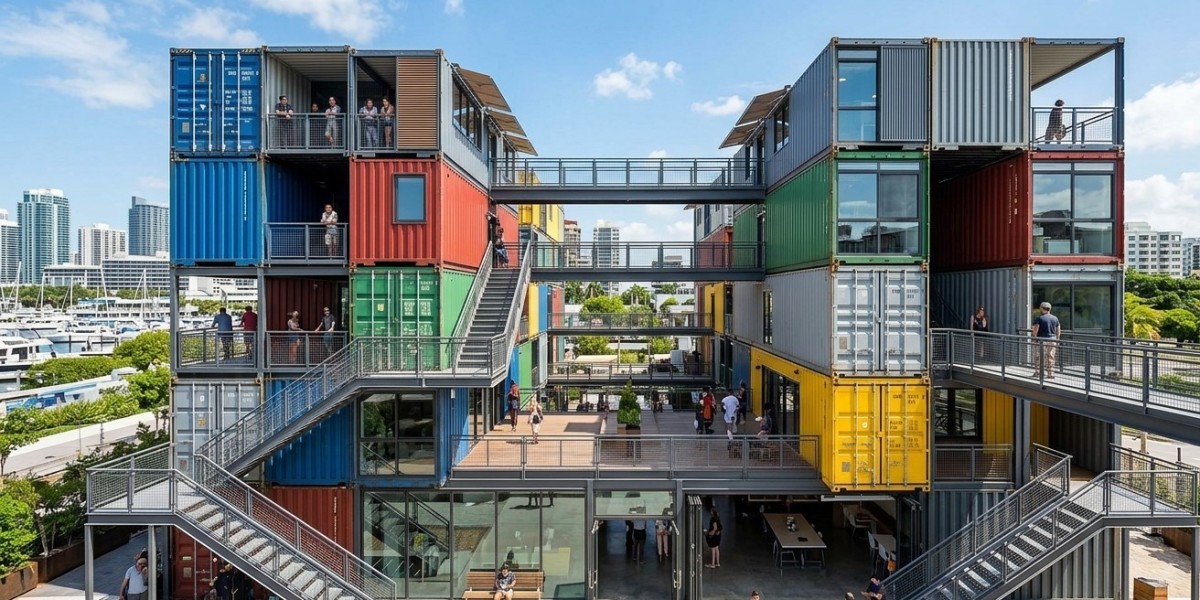

Yes, multiple shipping containers can be combined to create a larger, more flexible space. By positioning containers side by side, end to end, or in other planned configurations, property owners and businesses can create larger offices, classrooms, workshops, retail spaces, storage facilities, and other structures.
This approach can be useful when a single container does not provide enough room. Instead of relying on one large unit, multiple containers can be arranged according to the available site and the requirements of the project.
Whether you are researching shipping containers for sale , searching for a shipping container for sale near me , or comparing storage containers for sale , it is important to understand how connected-container projects work. Conex Hub offers new, used, and custom-fabricated shipping containers that can be adapted for different applications.
Table of Contents
- Can Shipping Containers Be Connected?
- Why Connect Multiple Shipping Containers?
- How are the containers arranged?
- Side-by-Side Container Configurations
- End-to-End Configurations
- Connecting Containers With Openings
- Structural Considerations
- Insulation and Weatherproofing
- Electrical, Plumbing, and HVAC Systems
- Planning the Interior Layout
- Choosing the Right Containers
- Common Mistakes to Avoid
- FAQs
- Final Thoughts
- Get Started With Conex Hub
Can Shipping Containers Be Connected?
Multiple shipping containers can be combined to create a larger usable area. However, connecting containers is more involved than simply placing two units next to each other.
If the containers are intended to function as one larger interior space, modifications may be required. These can include cutting openings into the container walls, installing doors or windows, adding structural reinforcement, sealing connections, and creating appropriate interior finishes.
The complexity depends on the project design and how the containers will be used.
For example, two containers may remain largely independent while sharing an exterior area, or they can be extensively modified to create a connected interior space.
Why Connect Multiple Shipping Containers?
Combining containers can provide flexibility when a single container is too small.
Create More Floor Space
A single 20-foot or 40-foot container may not provide enough room for a larger operation. Combining multiple units can increase the available floor area.
Flexible Design
Containers can be arranged in different configurations depending on the property and intended use.
Expand Over Time
A project can potentially start with one or two containers and expand later if the site and design allow it.
Separate Different Functions
Multiple containers can also be used for separate purposes. For example, one unit could serve as an office while another provides storage or equipment space.
Conex Hub offers container office configurations in 20-foot and 40-foot sizes, including single- and multi-room layouts, demonstrating how container-based spaces can be configured for different needs.
How Are Containers Arranged?
There are several common ways to position multiple containers.
Side by Side
Two containers can be positioned next to each other to create a wider structure. With appropriate modifications, sections of the adjacent walls can be opened to connect the interiors.
This configuration can work well for:
- Offices
- Classrooms
- Training rooms
- Retail spaces
- Workshops
- Larger storage areas
End to End
Containers can also be positioned lengthwise, creating a longer space.
This can be useful when the property is narrow but has more available length.
Parallel Layouts
Several containers can be arranged in parallel with a shared exterior area or walkway between them. This can create separate rooms or departments while keeping the units close together.
Stacked Configurations
In some projects, containers can be arranged vertically to create multiple levels. However, stacking and structural modifications require professional engineering and careful planning.
Side-by-Side Container Configurations
Side-by-side layouts are particularly useful when you want to create a wider interior space.
For example, two 20-foot containers placed next to each other can provide more width than one container. If the dividing walls are modified appropriately, the resulting layout can feel more like a conventional building.
However, removing sections of container walls can affect structural integrity. Reinforcement may be required, depending on the size and location of the opening.
This is why major modifications should be designed and performed by qualified professionals.
End-to-End Configurations
End-to-end arrangements can create longer spaces without necessarily requiring extensive side-wall modifications.
For example, two containers can be positioned with their ends facing each other. A suitable opening can then be created between the units if a continuous interior is required.
This configuration may be useful for:
- Long workshops
- Storage facilities
- Offices
- Training areas
- Equipment spaces
The connection point needs to be properly sealed and designed to prevent water infiltration.
Connecting Containers With Openings
If you want to create one continuous interior space, openings may need to be cut into the walls.
Potential modifications include:
- Large connecting openings
- Personnel doors
- Windows
- Roll-up doors
- Interior doorways
However, container walls contribute to the overall structure of the unit. Cutting large sections without appropriate reinforcement can create structural problems.
A qualified engineer or experienced container modification professional should determine how openings can be created safely.
Structural Considerations
Structural planning is one of the most important parts of a multi-container project.
Shipping containers are designed with strong structural frames, but their walls and components work together as part of the original design.
Major modifications can change how loads are transferred through the container.
Before connecting containers, consider:
- The size of planned openings
- Roof loads
- Foundation conditions
- Wind loads
- Local building requirements
- Connections between units
- Reinforcement requirements
- Whether containers will be stacked
For complex projects, professional structural engineering should be part of the planning process.
Conex Hub offers custom engineering and modified container solutions for specialized applications, including custom door configurations and reinforced components.
Insulation and Weatherproofing
Connecting containers creates additional areas that need to be properly sealed and insulated.
Steel containers can transfer heat and cold, so insulation should be considered when creating occupied spaces.
A connected structure may require insulation in:
- Exterior walls
- Roofs
- Floors
- Connection areas
- Modified openings
The connection between containers should also be weatherproofed carefully to prevent water and air infiltration.
For year-round offices, classrooms, or other occupied spaces, insulation should be coordinated with the HVAC and ventilation system.
Electrical, Plumbing, and HVAC Systems
A larger container structure may require systems similar to those used in conventional buildings.
Depending on the intended use, you may need:
- Electrical outlets
- Lighting
- HVAC
- Ventilation
- Plumbing
- Internet connections
- Fire and life-safety systems
Plan these systems before completing the interior finishes. Doing so can make it easier to route wiring, ducts, pipes, and other components.
Electrical and plumbing work should be performed by qualified professionals according to applicable codes and requirements.
Planning the Interior Layout
Once multiple containers are connected, the interior can be designed around the purpose of the building.
For an office, you might include:
- Workstations
- Meeting areas
- Storage
- Windows
- Lighting
- Climate control
For a classroom, you may need:
- Student seating
- Instructor space
- Displays
- Storage
- Adequate lighting
- Ventilation
For a workshop, priorities may include:
- Workbenches
- Tool storage
- Electrical outlets
- Equipment access
- Ventilation
Planning the layout before modifications begin helps prevent wasted space and unnecessary changes.
Choosing the Right Containers
The containers you select can affect the entire project.
20-Foot Containers
20-foot containers can be useful for smaller connected structures. Conex Hub describes its 20-foot containers as suitable for storage, shipping, and modification.
40-Foot Containers
40-foot containers provide substantially more length and can reduce the number of units needed for larger projects.
High-Cube Containers
High-cube containers provide additional interior height and can be useful for office, workspace, or other conversion projects.
New or Used Containers
New one-trip containers arrive in near-new condition and can be attractive for projects requiring clean, modification-ready units. Used containers can also be considered when their condition is appropriate for the planned application.
When comparing shipping containers for sale, look at the condition, dimensions, structural condition, modification requirements, and delivery logistics rather than focusing only on the initial purchase price.
Common Mistakes to Avoid
Removing Too Much Steel
Large openings can affect structural integrity if they are not properly engineered and reinforced.
Ignoring Water Sealing
Connections and modified openings need appropriate weatherproofing.
Forgetting Site Requirements
A multi-container structure needs sufficient space for delivery, placement, access, and future maintenance.
Planning Utilities Too Late
Electrical, HVAC, plumbing, and ventilation systems should be planned before interior finishes are installed.
Choosing Containers Without a Design Plan
Selecting containers first and designing later can result in unnecessary modifications or an inefficient layout.
Ignoring Local Regulations
Depending on the project and location, permits, zoning requirements, building codes, and other approvals may apply.
FAQs
Can two shipping containers be connected?
Yes. Two containers can be positioned together and modified to create a larger usable space. The connection method depends on the intended design.
Can you remove the walls between shipping containers?
Sections of container walls can be removed for openings, but major structural modifications should be properly engineered and reinforced.
Can three or more shipping containers be connected?
Yes. Multiple containers can be arranged into larger structures, subject to appropriate structural design, site requirements, and local regulations.
Can connected containers be used as an office?
Yes. Containers can be modified into office spaces with features such as doors, windows, lighting, climate control, and multiple-room layouts.
Can shipping containers be connected side by side?
Yes. Side-by-side arrangements are commonly considered when a wider interior space is desired. Structural reinforcement may be necessary when connecting the interiors.
Are connected shipping containers waterproof?
They can be made weather-resistant, but connections, modified walls, doors, windows, and roofing areas need to be properly sealed and constructed.
Do I need a permit to connect shipping containers?
Requirements vary by location and intended use. Check with the appropriate local building and planning authorities before beginning the project.
Final Thoughts
Connecting multiple shipping containers can transform individual units into a larger and more flexible space. Whether you need an office, classroom, workshop, training facility, retail space, or expanded storage area, multiple containers can provide a modular approach to creating additional usable space.
The key is proper planning. Consider the container sizes, layout, structural modifications, insulation, weatherproofing, utilities, site conditions, and local requirements before beginning the project.
If you are researching shipping containers for sale , consider how many units your project requires and whether you need standard, high-cube, or modified containers. If you are searching for a shipping container for sale near me , also consider delivery access and site preparation. For customers comparing storage containers for sale , connecting multiple units may provide an alternative when one container does not provide enough capacity.
Get Started With Conex Hub
Planning a larger container project? Conex Hub offers new, used, and custom-fabricated shipping containers for storage, offices, construction, commercial applications, and specialized projects.
Determine your required floor space, container sizes, layout, and modifications before ordering. Contact Conex Hub to discuss your project requirements and explore available container options.