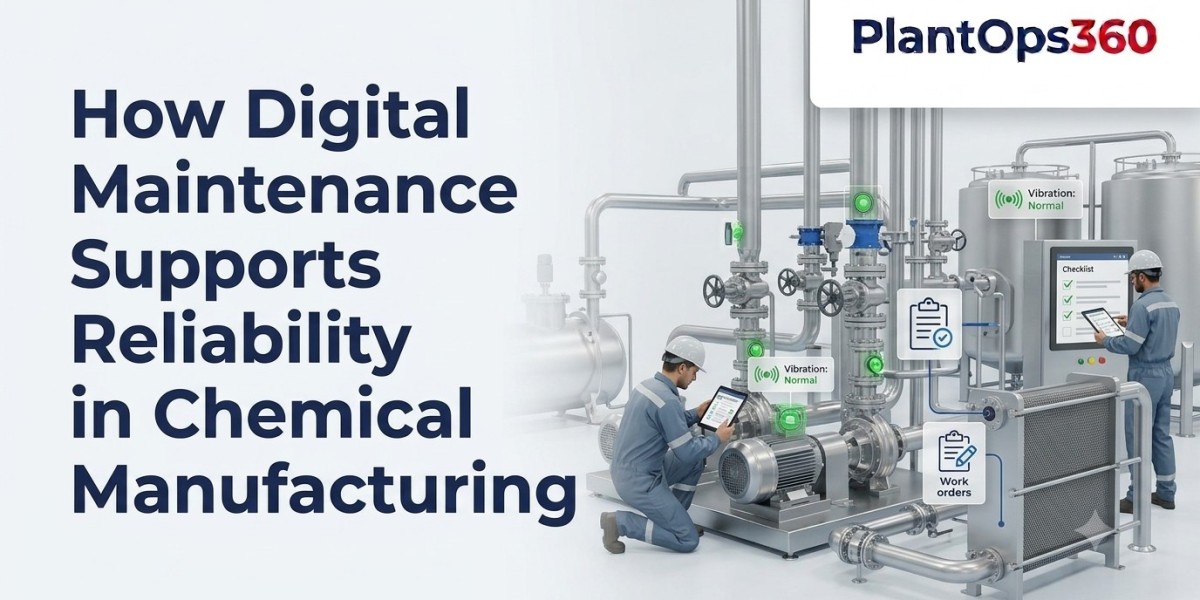

Reliable equipment is essential in chemical manufacturing. A pump failure, leaking seal, faulty valve, or unexpected compressor shutdown can interrupt production and create additional operational risks.
A chemical plant CMMS helps maintenance teams replace scattered records and reactive processes with a structured digital system. It brings preventive maintenance, work orders, inspections, equipment history, and spare-parts information together, helping teams identify problems earlier and manage critical assets more consistently.
Why Is Maintenance Reliability Important in Chemical Manufacturing?
Chemical plants often depend on continuous or tightly controlled processes. Equipment must operate consistently to maintain production schedules and process conditions.
Maintenance teams may be responsible for assets such as:
Pumps
Compressors
Reactors
Heat exchangers
Storage tanks
Piping systems
Valves
Agitators
Utility equipment
Sensors and instruments
When these assets fail unexpectedly, the effect can extend beyond a single maintenance job.
Reliable maintenance therefore requires more than fixing equipment after breakdowns. Teams need structured inspections, preventive tasks, accurate records, and clear responsibility.
What Is Digital Maintenance in a Chemical Plant?
Digital maintenance means managing maintenance activities through connected software rather than relying mainly on paper forms, spreadsheets, phone calls, or individual records.
A chemical plant CMMS provides one place to manage maintenance information across assets and departments.
Teams can use it to record:
Maintenance requests
Preventive maintenance schedules
Breakdown work orders
Inspection results
Equipment history
Technician activities
Spare-parts usage
Maintenance documents
Digital records also make it easier to understand what has happened to an asset throughout its operating life.
How Does a Chemical Plant CMMS Improve Equipment Reliability?
Reliability improves when maintenance teams have better information and can act before small problems become major failures.
Preventive Maintenance Becomes Easier to Control
Critical equipment often requires routine inspection, lubrication, cleaning, testing, adjustment, or component replacement.
Managing hundreds of recurring tasks manually can result in missed schedules.
A chemical plant CMMS can organize preventive maintenance according to defined frequencies and help teams see upcoming or overdue work.
This creates a more consistent maintenance process.
Equipment History Helps Identify Repeat Problems
A pump that fails once may need a repair. A pump that develops the same problem repeatedly needs deeper investigation.
Digital equipment history can show:
Previous failures
Repairs completed
Parts replaced
Inspection findings
Maintenance frequency
Technician notes
This information gives reliability teams a better basis for root-cause analysis.
How Can Digital Work Orders Improve Maintenance Response?
Work orders create structure around maintenance activities.
When a fault is identified, a digital work order can record the asset, problem, priority, technician, actions taken, and completion details.
This improves visibility for supervisors because they can see which jobs are:
Newly reported
Waiting for assignment
In progress
Delayed
Completed
A structured workflow also reduces dependence on verbal communication and separate messages between departments.
Can Digital Maintenance Support Mechanical Integrity?
Mechanical integrity depends on maintaining important process equipment in suitable operating condition.
A chemical plant CMMS can support this effort by helping teams schedule inspections, record maintenance activity, retain equipment history, and track corrective actions.
For example, if an inspection identifies abnormal vibration, corrosion, leakage, or another equipment condition, teams can create a maintenance action and maintain a record of how the issue was addressed.
Digital systems do not replace engineering procedures or safety requirements. They help organize the information and tasks needed to follow those processes consistently.
How Does Predictive Maintenance Fit into Chemical Plant Reliability?
Preventive maintenance works according to predefined schedules. Predictive maintenance uses condition information to identify equipment that may require attention.
Depending on the equipment, teams may monitor factors such as:
Vibration
Temperature
Pressure
Flow
Current
Equipment condition trends
For example, changing vibration patterns on rotating equipment may prompt maintenance teams to investigate before a breakdown occurs.
A chemical plant CMMS can combine condition information with work history, inspections, and maintenance schedules to provide a broader view of equipment health.
Why Are Spare Parts Important for Reliability?
Maintenance cannot be completed quickly if the required spare part is unavailable.
Chemical plants may need critical seals, bearings, valves, gaskets, filters, and other components to restore equipment safely and efficiently.
Connecting spare-parts information with maintenance activity can help teams understand:
Which parts are frequently used
Which assets use each part
Current stock availability
Which spares are critical
When replenishment may be needed
Better materials visibility can reduce delays caused by discovering a stockout after a repair has already started.
What Should You Look for in a Chemical Plant CMMS?
The best system should support the actual maintenance workflow used on the plant floor.
Important capabilities may include:
Preventive maintenance scheduling
Corrective work orders
Asset hierarchy
Inspection checklists
Equipment history
Mobile access
Spare-parts tracking
Document management
Alerts and notifications
Maintenance dashboards
Predictive maintenance support
The software should also be simple enough for technicians and supervisors to update consistently.
Frequently Asked Questions
Can a CMMS manage maintenance across multiple chemical plant locations?
Yes. Many modern systems can organize assets, users, work orders, and maintenance records by plant, area, department, or location.
Can maintenance teams attach inspection photos to work orders?
Yes. Digital maintenance systems can allow technicians to attach photos, documents, or notes to provide clearer evidence of equipment condition and completed work.
Should every chemical plant asset have the same maintenance schedule?
No. Maintenance frequency should depend on equipment type, criticality, operating conditions, manufacturer guidance, maintenance history, and applicable plant procedures.
Can a CMMS help with shutdown maintenance planning?
Yes. Maintenance teams can use equipment history, pending work, inspection findings, and planned tasks to identify activities that should be completed during scheduled shutdowns.
Conclusion: Build Reliability Through Better Maintenance Information
Chemical manufacturing reliability depends on knowing equipment condition, completing maintenance at the right time, and maintaining accurate records of what has been done.
Digital maintenance helps teams move from disconnected information toward a more structured approach involving preventive maintenance, work orders, inspections, equipment history, and spare-parts planning.
If your plant wants better visibility into critical equipment and maintenance activities, explore PlantOps360 chemical plant CMMS to create a more connected and reliable maintenance process.