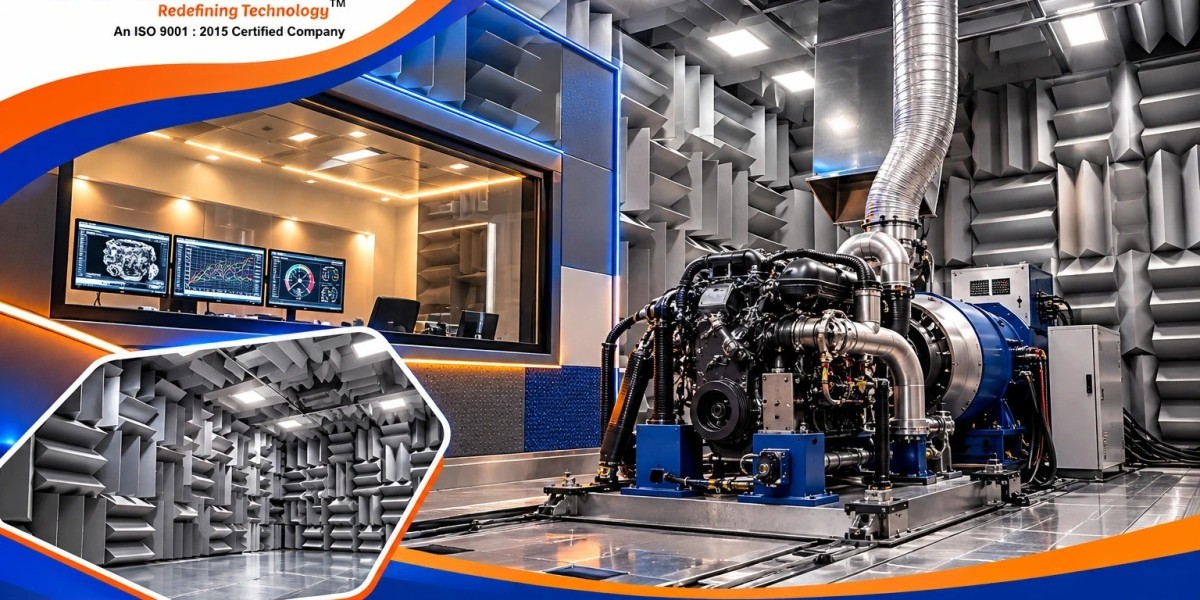

Even a well-built testing room develops quirks over time. Readings wander, the room gets hotter than it should, or someone in the next office starts complaining about a low rumble. The good news is that most issues have clear causes and practical fixes. This guide walks through the most common problems found in an engine dyno test cell and how to approach each one calmly.
Problem One: Too Much Noise Outside the Cell
If sound is escaping from your engine dyno test cell, do not guess. Walk the boundary of the room during a run and listen closely. Noise usually leaks from a handful of places: worn door seals, gaps around cable and pipe entries, thin sections of wall, ventilation openings and the exhaust route.
Start with the easy repairs. Replace damaged door gaskets, seal penetrations with proper acoustic sealant and check that observation windows are fitted tightly. If the leak is coming through ducts, the silencers may be undersized or clogged, which is a bigger job. In an engine dyno test cell, low-frequency sound is the hardest to control because it passes through light structures easily. That is where heavier construction and well-designed silencers earn their cost.
Problem Two: Vibration Traveling Into the Building
A faint hum in the floor or shaking shelves nearby points to a vibration path. Check the dynamometer bed and engine mounts first. Perished rubber, loose bolts or a bridged isolation gap, where debris or a rigid pipe connects the bed to the surrounding slab, can undo good design. Flexible connections on fuel, coolant and exhaust lines help stop vibration from sneaking along pipework.
Also confirm the engine and dynamometer are properly aligned. Misalignment creates extra shaking, wears couplings and can also spoil test data.
Problem Three: The Cell Runs Too Hot
Heat builds in an engine dyno test cell when airflow is short of what the engine needs. Common causes include blocked filters, weak fans, closed dampers or an exhaust leak inside the room. Measure supply and extraction rates and compare them with the original design. Pay attention to how the cell behaves during long, high-load runs rather than short checks, since problems often appear only after an hour or two.
Rising cell temperature also changes engine behavior. Denser or thinner intake air alters power output, so an overheating room can quietly distort your results.
Problem Four: Data That Drifts or Will Not Repeat
If the same test gives different numbers on different days, look at the basics before blaming the engine. Sensors need regular calibration. Loose connectors and damaged cable shielding introduce electrical noise. Changes in intake air temperature, humidity or fuel quality can also shift results. Keep a simple log of ambient conditions for every test so patterns are easy to spot.
Problem Five: Fumes and Pressure Imbalance
If you notice exhaust smell near the control room or find doors hard to open, the pressure balance is off. The supply and extraction fans may be out of step, or a filter may be restricting flow. Check gas detectors, confirm exhaust routing is intact and rebalance the airflow with a qualified technician.
When to Call a Specialist
Some engine dyno test cell issues go beyond routine maintenance. Persistent noise complaints, structural vibration or a cell that no longer meets its noise targets often need expert measurement and redesign. Ecotone Systems works in acoustic engineering for industrial environments, so its background is relevant when sound and vibration are the main concerns. Ecotone Systems can help you find the actual source of a problem instead of treating symptoms one by one, and Ecotone Systems can also advise on upgrades to enclosures and silencers where the original design falls short.
Build a Simple Preventive Routine
Prevention is cheaper than repair. A short monthly checklist goes a long way: inspect seals and mounts, clean filters, test alarms and emergency stops, review calibration dates and record noise readings at a fixed spot. Over months, those readings show whether the engine dyno test cell is holding steady or quietly slipping.
Final Thoughts
A reliable engine dyno test cell is the result of good design plus steady care. Find noise leaks by inspection, protect the building from vibration, keep airflow healthy and treat data drift as a signal, not an annoyance. When the problem runs deeper than a quick fix, bringing in acoustic specialists such as Ecotone Systems can save time, money and frustration.