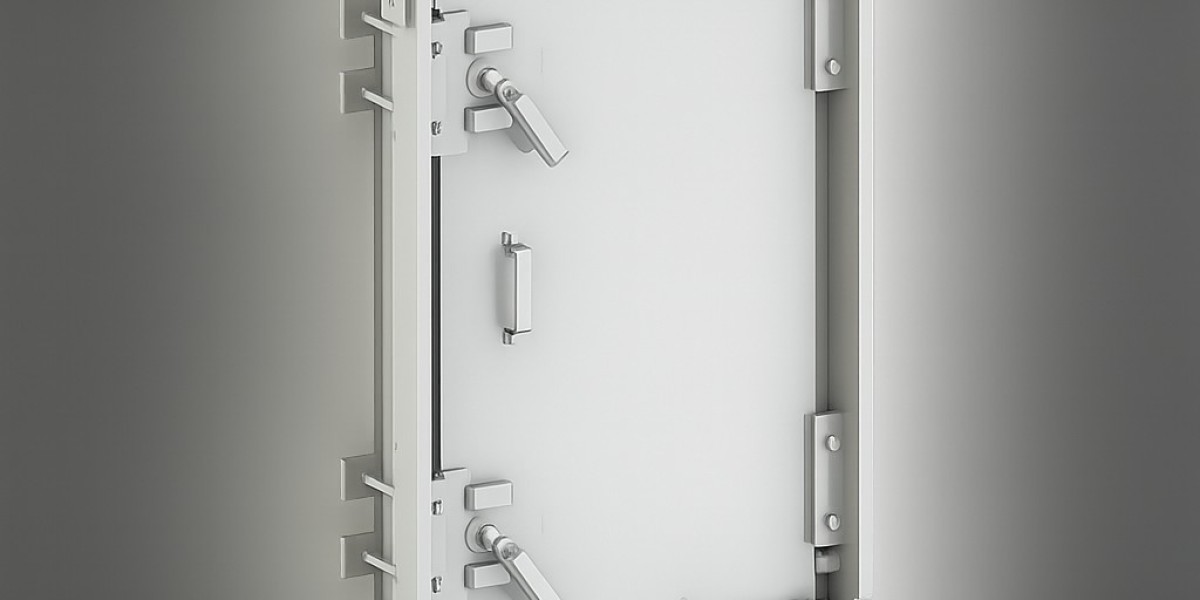

If even a minor leak develops around the frame or compression gasket, hazardous gases can escape into adjoining areas. This is why selecting a high-quality Gas tight door is essential for CBRN shelters, military bunkers, nuclear facilities, and hazardous industrial environments where containment cannot be compromised.
A gas-tight door is far more than a reinforced steel barrier. It is a precision-engineered safety system designed to maintain airtight integrity under pressure while integrating with critical protection systems. Its engineering quality directly affects personnel safety, environmental protection, and long-term operational reliability.
What Defines a High-Quality Gas Tight Door?
A Gas tight door is engineered to prevent hazardous gases, radioactive particles, toxic chemicals, and biological contaminants from passing between protected and unprotected spaces.
Unlike conventional industrial doors, high-performance gas-tight doors combine reinforced structural construction with precision sealing technology capable of maintaining verified airtight performance throughout years of continuous operation.
Key engineering elements include:
Reinforced steel door leaf
Heavy-duty structural frame
Precision compression gasket seals
Multi-point locking system
Corrosion-resistant protective finish
Heavy-duty hinges and hardware
Professional Gas tight door design ensures that every component works together to provide uniform gasket compression and long-term structural stability.
Why Compression Gasket Seals Matter
The most important feature of any gas-tight door is its sealing mechanism.
Instead of relying on conventional weather seals, gas-tight doors use specially engineered compression gaskets. When the locking system is engaged, the gasket compresses evenly around the entire door perimeter, creating a continuous airtight barrier.
Uniform compression eliminates leakage paths that could allow hazardous contaminants to bypass filtration systems.
Maintaining Pressure Differential for Facility Protection
Many critical facilities depend on pressure-controlled environments to prevent contamination.
CBRN shelters generally operate under positive pressure so contaminated outside air cannot enter protected areas. Biological laboratories and hazardous chemical facilities often use negative pressure to ensure dangerous substances remain contained.
Properly engineered Gas tight door systems maintain these pressure differentials without compromising airtight integrity.
Reliable systems undergo performance evaluations that typically include:
Air leakage rate testing
Pressure retention verification
Compression seal inspection
Operational cycle testing
Structural performance assessment
Functional inspection of locking mechanisms
These tests verify consistent sealing performance under realistic operating conditions.
Frame Engineering and Wall Integration
Door performance depends just as much on installation quality as manufacturing precision.
The frame must be securely anchored to the surrounding structure while maintaining continuous airtight sealing throughout the wall interface.
Critical installation considerations include:
Reinforced anchor systems
Precision frame alignment
Continuous perimeter sealing
Structural wall integration
Concrete interface detailing
Long-term dimensional stability
Improper frame installation remains one of the most common causes of air leakage in containment facilities.
Compatibility with Blast, Fire, and CBRN Protection
Modern high-security infrastructure combines multiple protective systems into a single engineered solution.
A Gas tight door for CBRN shelters is frequently integrated with blast-resistant structures, fire-rated assemblies, and advanced filtration equipment to provide comprehensive facility protection.
These integrated systems often include:
Blast-resistant barriers
Fire-rated door assemblies
CBRN filtration systems
Airlock chambers
Emergency ventilation controls
Building management systems
Proper coordination ensures each system supports overall containment performance without creating weak points.
Locking Mechanisms and Automation
A high-quality gas-tight door requires far more than a standard locking handle.
Multi-point compression locking systems distribute force evenly across the gasket, producing a reliable airtight seal while preventing localized wear.
Many facilities also integrate:
Electronic access control
Remote monitoring
Emergency release mechanisms
Door position sensors
Security management systems
Building automation integration
These technologies improve operational control while maintaining dependable containment.
Key Features of a High-Quality Gas Tight Door
When evaluating a gas-tight door, engineers should consider several performance characteristics.
Essential features include:
Proven airtight sealing performance
High structural strength
Corrosion-resistant construction
Pressure differential capability
Compatibility with blast and fire protection systems
Security-grade compression locking
Long operational lifespan
Low maintenance requirements
Certification compliance
Together, these features provide dependable protection in demanding environments.
Applications in Critical Infrastructure
Gas-tight doors are used wherever hazardous substances or controlled environments require dependable containment.
Typical applications include:
CBRN shelters and civil defense bunkers
Military command centers
Biological containment laboratories
Pharmaceutical and chemical research facilities
Chemical and petrochemical plants
Nuclear facilities
Underground infrastructure
Hazardous material storage units
In these sectors, an Airtight door for hazardous facilities must consistently perform under challenging environmental and operational conditions.
Cost and Investment Factors
The Gas tight door price depends on engineering complexity rather than simply door dimensions.
Major investment factors include:
Required sealing and leakage-rate class
Door size and configuration
Material selection and plate thickness
Frame engineering requirements
Testing and certification costs
Integration with filtration and pressure systems
Automation and access control
Installation complexity
Site-specific engineering assessments
Long-term maintenance planning
A properly engineered system typically delivers lower lifecycle costs by reducing maintenance requirements and minimizing operational risks.
Buyer's Guide: Selecting the Right Manufacturer
Choosing among Gas tight door manufacturers in India requires careful technical evaluation rather than focusing solely on initial cost.
A qualified manufacturer should demonstrate:
Extensive engineering experience
Proven airtight testing capability
Compliance with IS, BIS, and relevant international CBRN and airtightness standards
Precision manufacturing processes
Custom engineering capability
Professional installation expertise
Comprehensive technical documentation
Reliable after-sales maintenance support
Strong industry references
As a Sigma Power Tech manufacturer and service provider, Sigma Power Tech gas tight door solutions are engineered to meet the demanding requirements of defense, nuclear, pharmaceutical, industrial, and critical infrastructure projects where long-term containment reliability is essential.
Common Mistakes to Avoid
Several specification errors can reduce long-term performance and safety.
Avoid these common mistakes:
Selecting products based only on purchase price
Ignoring pressure or leakage-rate requirements
Incorrect frame and wall integration
Underestimating corrosion or fire exposure
Skipping certification verification
Neglecting gasket inspection and maintenance
Overlooking compatibility with filtration and CBRN protection systems
Addressing these factors during the design stage significantly improves long-term reliability.
Conclusion
A high-quality Gas tight door is defined by far more than its appearance or structural strength. Its true value lies in certified airtight sealing performance, precision-engineered compression mechanisms, reliable pressure retention, proper frame integration, and compatibility with blast, fire, and CBRN protection systems. Selecting the correct sealing class, verifying engineering credentials, ensuring proper installation, and implementing regular maintenance provide lasting operational safety and dependable containment. In critical facilities where even minor air leakage can compromise protection, investing in certified engineering and long-term airtight reliability always delivers greater value than choosing the lowest upfront cost.