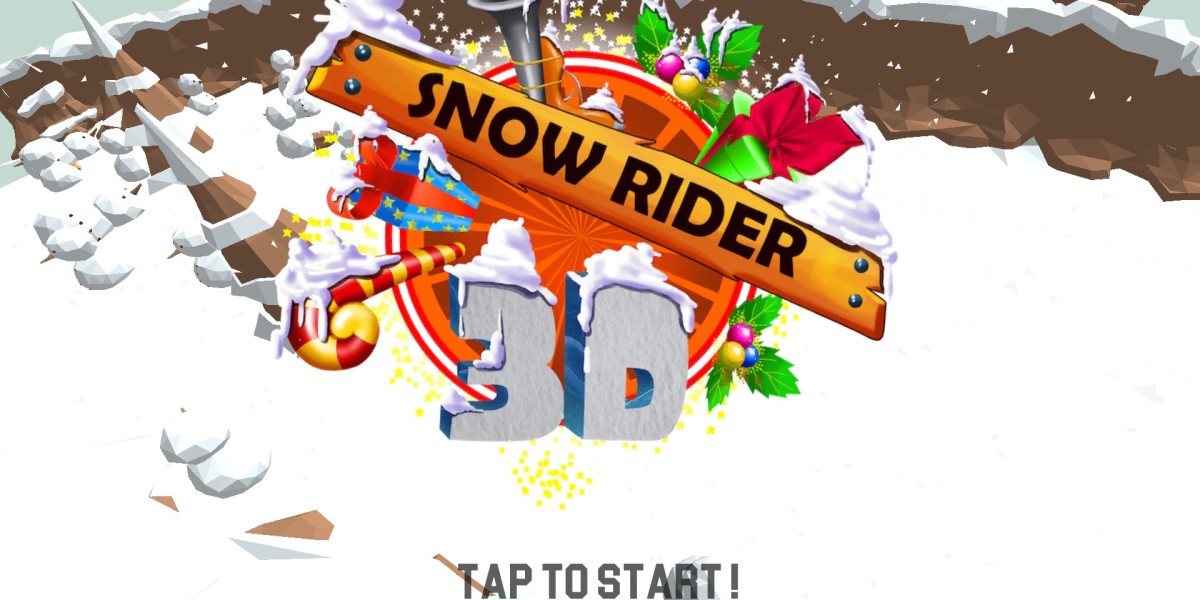

I told myself I'd play Snow Rider 3D for five minutes. That was three hours ago.
There's something about the way this game gets under your skin. You're flying down a snowy slope at ridiculous speeds, your sled cutting left and right, dodging trees that seem to multiply the faster you go. Your hands are tense on the keyboard. Your eyes are locked on the path ahead. And then—maybe ten seconds in—your sled clips a rock, tumbles spectacularly, and the run ends.
Game over. Score: nowhere close to your best.
And yet, thirty seconds later, you're doing it all over again. That's the Snow Rider effect.
The Rush of the Endless Downhill
Snow Rider 3D isn't complicated. You're sledding down endless snowy slopes, steering left and right to avoid obstacles—trees, rocks, snowmen, wooden barriers. The track keeps getting longer, the speed keeps climbing, and the hazards keep getting meaner. There's no finish line. There's no "beat this level and move on." It's pure, relentless forward momentum until you crash.
That simplicity is exactly why it hooks you.
The automatic downhill rush means you're never fighting the game itself; you're fighting the mountain and fighting your own reflexes. The moment you load in, you feel the pressure. You're already moving. The decision-making starts immediately. Every second counts. Every angle matters.
And the pacing? Merciless. Narrow sections appear out of nowhere. Gaps open up that force you to time a jump perfectly or eat snow. The difficulty doesn't ramp gradually—it punches you when you least expect it. I've had clean runs through a chaotic stretch only to get blindsided by a tight turn I didn't see coming.
That Gift Box Obsession (and Why It'll Kill Your Run)
Here's where Snow Rider gets clever and cruel at the same time: gift boxes.
These little presents are scattered down the slopes, and they're used to unlock cool new sled designs. Grab a few, and you can customize your ride. But here's the thing—going for a gift box means detouring slightly or timing a jump to grab it mid-air. That extra movement, that split-second distraction, is often the exact moment disaster strikes.
I've lost count of how many runs I've sacrificed chasing a gift box. I see it there, gleaming in the snow, and something in my brain screams, "You can make that." So I lean into it, adjust my path, jump for it... and then I'm wrapped around a tree three obstacles later.
The worst is when you're on a personal best run. You're beating your high score. The gift box is right there. And you're faced with the split-second choice: do I risk it, or do I stay conservative and lock in this score? I've made both calls. The safe call feels boring. The risky call feels alive.
Spoiler: both lead to consequences.
Survival Strategies (Learned the Hard Way)
After way too many wipeouts, I've picked up a few survival tactics that actually work:
Look ahead, not at your sled. This sounds obvious, but under pressure your eyes want to lock onto your current position. Don't. Train yourself to scan the slope 2-3 obstacles ahead. Trees cluster. Gaps appear. Snowmen are positioned to trap you. If you're reacting to what's immediately in front of you, you're already too late.
Master your jump timing. Gaps are terrifying until you realize they follow patterns. A gap always has a landing zone. Jump too early and you'll fall short. Jump too late and you'll land in the next hazard. The sweet spot exists—find it and you'll glide over sections that would destroy a panicked player.
Never target-fixate on collectibles during chaos. This is the big one. When obstacles are thick and the slope is unforgiving, that gift box isn't worth the risk. Your high score is. Stay alive first. Decorate your sled later.
Stay loose. Tension kills precision. I play best when I'm slightly relaxed, making small, deliberate adjustments rather than jerky panic-turns. Easier said than done when you're flying down a mountain, but controlling that instinct is what separates a 500-meter run from a 1000-meter run.
The Wipeouts That Haunt You
The worst moments in Snow Rider aren't the crashes themselves. They're the crashes that happen when you're milliseconds away from beating your high score.
I've had runs where I've absolutely crushed it—smooth turns, clean line, no unnecessary detours. I'm looking at a personal best. I can feel it. My score is climbing higher than it's ever been. And then, right when I'm about to lock it in, I misjudge a turn by inches and the sled goes tumbling.
That feeling of being so close and losing everything in a split second? It's brutal. But it's also why I immediately queue up another run.
Because that's the other side of Snow Rider: the satisfaction of a truly clean run through impossible chaos. When everything clicks, when the timing aligns, when you're carving down the slope like the mountain is yours—that's pure adrenaline. That's the hit that keeps you coming back.
One More Run
Snow Rider 3D is the kind of game that eats time. You blink and two hours have disappeared. You swear you're done after a bad run, and then you load in "just to try once more." Your hands are tired. Your eyes are burned. And you absolutely, positively need to beat that score.
That's the game in its purest form. Simple enough to jump into. Hard enough to respect. Addictive enough to keep you playing until 2 AM wondering how you got here.
So here's my challenge: hop on your sled. Dodge those trees. Chase that high score. And when you inevitably wipe out spectacularly, send me a message. Let's compare runs. Let's swap strategies. Let's celebrate the clean slides and laugh at the ridiculous crashes.
Because Snow Rider isn't just a game—it's a winter mountain that keeps calling you back for one more run.
Always one more run.