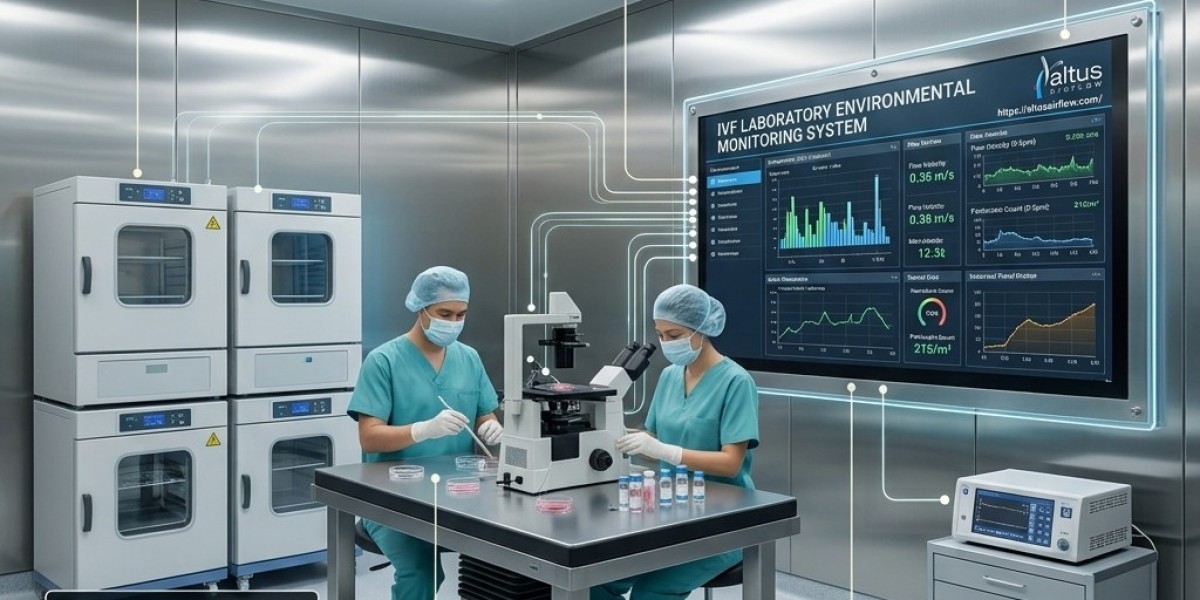

INTRODUCTION
IVF Laboratory Design involves much more than planning laboratory rooms and installing equipment. It is a specialized process that combines workflow planning, laboratory zoning, HVAC engineering, air-quality control, cleanroom construction, equipment integration, electrical and utility planning, safety systems, validation, and future expansion. A professionally planned IVF laboratory should support safe and efficient handling of reproductive cells and embryos while maintaining appropriate environmental conditions. The updated 2026 ESHRE recommendations specifically address IVF laboratory design, workflow, air quality, equipment, cryostorage, safety, traceability, and quality management.
For fertility clinics, selecting a provider capable of delivering comprehensive design and engineering services can simplify project coordination and improve the long-term functionality of the laboratory. The exact services required depend on the clinic's procedures, workload, available space, equipment, applicable regulations, and future plans.
What Is IVF Laboratory Design?
IVF laboratory design is the structured planning and engineering of a controlled environment where fertility laboratory procedures are performed.
The design process considers the relationship between:
- Embryology workflow
- Andrology activities
- Oocyte handling
- Sperm preparation
- Insemination
- ICSI
- Embryo culture
- Embryo assessment
- Biopsy and PGT-related activities
- Cryopreservation
- Sample identification
- Laboratory storage
- Staff movement
- Equipment operation
The latest ESHRE recommendations emphasize that laboratory design should optimize workflow and minimize the time reproductive cells and tissues are handled outside controlled environmental conditions.
1. Consultation and Requirement Assessment
The first service normally involves understanding the clinic's operational requirements.
The design provider may assess:
- Type of fertility procedures
- Expected patient volume
- Number of IVF cycles
- Laboratory workload
- Available floor area
- Existing infrastructure
- Equipment requirements
- Staffing requirements
- Future expansion plans
- Applicable regulations
This initial assessment establishes the technical basis for the project.
A detailed requirement study also helps avoid designing a laboratory that is either unnecessarily large or insufficient for the clinic's anticipated workload.
2. Laboratory Layout and Space Planning
Layout planning is one of the most important services.
A professional provider develops layouts showing the relationship between laboratory areas, equipment, personnel, storage, and supporting spaces.
Depending on the clinic's activities, the design may include:
- Embryology laboratory
- Andrology laboratory
- Oocyte handling area
- Sperm preparation area
- Embryo culture area
- Media preparation area
- Cryopreservation area
- Equipment rooms
- Storage
- Staff changing facilities
- Technical areas
- Administrative spaces
ESHRE recommends that technical facilities, staff areas, and storage be appropriately separated from laboratory areas used for procurement, processing, and release of human cells and tissues.
3. Workflow Planning
Workflow planning ensures that people, materials, equipment, and biological samples move through the laboratory efficiently.
The provider should consider:
- Entry and exit routes
- Clean access
- Staff movement
- Material movement
- Sample movement
- Equipment access
- Waste movement
- Relationship with procedure rooms
- Relationship with operating rooms
Ideally, the IVF laboratory should be located close to the operating room used for relevant procedures to minimize transport distances and handling time.
Good workflow planning can reduce unnecessary movement and help staff perform procedures consistently.
4. Cleanroom and Controlled-Environment Planning
IVF laboratories require careful control of their environment because reproductive cells and embryos can be sensitive to environmental conditions.
A design provider can plan:
- Controlled laboratory zones
- Cleanable surfaces
- Appropriate wall systems
- Hygienic ceilings
- Suitable flooring
- Controlled access
- Air filtration
- Pressure relationships
- Environmental monitoring
Construction materials should also be carefully selected. ESHRE recommends materials for laboratory construction, flooring, painting, and furniture that are appropriate for cleanroom environments and minimize VOC release and potential embryo toxicity.
5. HVAC Design and Integration
HVAC engineering is a major component of a professional IVF laboratory project.
The service may include planning for:
- Air-handling systems
- HEPA filtration
- Fresh-air supply
- Air changes
- Positive pressure
- Temperature control
- Humidity control
- Air distribution
- Pressure monitoring
- Environmental alarms
The updated ESHRE recommendations state that IVF laboratory air should be subject to HEPA and VOC control, with positive pressure recommended to minimize air contamination. Air cleanliness should be assessed using a risk-based approach and monitored regularly.
The HVAC system should be designed according to the actual laboratory processes rather than applying a generic specification to every fertility facility.
6. Air-Quality and VOC Control
Air quality is especially important in IVF laboratories.
A design provider may incorporate:
- HEPA filtration
- VOC-control strategies
- Appropriate fresh-air supply
- Positive-pressure arrangements
- Air-quality monitoring
- Environmental testing
- Material selection to minimize emissions
The provider should also consider the possible impact of construction materials, furniture, paints, flooring, sealants, and other products on laboratory air quality.
After construction or renovation, sufficient time may be required for off-gassing of construction materials before the laboratory becomes operational.
7. Equipment Planning and Integration
Equipment planning should be completed before construction and utility installation.
Typical equipment may include:
- IVF workstations
- Laminar-flow workstations
- Inverted microscopes
- Stereomicroscopes
- ICSI equipment
- Incubators
- Centrifuges
- Refrigerators
- Freezers
- Heated stages
- Gas systems
- Cryostorage equipment
- Environmental monitoring systems
The number of critical equipment units should correspond to laboratory workload.
ESHRE recommends that critical equipment be qualified, appropriate in number, fit for purpose, and supported by appropriate validation and maintenance procedures.
8. Electrical and Backup Power Planning
Reliable electrical infrastructure is essential because many IVF laboratory systems operate continuously.
Electrical planning may include:
- Dedicated circuits
- UPS systems
- Emergency power
- Equipment outlets
- Data connections
- Monitoring systems
- Alarm systems
- Backup systems
Critical equipment should have suitable backup arrangements.
The ESHRE recommendations specifically identify backup power as an important measure for critical laboratory equipment.
The design should also consider the electrical loads of incubators, microscopes, HVAC systems, freezers, monitoring equipment, and cryostorage systems.
9. Medical and High-Purity Gas Planning
Gas infrastructure may be required for incubators and other laboratory processes.
Design services can include:
- Gas pipeline planning
- Gas outlet positioning
- Cylinder storage arrangements
- Automatic changeover systems
- Pressure regulation
- Gas monitoring
- Alarm integration
ESHRE recommends that gas cylinders be located outside the laboratory, with appropriate automatic changeover arrangements and sufficient backup supply. High-purity or medical-grade gas and appropriate filtration are also recommended.
10. Cryostorage Facility Planning
Cryostorage requires specialized infrastructure and safety planning.
A design provider may plan:
- Dedicated cryostorage rooms
- Liquid nitrogen tank positioning
- Ventilation
- Low-oxygen monitoring
- Audible and visual alarms
- Emergency access
- Backup storage
- Monitoring systems
- Safety equipment
ESHRE recommends that cryostorage facilities be separated from the main laboratory working area while remaining close enough for efficient operation. Adequate ventilation, low-oxygen alarms, continuous tank monitoring, and backup storage capacity are important considerations.
11. Laboratory Furniture and Interior Systems
Specialized laboratory furniture should be planned around embryology activities.
Services may include:
- Laboratory workbenches
- Storage cabinets
- Equipment stands
- Workstations
- Ergonomic seating
- Specialized work surfaces
- Shelving
- Service access
Furniture materials should be compatible with the controlled laboratory environment and easy to clean and maintain.
Ergonomics are also important. ESHRE highlights workspace, bench height, seating, microscope positioning, lighting, and operator comfort as design considerations that can reduce fatigue and the risk of human error.
12. Access Control and Personnel Flow
Controlled access helps reduce unnecessary movement through the laboratory.
The design can include:
- Restricted laboratory access
- Staff changing areas
- Hand-washing facilities
- Controlled entry systems
- Clean access routes
- Material entry arrangements
ESHRE recommends restricted access to IVF laboratories and recommends dedicated areas for staff to change into laboratory clothing and perform appropriate hand hygiene before entry.
13. Environmental Monitoring
Environmental monitoring helps laboratory staff identify changes in critical conditions.
Depending on the facility, monitoring may cover:
- Temperature
- Relative humidity
- Room pressure
- Air quality
- Particle levels
- VOC levels
- Equipment temperatures
- Gas conditions
- Cryostorage conditions
Critical equipment such as incubators and cryostorage tanks should have appropriate continuous monitoring and external alarm systems.
14. Safety Planning
Safety is another important design service.
The design may address:
- Fire safety
- Electrical safety
- Gas safety
- Cryogenic safety
- Emergency exits
- Alarm systems
- Low-oxygen monitoring
- Chemical handling
- Waste management
- Emergency power
Separate areas may be required for activities involving hazardous or toxic reagents. ESHRE recommends a separate laboratory with an appropriate safety fume hood for analyses involving fixatives and other toxic reagents.
15. Testing, Validation, and Commissioning
The project should include systematic testing before laboratory handover.
Depending on the scope, this can include:
- HEPA filter integrity testing
- Airflow testing
- Pressure testing
- Temperature verification
- Humidity verification
- Particle monitoring
- VOC assessment
- HVAC performance testing
- Electrical testing
- Alarm testing
- Equipment qualification
Critical equipment may require qualification through design, installation, operational, and performance stages.
A properly documented commissioning process provides evidence that the laboratory infrastructure performs according to the approved project specifications.
16. Documentation and Compliance Support
Professional providers can prepare technical documentation such as:
- Layout drawings
- HVAC drawings
- Electrical drawings
- Utility layouts
- Equipment layouts
- Material specifications
- Testing protocols
- Commissioning reports
- Maintenance manuals
Documentation supports future maintenance, audits, upgrades, and facility management.
The applicable regulatory requirements should be identified according to the location and services provided by the fertility clinic.
17. Maintenance Planning
A good design considers maintenance from the beginning.
Maintenance planning may include:
- HVAC servicing
- HEPA filter inspection
- Airflow balancing
- Sensor calibration
- Equipment servicing
- Alarm testing
- Gas-system inspection
- Cryostorage maintenance
- Environmental testing
ESHRE recommends that maintenance of critical equipment be scheduled and documented according to supplier recommendations and laboratory quality requirements.
18. Future Expansion Planning
Fertility clinics may increase their workload or introduce additional services over time.
Design services can therefore include provisions for:
- Additional incubators
- More workstations
- Expanded cryostorage
- Additional laboratory areas
- PGT-related workflows
- Increased electrical capacity
- Additional HVAC capacity
- New monitoring systems
Planning for future expansion during the initial design can reduce the need for disruptive renovations later.
Why Comprehensive Services Matter
A complete laboratory design approach brings different engineering disciplines together.
Instead of separately hiring providers for construction, HVAC, electrical systems, filtration, utilities, and commissioning, an integrated design approach can improve coordination between these systems.
The result can be:
- Better workflow
- Improved environmental control
- Easier equipment integration
- Better maintainability
- Reduced coordination problems
- Improved safety
- Greater flexibility
- Better long-term value
The exact scope should always be developed around the clinic's procedures, workload, risk assessment, applicable standards, and regulatory requirements.
Conclusion
The services included in IVF Laboratory Design can cover consultation, workflow planning, laboratory zoning, cleanroom engineering, HVAC and air-quality control, HEPA filtration, equipment integration, electrical and backup power planning, gas systems, cryostorage, furniture, access control, environmental monitoring, safety, validation, commissioning, documentation, maintenance planning, and future expansion. The updated 2026 ESHRE recommendations provide comprehensive guidance covering laboratory organization, design, air quality, equipment, cryostorage, traceability, safety, and quality management.
Fertility clinics should select a design provider capable of coordinating these services as an integrated system rather than treating each requirement separately. Careful planning can create a laboratory environment that supports efficient embryology workflows, controlled environmental conditions, equipment reliability, staff safety, and future growth. For specialized IVF laboratory planning, engineering, and controlled-environment solutions, Altus Airflow supports fertility facilities in developing infrastructure aligned with their operational requirements.
Frequently Asked Questions
1. What services are included in IVF Laboratory Design?
Professional IVF Laboratory Design can include consultation, space planning, workflow design, laboratory zoning, HVAC engineering, HEPA filtration, air-quality control, equipment planning, electrical systems, gas systems, cryostorage planning, monitoring, validation, commissioning, documentation, and maintenance planning.
2. Does IVF Laboratory Design include HVAC planning?
Yes. IVF Laboratory Design commonly includes HVAC planning for temperature, humidity, fresh air, pressure relationships, air distribution, HEPA filtration, and environmental monitoring according to the laboratory's specific requirements.
3. Is equipment integration included in IVF Laboratory Design?
Yes. Equipment integration is an important part of IVF Laboratory Design and can include planning for incubators, microscopes, ICSI systems, laminar-flow workstations, centrifuges, refrigerators, freezers, gas systems, and cryostorage equipment.
4. Does IVF Laboratory Design include cryostorage planning?
Yes. IVF Laboratory Design can include dedicated cryostorage planning covering room location, ventilation, low-oxygen alarms, tank monitoring, backup storage, emergency access, and safety requirements.
5. Does IVF Laboratory Design include HEPA filtration?
Yes. IVF Laboratory Design can incorporate HEPA filtration and controlled airflow systems to support particulate and contamination control. The required configuration should be based on the laboratory's risk assessment and applicable requirements.
Read Our Previous Blog------>Why is professional Modular Ophthalmic OT Manufacturers important for fertility clinics?