
Retrofitting is an important engineering approach for improving the strength, safety, and performance of existing structures without automatically replacing the entire asset. As buildings, industrial facilities, commercial spaces, and infrastructure age, their condition can change because of deterioration, altered usage, increased loads, or environmental exposure. Retrofitting addresses these changes through planned structural interventions based on current condition and future requirements. This is useful when an existing facility must continue operating.
Why Existing Structures May Need Retrofitting
The need for retrofitting can become noticeable when a structure develops cracks, concrete deterioration, corrosion, deflection, weakened members, or other signs of distress. However, visible damage alone does not determine the correct solution. A proper technical assessment is necessary to understand the cause, severity, and structural significance of the problem. This makes retrofitting a design-led activity rather than simply another form of repair work alone.
Retrofitting for Industrial and Commercial Facilities
For industrial and commercial properties, structural performance can become more demanding when machinery, equipment, storage arrangements, production systems, or building functions change. A structure that was suitable for an earlier purpose may require strengthening for new operating conditions. Retrofitting services can therefore support capacity upgrades while helping owners plan improvements around existing assets, site limitations, operational requirements, and the practical need to reduce unnecessary disruption.
Retrofitting Instead of Complete Reconstruction
One of the main advantages of structural retrofitting is that it focuses on improving an existing asset instead of treating demolition and reconstruction as the only answer. Depending on the structural condition and project objectives, strengthening may be more practical when substantial portions of the existing facility remain usable. The decision should always be based on engineering assessment, feasibility, project priorities, and the condition of the structure.
Role of Retrofitting Contractors
Retrofitting contractors play an important role because structural strengthening requires more than applying a particular material to a damaged member. Contractors need to understand drawings, site conditions, work sequences, safety requirements, and the strengthening design. Coordination between assessment, engineering, procurement, and execution and project requirements is essential for successful execution. Poor sequencing or unsuitable execution can affect the intended performance of an otherwise well-designed retrofitting solution.
Structural Assessment Before Retrofitting
Before any strengthening work begins, engineers generally study the existing structure and collect relevant information about its condition and use. This can include available drawings, previous repair records, visible distress, member dimensions, reinforcement details, concrete condition, loading information, and site observations. Depending on the project, testing and further investigation may also be required to establish a reliable basis for structural decision-making for planning and execution.
Identifying the Actual Structural Problem
Structural assessment is particularly important when the reason for retrofitting is unclear. Cracks may result from several causes, while corrosion, settlement, overloading, poor construction, water ingress, or material deterioration can influence structural performance differently. Treating every crack or damaged surface with the same method can therefore be misleading. The objective is to identify the underlying issue before deciding whether repair, strengthening, rehabilitation, or a combination is appropriate.
Common Structural Strengthening Methods
For RCC structures, different strengthening approaches may be considered depending on the member and the required improvement. Column strengthening, beam strengthening, slab strengthening, foundation strengthening, steel strengthening, jacketing, and fiber-based systems can serve different engineering purposes. The selection should consider load requirements, geometry, existing reinforcement, accessibility, surrounding operations, durability conditions, and the design strategy rather than choosing a technique only because it is commonly advertised.
RCC Column Strengthening
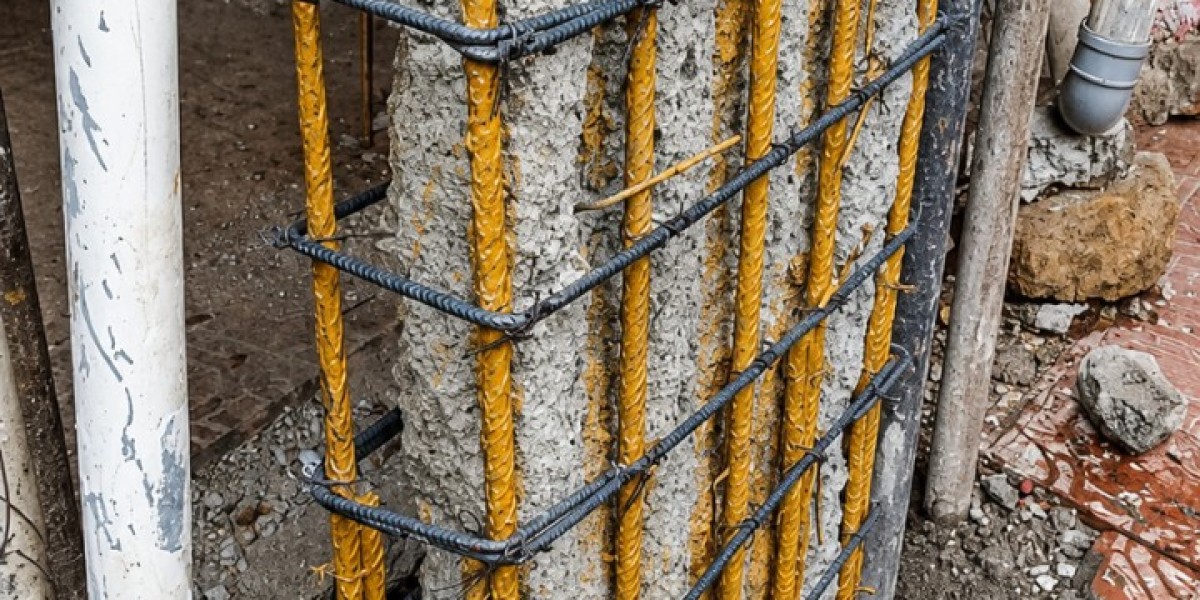
RCC column strengthening is often considered when existing columns require additional capacity, improved confinement, or correction of identified structural deficiencies. Jacketing can increase the effective size and reinforcement of an existing member when designed and executed appropriately. However, the additional section must work effectively with the existing structure. Proper surface preparation, reinforcement detailing, connection, load transfer, alignment, and curing are therefore important parts of the overall strengthening process.
Beam and Slab Strengthening
Beam and slab strengthening requires a similarly careful approach because these members respond differently to loads and structural actions. Strengthening may be required because of increased loading, changes in use, deterioration, design deficiencies, or modifications to the structure. Depending on the assessment, engineers may consider reinforced concrete, steel, fiber-based systems, or other engineered solutions. The chosen method should address the actual structural demand while remaining practical for site execution.
Foundation Strengthening and Retrofitting
Foundation strengthening is another area where retrofitting services may become necessary. Changes in building loads, settlement concerns, inadequate capacity, deterioration, or modifications above the foundation can create new structural requirements. Foundation work can be technically demanding because existing conditions are often concealed and access may be limited. Investigation, load assessment, soil-related information, and a clear strengthening strategy are important before any intervention is selected or executed.
Seismic Retrofitting for Existing Structures
Seismic retrofitting is used when an existing structure requires improved performance against earthquake-related demands. The objective is not simply to add more material but to improve the way structural components respond to expected forces and deformation. Depending on the structure, interventions may involve strengthening selected members, improving connections, modifying load paths, or addressing identified weaknesses. Seismic requirements should be evaluated through appropriate structural analysis and engineering design.
Carbon Fiber Wrapping for Strengthening
Carbon fiber wrapping and other fiber-reinforced systems can be considered where a lightweight strengthening approach is suitable. These systems may be useful when additional structural capacity is required without significantly changing the geometry of an existing member. Their application still depends on substrate condition, design requirements, detailing, bonding, environmental exposure, and installation quality. They should be treated as engineered strengthening systems rather than general-purpose repair materials.
Steel Jacketing as a Retrofitting Method
Steel jacketing can be considered for selected structural members where additional reinforcement or confinement is required. It may provide a practical strengthening option in situations where geometry, load requirements, or construction conditions make other methods less suitable. The effectiveness of steel strengthening depends on connection details, load transfer, corrosion protection, fabrication accuracy, and installation. Site constraints should be evaluated before finalizing the system and execution sequence.
Retrofitting and Concrete Repair
Concrete repair and structural strengthening are related but not identical activities. Repair primarily addresses deterioration or damage, while strengthening aims to improve structural performance beyond the existing condition. In many projects, both are required. Damaged concrete may need restoration before a strengthening system can perform properly. This is why a complete retrofitting plan should consider the existing material condition, underlying causes, structural requirements, protection needs, and future exposure.
Retrofitting in Operating Industrial Facilities
Retrofitting projects in operating industrial facilities require additional planning because construction activities can affect production, movement, equipment, safety, and access. Work may need to be divided into controlled stages so that critical operations remain manageable. Shutdown requirements, temporary supports, material movement, worker access, dust control, curing periods, and protection of nearby equipment should be considered during planning. Good execution planning can reduce avoidable disruption without compromising structural safety.
Managing Access and Site Constraints
For commercial and infrastructure structures, access can be equally important. Strengthening may take place in congested areas, around existing services, beneath occupied spaces, or near sensitive equipment. Retrofitting contractors must therefore consider how materials, equipment, manpower, and temporary arrangements will reach the work area. A technically suitable method may still be impractical if it cannot be safely executed within the available space, access route, working hours, or operational conditions.
Quality Control During Retrofitting
Quality control is a major part of successful structural retrofitting. Preparation, reinforcement installation, bonding, material mixing, placement, curing, anchorage, and finishing can influence the performance of the completed work. Inspection should continue throughout execution rather than being limited to the final stage. Project records, approved materials, method statements, testing requirements, and inspection checkpoints can help maintain consistency between the engineering design and site execution.
Safety During Structural Retrofitting
Safety planning is especially important because retrofitting often involves work on existing structures whose condition may already be uncertain. Workers may encounter damaged concrete, exposed reinforcement, restricted spaces, temporary supports, overhead work, or active industrial environments. Safe access, controlled work zones, appropriate equipment, structural stability during each stage, and supervision should be considered before execution begins. The strengthening process must protect both the structure and the people working around it.
Choosing the Right Retrofitting Contractors
Choosing retrofitting contractors should therefore involve more than comparing quotations. Project owners should consider the contractor's understanding of structural work, ability to coordinate with engineers, experience with existing structures, execution planning, quality procedures, safety practices, and capacity to work within operational constraints. Clear communication is also important because the contractor should understand the design intent and report site conditions that may require technical review before proceeding.
Typical Retrofitting Project Process
A practical retrofitting project normally moves through several connected stages: understanding the requirement, inspecting the structure, investigating the cause of deterioration, assessing structural performance, developing the strengthening strategy, preparing execution details, planning site activities, carrying out the work, and checking the completed intervention. Each stage supports the next. Skipping investigation or rushing into execution can create avoidable problems, particularly when the existing structure differs from available drawings.
Selecting a Retrofitting Partner
A Structural Asset Upgrade Strategy should begin with the actual project requirement. For organizations planning structural improvements, working with Gubbi Civil Engineers Limited can be considered when the project requires an integrated approach to structural repair, strengthening, and rehabilitation. The right contractor should first understand the existing condition and project objective before recommending an intervention. A clear scope, technical assessment, execution plan, quality expectations, and communication process can make the overall retrofitting project easier to manage.
Long-Term Value of Retrofitting
The value of retrofitting becomes clearer when it is viewed as long-term asset management rather than a short-term repair activity. A well-planned intervention can help address current structural concerns, support changed operational requirements, and prepare an existing facility for continued use. It can also help owners make informed decisions about where strengthening is necessary, where repair is sufficient, and where more extensive structural intervention may be required.
Why Every Retrofitting Project Is Different
Every existing structure is different, so there is no universal retrofitting method that can be applied to every project. The correct solution depends on the structural system, existing condition, loads, environmental exposure, design requirements, accessibility, operational constraints, and future use. This is why professional assessment and engineering judgment are essential. A suitable retrofitting strategy should solve the identified structural problem while remaining practical to execute and maintain.
Retrofitting can be a strategic option for industrial buildings, commercial facilities, infrastructure assets, and other existing structures that need improved structural performance. Instead of relying on a standard repair package, owners can approach the requirement through assessment, diagnosis, engineering design, controlled execution, and quality verification. When these elements work together, retrofitting becomes a planned method of upgrading an existing structure for safer and more functional future use.