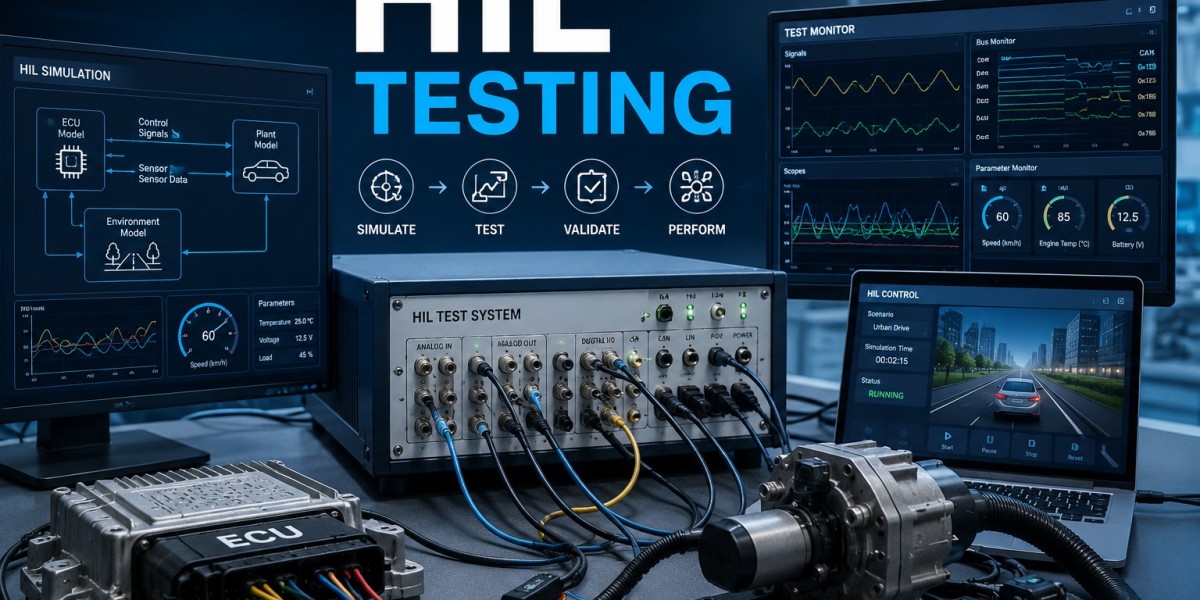

HIL software testing is one approach that connects real control hardware with a simulated representation of the system it controls.
In a typical HIL environment, the actual controller communicates with a real-time simulation. The simulation can represent sensors, actuators, mechanical behavior, or other parts of the target system.
This setup allows engineers to create different operating conditions without requiring every physical component to be available. Test scenarios can include normal operation as well as unusual or fault conditions.
Repeatability is another useful feature. A test can be executed multiple times using the same conditions, allowing engineers to compare results after software changes.
Automated test sequences can further improve efficiency. Instead of manually performing every test, engineers can create predefined scenarios and evaluate system responses against expected results.
HIL testing can be particularly useful for complex embedded control applications where software behavior depends on many inputs and system conditions.
It is important to remember that HIL testing complements rather than completely replaces physical testing. Final systems still need appropriate validation under real operating conditions.
When incorporated into a broader development strategy, HIL software testing can help engineering teams identify software issues earlier, improve test coverage, and make the validation process more structured.