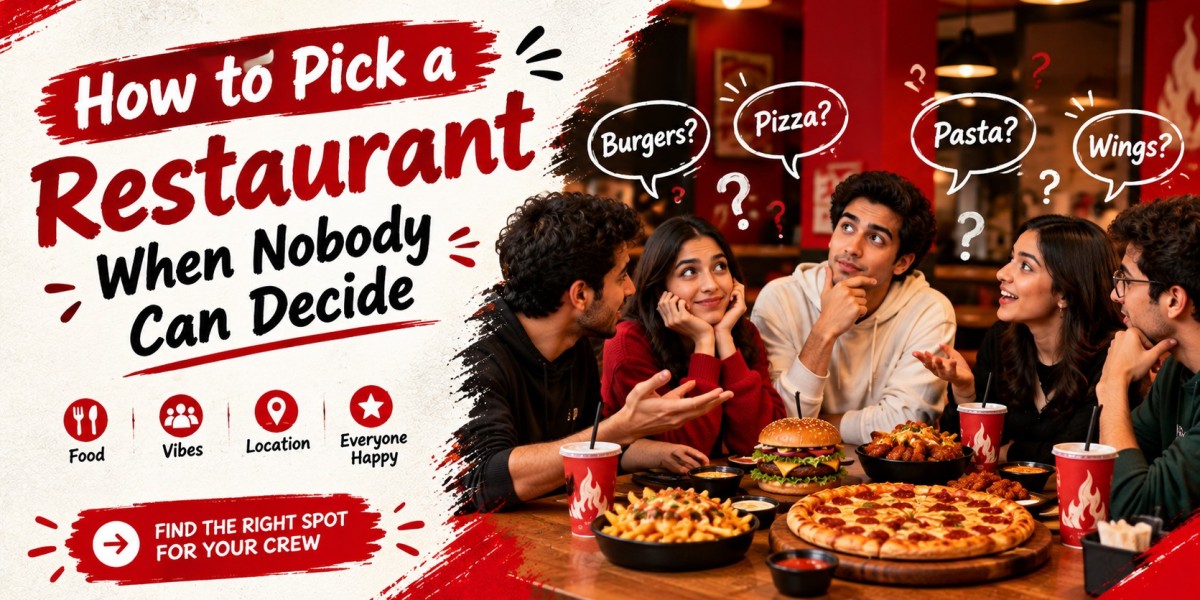

"What do you want to eat?" "I don't mind. You choose." Anyone who has been in that conversation knows how it ends. Twenty minutes later, everyone is hungrier, slightly irritated and still arguing about the same three options.
Choosing food as a group is a surprisingly hard decision. It is not about taste alone. It is about preferences, budgets, moods and the quiet fear of picking something nobody likes. A few simple habits make it far easier and keep the evening pleasant.
Why Choosing Is Harder Than Eating
Decisions get harder as options multiply. A menu with hundreds of items, plus dozens of restaurants, creates more choice than a tired group can handle.
When looking at fast food near me, the list can feel endless, and each extra option makes it less likely that anyone commits. Psychologists call this choice overload, and it explains why a group with ten possible restaurants often chooses worse, and more slowly, than one with three.
There is also a social side. People avoid stating strong preferences to be polite, so the loudest voice wins by default, or the decision is passed around until someone gives in. Neither outcome leaves everyone satisfied.
Three things usually slow a group down:
- Too many options at once
- Unspoken preferences that only appear after the order is placed
- No agreed way of making the final call
Start With Constraints, Not Cravings
The fastest way to narrow a choice is to remove what cannot work.
Before discussing what everyone feels like eating, agree on the limits. How much time is there? What is the budget? Is anyone avoiding something, whether for preference, tradition or a food allergy? How far can the food travel, or how far is everyone willing to go? Constraints are easy to agree on, and they cut the list dramatically before any debate begins.
Once the limits are clear, cravings fit inside them. A group that has decided on a quick, affordable meal that can be shared is already choosing from a short list, and the argument has mostly been won in advance.
Use a Simple Shortlist
A shortlist beats an open question every time.
Instead of asking "where should we eat?", one person proposes two or three specific options and the group picks from them. Three is enough to feel like a real choice and few enough to compare easily. It also gives shy members something concrete to react to, which is much easier than coming up with an idea from scratch.
A few good habits for building the shortlist:
- Include one familiar favourite that most people already like
- Include one option that is slightly different, to avoid the same order again
- Leave out anything that someone in the group has already said they dislike
- Keep it to three, even if more come to mind
Let the Menu Do the Work
The restaurant itself can solve much of the problem, and it is worth choosing for that reason.
A kitchen with a wide menu lets a group with mixed tastes eat together without compromise. Hungrie, for instance, lists appetizers, pizza, burgers and wraps, beverages and Injected Broast in one place, so someone who wants a burger, someone who wants pizza and someone who wants fried chicken can all order from the same kitchen. That removes the need for a vote between categories entirely.
A narrow menu works against groups. When every person wants something different and the restaurant offers only one type of dish, someone ends up disappointed.
Group-sized options help as well. Hungrie's Deals section includes bundles such as Family Feast 1 and Family Feast 2, which put several items into one order. As with any bundle, the item list is what to read before choosing, but a ready-made spread can end an argument faster than choosing dish by dish.
Avoid the Voting Trap
Voting seems fair, but it often leaves people feeling unheard.
A close vote leaves nearly half the group with their second choice, and a split vote among many options can produce a result nobody likes. Simple alternatives work better. Rotating who chooses gives everyone a turn and stops the same preferences from winning every time. A veto rule, where each person may rule out one option, removes the choices that would be genuinely unpleasant.
It also helps to separate the two questions. First decide the restaurant, then let each person choose their own dish within it. Mixing the two leads to long debates about individual orders before the basic choice has even been made, and it is the main reason a simple dinner plan turns into a lengthy negotiation.
Make the Decision Faster Next Time
Most of the effort in group decisions is repeated every time, and a small bit of preparation removes it.
Keeping a short list of go-to places, with a note of what each one does best, turns the next discussion into a quick pick. When searching for the best fast food in Lahore, a saved shortlist of two or three favourites avoids starting from zero. Over time, the group learns which restaurants suit which moods, and the question "where should we eat?" stops being a problem.
A few things worth saving:
- The restaurants the whole group enjoys
- Dishes that were a hit and worth ordering again
- Any dietary notes that affect the whole table
- Whether the place works well for delivery or sharing
Conclusion
Choosing a restaurant as a group is easier when the decision is made smaller. Agree on the limits first, offer a shortlist of three, choose a kitchen with enough variety and use a simple rule for the final call. A little structure turns a twenty-minute argument into a two-minute choice, and everyone gets to the meal while they are still in a good mood.