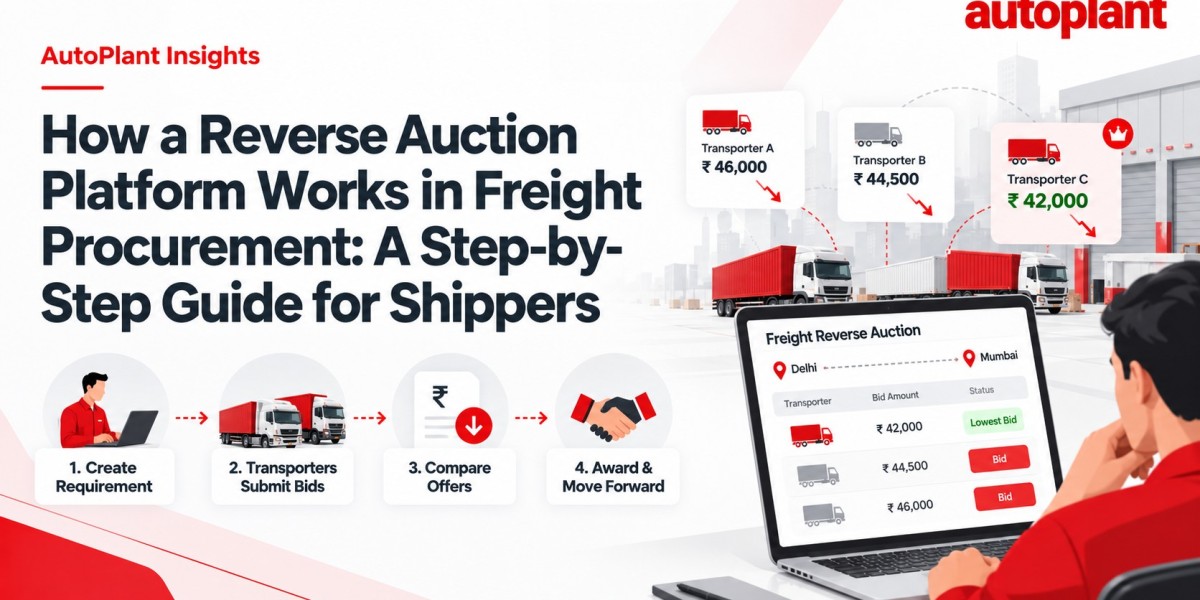

How a Reverse Auction Platform Works in Freight Procurement: A Step-by-Step Guide for Shippers
Managing freight procurement across multiple transporters can be complicated. Logistics teams spend considerable time requesting quotes, negotiating rates, and confirming vehicle availability.
The Reverse Auction Platform simplifies this process by allowing qualified transporters to compete for freight orders through online bidding.
Shippers define transportation requirements, invite eligible transporters, set bidding rules, compare quotations, and award orders based on agreed criteria.
Unlike traditional auctions, freight reverse auctions encourage competitive pricing while maintaining clear procurement requirements. Here is how the process works.
What Is a Reverse Auction Platform in Logistics?
The Reverse Auction Platform is a digital system where transporters compete to provide freight services at competitive rates.
The shipper defines the transportation requirement, while participating transporters submit quotations within a specified bidding period.
For example, a manufacturer requiring trucks between Chennai and Bengaluru can invite several approved transporters to submit freight rates.
Instead of conducting individual negotiations, the procurement team reviews competing offers through a structured process.
This improves price visibility, reduces manual coordination, and supports consistent transportation procurement decisions.
How Does a Reverse Auction Platform Work Step by Step?
A successful freight auction depends on accurate shipment details, suitable transporters, and clearly defined bidding conditions.
Step 1: Define Freight Lanes and Vehicle Requirements
Begin by identifying the transportation routes and shipment requirements for the auction.
Each freight lane should include essential information that helps transporters calculate accurate quotations.
Important details include:
Pickup and delivery locations
Vehicle type and carrying capacity
Expected shipment quantity
Loading and unloading conditions
Delivery timelines and special requirements
Incomplete information may result in unrealistic quotations, additional charges, or disagreements during transportation.
Step 2: Set the Base Price and Bidding Window
The shipper establishes a reference price using existing freight contracts, historical quotations, or available market information.
This reference helps procurement teams evaluate whether the bidding outcome is commercially reasonable.
Next, define the auction's starting time, closing time, and applicable bid reduction rules.
The Reverse Auction Platform can support structured bidding conditions that keep the process transparent and consistent.
Allow sufficient time for participants to review requirements and submit realistic freight quotes.
Step 3: Invite and Onboard Qualified Transporters
Competitive bidding works when participating transporters can genuinely meet the shipment requirements.
Invite vendors with suitable vehicles, relevant route experience, and dependable delivery capabilities.
New participants may require assistance understanding auction rules, account access, and quotation submission.
The SaaS Platform for Transport Auctions can provide a centralized digital environment for managing transporter participation.
Start with approved transporters before gradually expanding the vendor network based on operational needs.
Step 4: Conduct Competitive Freight Bidding
Once the auction begins, participating transporters submit their freight quotations within the specified bidding period.
Depending on configured rules, vendors may review their offers before the auction closes.
Real-time Bidding and Order Awarding allows procurement teams to manage competitive quotations through a defined workflow.
However, freight rates must be compared using the same commercial conditions.
Check whether quotations include toll charges, loading costs, waiting charges, and other applicable expenses.
A lower initial quotation does not always represent the lowest overall transportation cost.
Step 5: Evaluate Bids and Award Freight Orders
After the auction closes, the procurement team reviews eligible quotations against predefined selection criteria.
Price matters, but transporters must also demonstrate vehicle availability, operational reliability, and suitable service capabilities.
A Reverse Auction Platform helps organize quotation comparisons and supports structured freight allocation decisions.
Before confirming an order, review the transporter's service record and obtain acceptance of the awarded assignment.
This reduces the possibility of last-minute cancellations or dispatch disruptions.
How Can Reverse Auctions Improve Freight Procurement?
Digital reverse auctions offer practical advantages for manufacturers managing transportation across multiple routes and vendors.
More Competitive Freight Pricing
When several qualified transporters compete under comparable conditions, shippers gain better visibility into available freight rates.
This approach can help Reduce Freight Costs through Competitive Bidding without relying entirely on separate negotiations.
However, sustainable savings depend on realistic pricing and reliable transporter performance.
Better Procurement Transparency
A Reverse Auction Platform creates a structured record of quotations, bidding outcomes, and freight allocation decisions.
Procurement managers can review these records when comparing vendors or planning future transportation contracts.
Consistent processes also make freight procurement easier to monitor across different plants and locations.
Common Mistakes That Reduce Auction Effectiveness
Freight auctions can create operational problems when procurement teams focus exclusively on obtaining the lowest rate.
Common mistakes include:
Inviting transporters without checking their capabilities
Setting unrealistic base prices
Providing incomplete shipment information
Ignoring additional transportation charges
Awarding orders without confirming vehicle availability
Overlooking previous delivery performance
Successful procurement requires balancing competitive prices with dependable service and realistic delivery commitments.
Regular transporter performance reviews help refine future auction participation and selection rules.
Frequently Asked Questions
Can small transporters participate in freight reverse auctions?
Yes. Smaller transporters can participate when they meet the shipper's eligibility and vehicle requirements.
Simple onboarding procedures help businesses involve qualified vendors of different sizes.
Are reverse auctions suitable for urgent shipments?
They can be suitable when enough eligible transporters are available and the bidding window matches dispatch requirements.
For extremely urgent shipments, direct allocation may be more practical.
Can companies use reverse auctions for long-term freight contracts?
Yes. Businesses can conduct auctions for defined routes and contract periods when expected volumes are clearly specified.
Contractual terms should address rate validity, service commitments, and possible volume changes.
What should Indian manufacturers check before selecting auction software?
When evaluating Reverse auction freight bidding software India , examine bidding controls, vendor onboarding, audit records, and ERP integration.
Also consider usability, transporter acceptance, and support for different freight procurement requirements.
Conclusion: Building a Smarter Freight Procurement Process
The Reverse Auction Platform helps manufacturers organize competitive bidding, improve price visibility, and strengthen procurement control.
The best results come from clear auction rules, qualified transporters, and balanced evaluation of cost and service quality.
AutoPlant offers a Reverse Auction Platform for freight procurement, supporting competitive bidding and transportation order awarding. Its wider logistics capabilities include vendor collaboration and ERP integration.
For manufacturers managing multiple transporters, exploring digital reverse auctions is a practical step toward more efficient freight procurement.