
A building accessibility audit is a measured inspection of how well a facility works for people with different abilities. Done properly, it gives owners a documented list of barriers, ranked by importance, that can feed directly into repair budgets. This guide explains what auditors check and how to get real value from the report.
What the Audit Covers
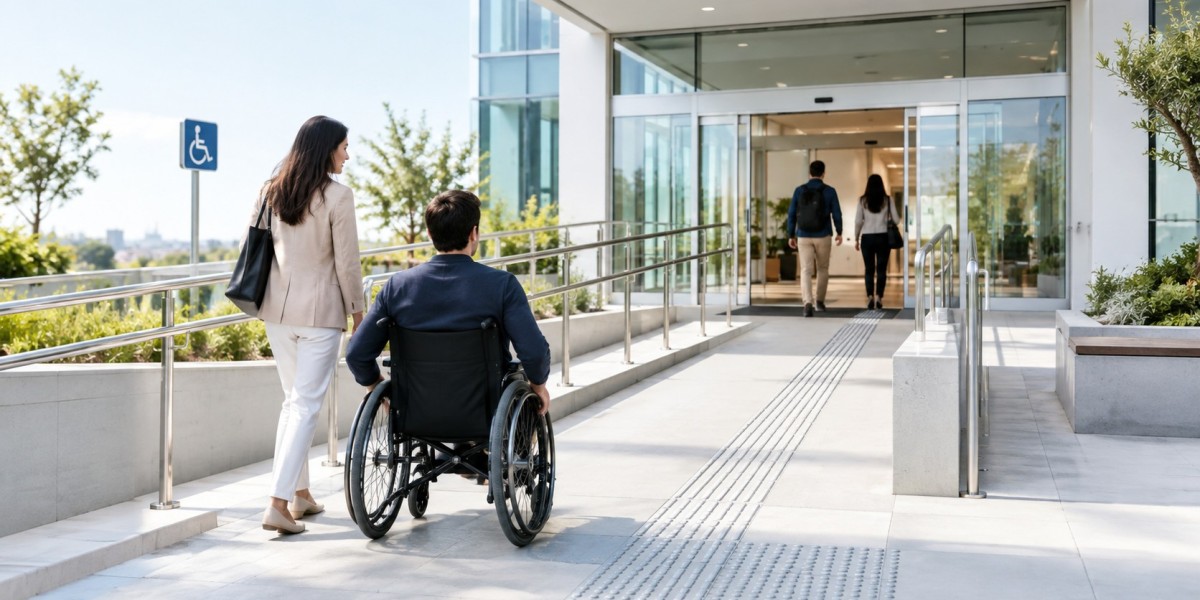
Auditors follow the route a visitor would take, from the parking area or transit stop to the farthest room. Along the way they measure and photograph key elements:
• Exterior routes, curb ramps, parking and drop-off zones.
• Entrances, door widths, door force and hardware.
• Corridors, lifts, stairs and ramps.
• Washrooms, counters, seating and fixtures.
• Signage, lighting, contrast and alarm systems.
Each measurement is compared with the governing standard, such as CSA B651 or the local building code.
Some audits also cover policies and services, such as how visitors request help, whether staff are trained, and how evacuation works for people who cannot use stairs.
Prepare Before the Auditor Arrives
Gather floor plans, previous reports, renovation records and any complaints received about access. Arrange keys and permissions for all areas, including plant rooms and staff-only spaces if they are in scope.
Brief your front-line staff too. They know where visitors struggle, and their comments often point auditors to problems drawings do not show, like a door that is always propped open or a lift that breaks down weekly.
Check what your lease or ownership structure allows. In multi-tenant buildings, common areas, tenant suites and base building systems may belong to different parties, and the report should say who is responsible for each.
Decide the audit standard before the visit, so findings are measured against the same benchmark you will use for later upgrades.
What Happens on Site
A typical visit for a mid-sized building takes one to two days. The auditor carries a tape, digital level, light meter and force gauge, and records dimensions, slopes, forces and heights. Photos and a location reference are taken for each issue.
Qualified accessibility consultants also test usability, for instance by checking whether a person using a wheelchair can reach a service counter and turn around in a washroom. Numbers alone do not catch every problem.
Join the walk if you can. Hearing a finding on site, with the measurement in front of you, makes the priority clear in a way a report page cannot. Take your own notes on how staff and visitors use each space.
Ask the auditor to flag items that can be fixed on the spot, such as adjusting a door closer. Small repairs can often begin the same week.
Read the Report and Act on It
A good report ranks findings by impact and gives a recommended fix with an estimated cost. Use it to build a staged plan: urgent safety and legal items first, then entrance and circulation barriers, then upgrades that can wait for the next renovation.
Do not file the report and forget it. Assign each item an owner and review progress every quarter. Repeat the audit after major work or every few years, and ask whether your accessibility consultant offers a follow-up visit to confirm that corrections meet the standard.
Look for a summary page at the front of the report. It should show totals by priority, the most serious findings and the estimated cost range, so decision makers can read it in five minutes.
Group repairs with planned maintenance wherever possible. Replacing flooring or repainting is the cheapest time to add contrast strips or tactile indicators.
Conclusion
A building accessibility audit works best when you prepare, join the site visit and turn the report into dated actions. Choose reviewers who show their method and explain their findings clearly. If you would like to talk through scope before booking, speak with accessibility consultants who can outline what a sensible first audit looks like for your building.
FAQs
1. How much does an audit cost?
It depends on building size, scope and location. Ask for a fixed fee based on a defined scope, and check what is included.
2. Will the audit tell us what to fix first?
A good one will. Look for a report that ranks issues by impact and includes cost estimates.
3. Do we need an audit before renovating?
It is a smart step. It shows which barriers to remove during the work, when changes cost far less.
4. How long is an audit report valid?
There is no fixed expiry. Update it after major renovations, change of use or code updates, and review it every few years.