
Copper tubes serve as the core heat transfer component of heat exchangers. The selection of copper tube types directly determines heat exchange efficiency, operational stability and service life of finished units, so clear specifications must be followed throughout the whole production process, from raw material purchasing to final inspection.
The most widely used base material is C12200 DHP seamless copper tube. It features high thermal conductivity, good brazing performance and moderate corrosion resistance, which fits most HVAC, refrigeration and fresh water cooling heat exchangers. For harsh working conditions such as seawater, brackish water and marine cooling systems, cupronickel tubes C70600 (90/10 Cu-Ni) and C71500 (70/30 Cu-Ni) are required, because they show strong resistance to erosion and biofouling. Aluminium brass C68700 is another practical alternative for condensers with medium corrosion risk. Alloy selection should also consider brazing compatibility with tube sheets and economic factors, since material cost and availability differ significantly among grades.
Apart from alloy grades, surface structure is another key classification standard. Smooth copper tubes are simple to bend and process, suitable for conventional shell-and-tube exchangers. Internally grooved or finned enhanced copper tubes are preferred when high heat transfer capacity is demanded. The internal spiral grooves enlarge the heat exchange area and disturb the fluid flow, greatly improving thermal performance while keeping the equipment compact. These textured tubes have strict requirements on groove pitch, helix angle, groove depth and surface finish during manufacturing, and the first-piece samples must be measured and verified before mass production.
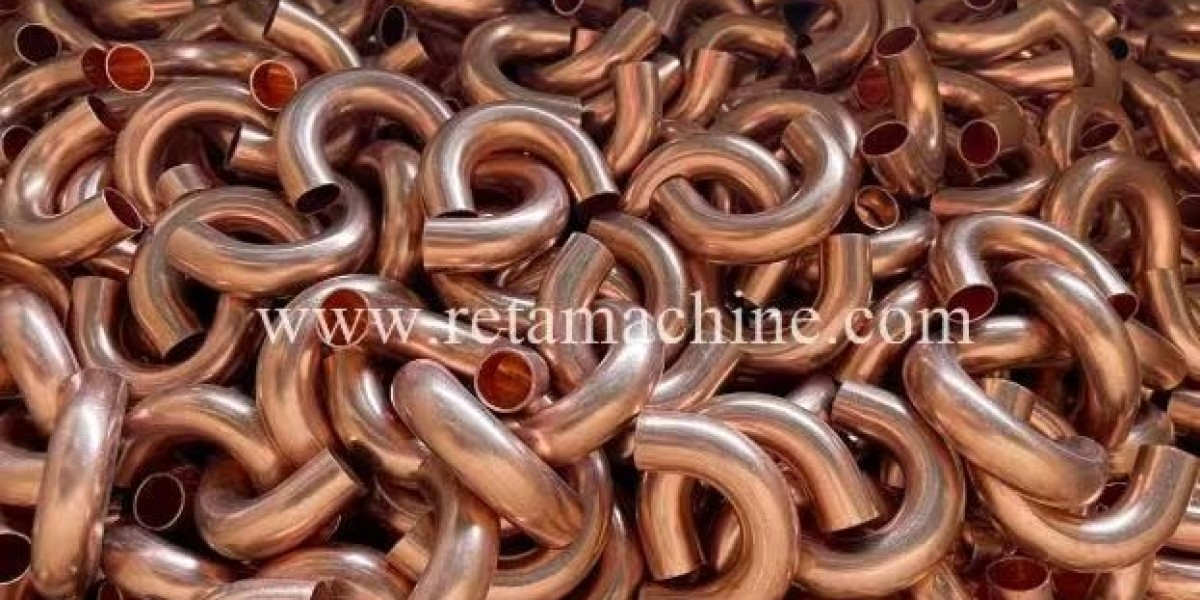
Temper status also matters for production. Soft annealed O60 tubes are adopted for U-bend forming, as they can withstand bending without cracking. Half-hard or hard temper tubes are used for straight sections under high pressure, providing higher tensile strength and dimensional stability. All tubes need to meet standards like ASTM B111 and EN 12451, and pass hydrostatic test, eddy current non-destructive inspection and flattening test before delivery. Dimensional tolerance of outer diameter and wall thickness must be controlled tightly, because uneven wall thickness easily causes leakage under pressure cycling. Tube ends should be deburred and kept square so that welding or rolling into the tube sheet remains reliable.
Cleanliness is often overlooked but critical. Residual oil, metal chips and oxide film on inner walls will contaminate refrigerant or circulating water, reduce heat transfer performance and trigger corrosion. Tubes for refrigeration heat exchangers must be cleaned and sealed with plastic caps at both ends to avoid internal pollution during transport and storage. The cleanliness level can be verified by solvent extraction tests according to common industry practice.
In short, there is no universal copper tube that suits all heat exchangers. Manufacturers should select the proper alloy, surface type and temper based on operating medium, pressure, temperature and heat efficiency targets, and strictly implement incoming material inspection and process control. Careful review of application conditions at the design stage is the foundation of reliable heat exchanger production and helps avoid field failures and warranty claims.