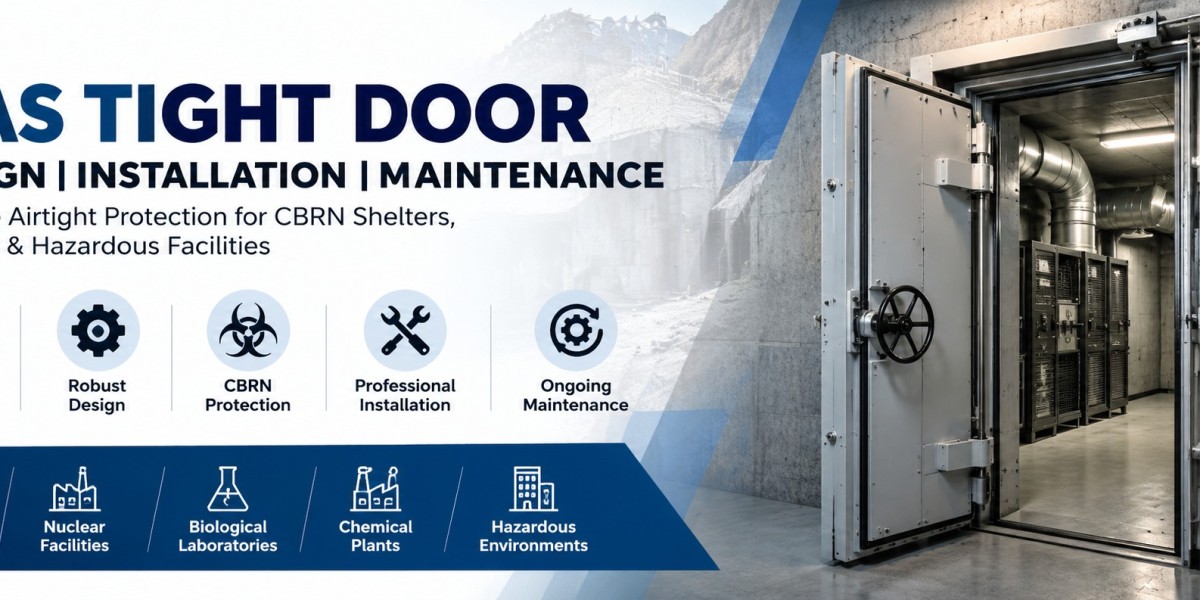

A Gas tight door is a critical safety component in CBRN shelters, nuclear facilities, biological laboratories, chemical plants, and other hazardous environments where airtight containment is essential. Beyond providing controlled access, it helps maintain pressure integrity, supports filtration systems, and protects occupants from hazardous airborne contaminants. Understanding its design, installation requirements, and maintenance practices is vital for achieving long-term operational reliability.
Understanding Gas Tight Door Design
The effectiveness of a gas-tight system begins with precision engineering. Unlike conventional industrial doors, gas-tight doors are manufactured specifically to prevent air leakage under controlled pressure conditions.
Modern Gas tight door design incorporates reinforced steel door leaves, heavy-duty frames, compression gasket seals, precision-machined sealing surfaces, and multi-point locking systems. When closed, the locking mechanism applies uniform compression across the entire perimeter, producing an airtight seal capable of withstanding demanding operational environments.
Material selection also plays a major role. Corrosion-resistant steel, durable protective coatings, and high-performance elastomeric gaskets help ensure reliable performance throughout years of continuous service.
Maintaining Pressure Integrity
Many hazardous facilities rely on controlled air pressure for contamination control.
Positive-pressure environments, commonly used in Gas tight door for CBRN shelters, prevent toxic air from entering protected spaces. Negative-pressure environments, frequently found in biological laboratories and chemical containment facilities, ensure hazardous substances remain confined within designated areas.
Maintaining these pressure differentials requires more than an airtight door leaf. Proper frame alignment, precision installation, compression seal consistency, and rigid wall integration are equally important for preventing leakage around the complete assembly.
Installation Requirements for Long-Term Performance
Even the highest-quality door can fail if installation is not performed correctly.
Frame anchoring must securely transfer structural loads into reinforced concrete or engineered wall systems without creating gaps that compromise sealing performance. Installation tolerances should be carefully controlled to prevent frame distortion that may affect gasket compression.
Engineers also verify:
Door alignment and operational clearance
Uniform gasket compression
Threshold sealing performance
Locking mechanism engagement
Frame-to-wall airtight integration
Hardware functionality
Proper installation ensures the gas-tight assembly performs exactly as designed throughout its service life.
Sealing Performance and Leakage Testing
Reliable containment can only be confirmed through testing.
Gas-tight assemblies undergo leakage-rate testing to measure air infiltration under specified pressure differentials. These tests verify whether the complete installation meets project requirements for airtight performance.
Additional evaluations may include:
Pressure differential verification
Operational cycle testing
Compression gasket durability
Structural deformation assessment
Hardware reliability testing
Seal integrity inspections
Compliance with applicable IS/BIS requirements and internationally recognized CBRN or airtightness standards provides confidence that the system can perform effectively during emergency conditions.
Integration with Critical Safety Systems
Modern Gas tight door systems function as part of an integrated protection strategy rather than as standalone products.
They are commonly designed for compatibility with:
CBRN air filtration systems
Blast-resistant infrastructure
Fire-rated compartmentation
Electronic access control
Emergency locking systems
Building management systems
Security monitoring platforms
This integration allows facilities to maintain airtight protection while supporting operational security, emergency response procedures, and controlled personnel access.
Key Features of High-Performance Gas Tight Doors
When specifying a gas-tight entrance, engineers typically evaluate several essential performance characteristics.
Important features include:
Excellent airtight sealing capability
Reinforced structural strength
Corrosion-resistant construction
High pressure differential performance
Compatibility with blast and fire protection systems
Security-grade multi-point locking
Long operational durability
Low maintenance requirements
Compliance with recognized certification standards
These characteristics help ensure dependable operation in demanding industrial and defense environments.
Applications Across Critical Infrastructure
Demand for Airtight door for hazardous facilities continues to increase as industries adopt stricter containment and safety requirements.
Typical installations include:
CBRN shelters and civil defense bunkers
Military command centers
Biological containment laboratories
Pharmaceutical research facilities
Chemical manufacturing plants
Petrochemical processing facilities
Nuclear installations
Underground infrastructure
Hazardous material storage areas
Emergency operations centers
Each application requires project-specific engineering based on operational risks, pressure requirements, and environmental exposure.
Maintenance for Reliable Airtight Performance
Maintenance is essential for preserving long-term sealing integrity.
Routine inspections should include examination of compression gaskets, hinges, locking hardware, corrosion protection, frame alignment, and threshold sealing surfaces. Worn gaskets should be replaced promptly to maintain consistent airtight performance.
Periodic leakage testing is also recommended, particularly in mission-critical facilities where containment reliability cannot be compromised.
A preventive maintenance program extends service life while reducing the likelihood of unexpected failures during emergency operation.
Cost and Investment Considerations
The Gas tight door price depends on multiple engineering variables rather than simply door dimensions.
Major cost factors include:
Leakage-rate classification
Door size and configuration
Material selection and steel thickness
Frame engineering requirements
Structural anchoring complexity
Factory testing and certification
Integration with filtration systems
Automation and access control
Installation requirements
Site-specific engineering
Lifecycle maintenance planning
Although advanced systems involve greater initial investment, they provide significantly higher operational reliability and reduced lifecycle risk.
Choosing the Right Manufacturer
When comparing Gas tight door manufacturers in India, technical expertise should outweigh cost alone.
Buyers should evaluate:
Experience with CBRN and containment projects
Engineering and testing capability
Compliance with IS/BIS and international airtightness standards
Precision manufacturing processes
Customization capability
Professional installation expertise
Technical documentation
After-sales maintenance support
Proven industry performance
Solutions such as Sigma Power Tech gas tight door demonstrate the advantages of working with a Sigma Power Tech manufacturer and service provider capable of delivering complete engineering support from design through installation, testing, commissioning, and long-term maintenance.
Common Mistakes to Avoid
Several avoidable decisions can compromise containment performance.
These include choosing products based solely on price, ignoring leakage-rate requirements, improper frame integration, overlooking corrosion exposure, failing to verify certifications, neglecting preventive maintenance, and not integrating the door with CBRN filtration or safety systems.
Avoiding these issues improves both operational safety and long-term system reliability.
Conclusion
A professionally engineered Gas tight door is far more than an entry point—it is a vital containment barrier that supports pressure control, CBRN protection, and overall facility safety. Its effectiveness depends on precision design, accurate installation, certified testing, and consistent maintenance throughout its operational life.
Organizations planning critical infrastructure should prioritize the correct sealing class, verified engineering standards, experienced installation teams, and long-term maintenance support instead of focusing solely on initial procurement costs. A properly specified gas-tight door system delivers dependable airtight performance and protects both people and critical assets for decades.