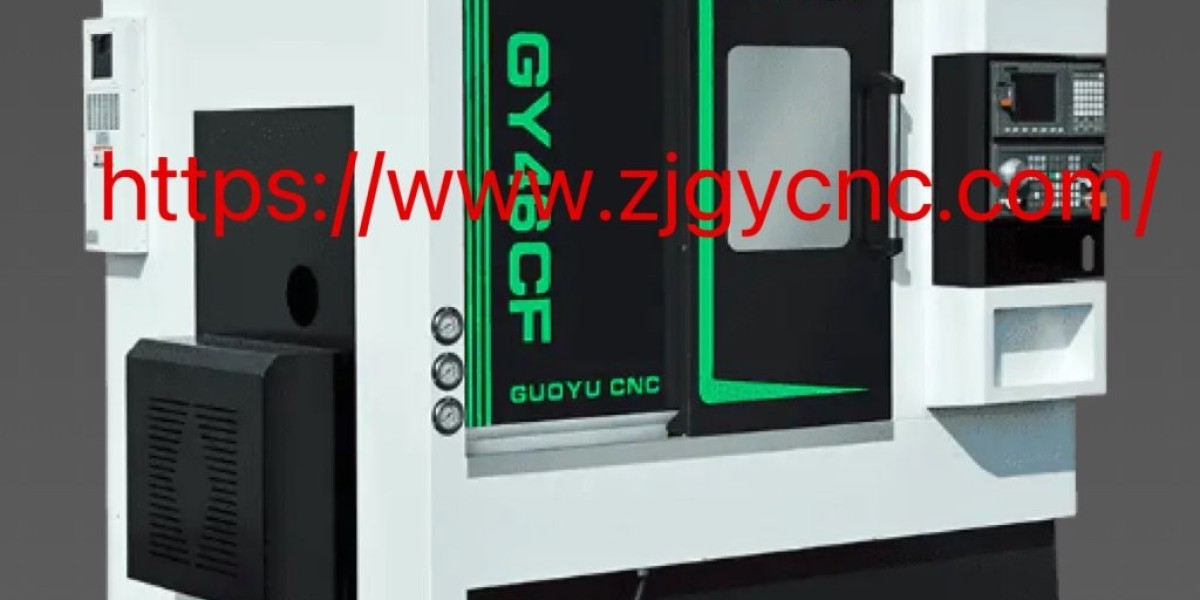

Mill-Turn CNC Machine selection involves evaluating component geometry, production goals, and processing requirements, and buyers can discuss these factors with zjgycnc when considering a suitable configuration. For manufacturers producing components with both cylindrical surfaces and milled features, purchasing decisions should account for workholding, spindle capacity, axis movement, tooling arrangements, programming resources, and maintenance needs. Reviewing these factors before ordering helps businesses align their investment with actual production tasks.
Start with Your Component Drawings
Collect drawings for several representative components before comparing equipment options. Record their dimensions, material grades, turned surfaces, drilled holes, slots, threads, pockets, and required tolerances. These details help identify the operations needed and establish whether they can be combined in a practical sequence.
A shaft with cross-holes may require different capabilities from a component featuring angled surfaces or complex contours. Buyers should separate essential functions from optional features that may not be needed for regular orders. This makes it easier to evaluate configurations against actual production requirements.
Production quantities should also be considered. Prototype work and frequent design changes may require flexible setup procedures, while repeat batches can benefit from consistent programming and tooling arrangements. Sharing technical drawings with the supplier allows discussions to focus on specific parts rather than broad assumptions.
Evaluate Turning and Milling Capabilities
Turning and milling involve different cutting movements, so both sets of requirements should be reviewed. Check the maximum workpiece diameter, machining length, spindle capacity, and workholding arrangements alongside milling travel, driven-tool functions, and available axis movements.
Consider whether the proposed configuration can produce the features shown on your drawings. Cross-drilled holes, flats, grooves, pockets, and angled surfaces may require particular tool access or rotary positioning. Buyers should confirm that these functions are supported rather than relying on the number of available axes alone.
It is also important to distinguish standard features from optional configurations. Depending on the application, additional rotary movement, a particular spindle arrangement, or extra tooling capacity may be necessary. Request written specifications so that each proposal can be compared on a consistent basis.
Examine Workholding and Setup Procedures
Workholding influences stability, repeatability, and the relationship between finished surfaces. Review chuck dimensions, clamping positions, fixture clearance, and the way each component will be supported during cutting operations.
Combining processes can reduce the need to transfer parts between separate workstations. However, the actual benefit depends on part geometry and access to each feature. Some components may still require another setup for back-side operations, finishing, or inspection.
Discuss the intended production sequence with the supplier. Identify the reference surfaces used during setup and consider how parts will be clamped, indexed, and measured. This review can reveal possible fixture interference or restricted tool access before installation.
Review Programming and Tool Compatibility
The control system should match the complexity of the planned work and the experience of the operators. Buyers should ask about supported programming methods, axis coordination, tool management, program verification, and available training resources.
Components with several milling and turning features may require carefully coordinated toolpaths. If your workshop uses computer-aided manufacturing software, confirm that the relevant post-processor supports the selected configuration and control system. Simulation and collision checking can also help identify potential conflicts between tools, fixtures, and moving components.
Tooling should be reviewed alongside programming. Check holder interfaces, available tool positions, cutting-tool requirements, and the accessories included in the quotation. Preparing a clear tooling plan helps the team estimate startup requirements and organize production before delivery.
Consider Accuracy and Maintenance
Define dimensional requirements directly from engineering drawings. Ask for relevant positioning and repeatability specifications, including the conditions under which they are measured. For components with critical relationships between turned and milled surfaces, discuss suitable inspection procedures and whether sample production can be arranged.
Maintenance requirements deserve attention before purchase. Request guidance on lubrication, cleaning, inspection intervals, consumable parts, and routine servicing. Buyers should also clarify warranty coverage, replacement-part availability, and the process for obtaining technical assistance.
When comparing quotations, include tooling, fixtures, transportation, installation, training, software, and maintenance supplies in the budget. Reviewing these costs together provides a clearer view of the investment required beyond the initial purchase price.
Prepare Questions Before Confirming an Order
A practical checklist should cover representative drawings, material types, required operations, production quantities, tolerances, tooling needs, programming resources, and installation conditions. Ask the supplier to explain how the proposed configuration addresses each requirement and identify optional features separately.Manufacturers evaluating integrated turning and milling solutions can contact zjgycnc to discuss application requirements and available configurations. Visit https://www.zjgycnc.com/ to review the company's product information and make an inquiry based on your components, workshop conditions, and production plans.