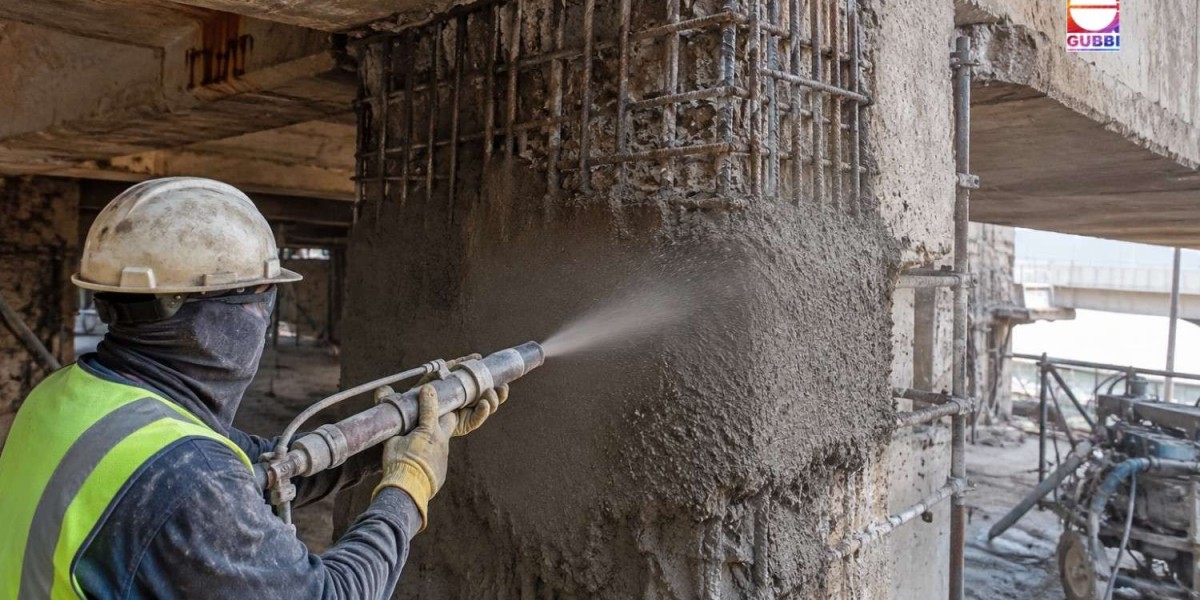

Concrete structures exposed to heavy loads, moisture, chemical environments, and continuous industrial operations may develop cracks, surface deterioration, and concrete damage over time. Shotcreting is a specialized concrete application method used to repair, strengthen, and protect various structural surfaces. It involves spraying concrete or mortar onto a prepared surface using specialized equipment, allowing the material to adhere to walls, ceilings, columns, and other complex shapes where conventional concrete placement may be difficult. Shotcreting services are widely used in industrial buildings, infrastructure projects, tunnels, retaining walls, bridges, and structural rehabilitation work. The method allows concrete to be applied to vertical and overhead surfaces without requiring extensive conventional formwork in many applications. When properly designed and executed, shotcrete can help restore damaged concrete sections, improve structural performance, and support the long-term maintenance of existing infrastructure while reducing unnecessary demolition and reconstruction.
What Is Shotcreting in Construction?
Shotcreting is a construction technique in which concrete or mortar is pneumatically projected at high velocity onto a prepared surface through a specialised nozzle. The impact of the sprayed material helps it compact against the receiving surface, forming a concrete layer that follows the shape of the structure. Depending on project requirements, shotcrete may contain cement, graded aggregates, water, and approved admixtures to achieve the required application properties and performance.
Unlike conventional concrete placement, which often requires pouring concrete into formwork, shotcreting can be applied directly to suitable prepared surfaces. This makes it useful for repairing irregular concrete profiles, strengthening selected structural elements, and constructing curved or inclined surfaces. The final quality depends on surface preparation, material selection, nozzle technique, application thickness, curing, and quality control throughout the work.
Types of Shotcreting Methods
1. Dry-Mix Shotcreting
Dry-mix shotcreting involves conveying a dry mixture of cement and aggregates through a hose using compressed air. Water is introduced at the nozzle, where the operator controls the mixture before spraying it onto the surface. This method is useful for selected repair applications, smaller work areas, and projects requiring flexible water adjustment. Proper nozzle control is essential to achieve consistent compaction, reduce rebound, and maintain the required concrete quality.
2. Wet-Mix Shotcreting
Wet-mix shotcreting involves preparing the concrete mixture with water before pumping it through specialised equipment to the spraying nozzle. Compressed air helps project the material onto the prepared surface. This method is commonly considered for larger applications requiring consistent material delivery and higher placement rates. The final outcome depends on the approved mix design, pumping equipment, nozzle technique, and curing practices selected according to the project's technical requirements.
Major Applications of Shotcreting in Construction
1. RCC Concrete Repair and Rehabilitation
Reinforced cement concrete structures may experience spalling, cracks, exposed reinforcement, and surface deterioration because of corrosion, moisture exposure, or ageing. Shotcreting can help rebuild damaged concrete sections after the affected material has been removed and the reinforcement properly treated. It is used on suitable beams, columns, slabs, and walls where engineered repair is required. A structural assessment helps determine the necessary repair thickness, reinforcement details, and application method.
2. Industrial Building and Factory Repairs
Industrial facilities frequently experience concrete deterioration caused by machinery vibration, heavy operational loads, chemical exposure, and continuous usage. Shotcreting can support the rehabilitation of suitable structural walls, columns, foundations, and other concrete components without requiring complete reconstruction. For factories and manufacturing units, the repair plan should consider equipment access, operational safety, and production schedules. Experienced contractors can coordinate work activities to minimise disruption while maintaining appropriate engineering and quality requirements.
3. Bridge Repair and Infrastructure Rehabilitation
Bridges, culverts, retaining walls, and other infrastructure assets require regular inspection to identify concrete deterioration and reinforcement corrosion. Shotcreting may be suitable for restoring damaged sections, rebuilding concrete cover, and repairing selected vertical or overhead surfaces. The application method must account for exposure conditions, structural loading, access limitations, and the required service life. Proper assessment and material selection help ensure that the repair addresses the actual deterioration rather than merely covering visible damage.
4. Tunnel and Underground Construction
Underground structures often require concrete support systems that can accommodate irregular surfaces and challenging site conditions. Shotcrete is used in tunnel construction, underground passages, and selected excavation support applications because it can be sprayed directly onto prepared surfaces. Depending on the engineering design, reinforcement or additional support elements may also be incorporated. Ground conditions, water ingress, required thickness, and installation sequence must be evaluated before selecting a suitable shotcreting method for underground projects.
5. Retaining Walls and Sloped Surfaces
Retaining walls and inclined concrete surfaces can deteriorate because of water penetration, weather exposure, poor drainage, and repeated environmental stress. Shotcreting can help restore damaged concrete and create a new layer over properly prepared surfaces. However, surface deterioration may also indicate drainage problems, movement, or pressure behind the wall. These underlying issues should be investigated before repairs begin. A technically appropriate solution addresses the cause of damage as well as the visible concrete defects.
6. Chimneys, Silos, and Water-Retaining Structures
Industrial chimneys, silos, and water-retaining structures may develop concrete damage through environmental exposure, abrasion, moisture penetration, and operational stresses. Shotcreting can be considered for suitable repair applications where the existing surface can support a properly bonded new layer. The repair specification must account for structural requirements, exposure conditions, and any special containment or process requirements. Depending on the structure, additional protective coatings, crack treatment, or reinforcement repairs may be necessary to achieve the intended performance.
Key Benefits of Shotcreting Services
Reduced Dependence on Conventional Formwork
One major advantage of shotcreting is that it can reduce the need for conventional shuttering in many repair applications. The material is sprayed directly onto a suitably prepared surface, making it practical for selected vertical, curved, and overhead locations. This can simplify access arrangements and reduce formwork-related labour. However, temporary supports or specialised formwork may still be required for particular geometries, structural conditions, or thickness requirements.
Strong Bonding with Existing Concrete
Shotcrete can achieve effective bonding with existing concrete when the substrate is properly prepared and the material is applied using suitable equipment and techniques. Loose concrete, dust, contaminants, and unsound material must be removed before application. The surface condition, moisture requirements, and reinforcement preparation should follow the approved repair specification. Poor preparation or incorrect spraying can result in debonding, voids, and premature deterioration, even when high-quality repair materials are used.
Faster Execution for Suitable Projects
Shotcreting can improve work efficiency when conventional concrete placement would require extensive formwork or complicated access arrangements. It is particularly useful for certain overhead repairs, irregular surfaces, and rehabilitation projects where conventional methods may be labour-intensive. Faster application does not eliminate the need for inspection, finishing, and curing. Project timelines should account for preparation, reinforcement treatment, material testing, and the time needed to achieve the specified performance before the repaired structure returns to service.
Better Adaptability to Complex Surfaces
Many construction and rehabilitation projects involve curved walls, inclined surfaces, restricted areas, and structural shapes that are difficult to repair using conventional concrete placement. Shotcreting allows the material to follow suitable prepared profiles and reach locations where traditional methods may be less convenient. The nozzle operator must maintain the correct spraying angle, distance, and movement to achieve uniform application. Proper technique is especially important around reinforcement, corners, and overhead sections where defects may otherwise remain hidden.
Improved Protection Against Further Deterioration
A properly designed shotcrete repair can restore concrete cover and help protect embedded reinforcement from environmental exposure. This is important where deterioration has exposed steel bars or damaged the original concrete surface. However, shotcrete alone cannot correct every cause of deterioration, such as active corrosion, continuing leakage, or structural movement. Effective rehabilitation requires appropriate treatment of the underlying problem, suitable repair materials, adequate curing, and maintenance based on the structure's operating conditions.
Step-by-Step Shotcreting Process
Step 1: Structural Inspection and Assessment
The first stage involves examining the structure to understand the extent and cause of concrete deterioration. Engineers may assess cracks, spalling, exposed reinforcement, surface delamination, and other visible defects. Depending on the condition, additional testing may be needed to evaluate concrete quality and reinforcement corrosion. The findings help establish whether shotcreting is suitable and determine the repair boundaries, material requirements, reinforcement treatment, and execution method before work begins.
Step 2: Surface Preparation
Surface preparation is essential for achieving a reliable bond between the existing concrete and the newly applied material. Damaged or loose concrete is removed until a suitable substrate is exposed, followed by cleaning to eliminate dust and other contaminants. Exposed reinforcement is assessed and treated according to the repair specification. Any required repairs to the substrate are completed before spraying. Skipping preparation or leaving unsound concrete behind can compromise the performance of the entire repair.
Step 3: Material Selection and Equipment Setup
The shotcrete mix is selected according to the structural application, required strength, exposure conditions, and specified thickness. Cement, aggregates, water, and approved admixtures must meet the project's technical requirements. Equipment is checked to ensure consistent material delivery, suitable air pressure, and reliable nozzle operation. Reinforcement mesh or additional bars are installed where required by the design. Proper setup helps control rebound, minimise material waste, and achieve consistent application across the repair area.
Step 4: Shotcrete Application
During application, the nozzle operator sprays the concrete onto the prepared surface using controlled movements and suitable operating parameters. The material is placed in the required layers and thickness, with particular attention to corners, reinforcement, and overhead sections. Poor nozzle technique can create rebound pockets, trapped air, or incomplete coverage. Skilled application and regular supervision help achieve uniform compaction and bonding. The sequence and thickness of each layer must follow the approved method statement and engineering specifications.
Step 5: Finishing, Curing, and Inspection
After spraying, the surface is finished to the required profile and appearance without compromising the quality of the applied material. Proper curing supports cement hydration and helps reduce the risk of premature drying and cracking. Inspection may include checking thickness, surface condition, bond performance, and specified strength requirements. Any identified defects should be addressed using approved procedures. The repaired structure should return to service only when the relevant acceptance requirements have been satisfied.
How to Choose the Right Shotcrete Contractors
Selecting suitable shotcrete contractors requires more than comparing quotations. Check whether the contractor understands structural repair, substrate preparation, reinforcement treatment, equipment operation, and project-specific quality control. Experience with industrial facilities and infrastructure can be particularly important when access is restricted or operational interruptions must be managed carefully. Ask about similar completed projects, technical supervision, safety procedures, material testing, and the proposed repair methodology before making a final decision.
A reliable contractor should explain why shotcreting is appropriate for the damaged structure and identify any additional work required before spraying begins. During your evaluation, consider discussing the project with Gubbi Civil Engineers Limited as one option for industrial, commercial, and infrastructure concrete rehabilitation. Review the proposed scope, inspection process, execution schedule, and quality requirements carefully. A clear technical proposal makes it easier to compare contractors on the basis of repair suitability and expected performance.
Factors That Affect Shotcreting Cost
Shotcreting cost depends on several project-specific factors, including the repair area, application thickness, material specifications, surface condition, and accessibility. Extensive concrete removal or reinforcement treatment can increase the overall scope of work. Projects involving overhead spraying, confined spaces, scaffolding, or specialised safety arrangements may also require additional resources. Therefore, a quotation based only on the surface area may not accurately represent the total cost of a structural repair project.
The selected shotcrete method, equipment requirements, labour availability, and testing procedures can also influence the final estimate. Before approving a quotation, confirm whether the price includes surface preparation, removal of damaged concrete, reinforcement treatment, spraying, finishing, curing, and quality checks. Comparing quotations with the same scope helps identify meaningful differences. Choosing the lowest initial price without considering workmanship and repair requirements may lead to recurring maintenance expenses or additional corrective work later.
Common Shotcreting Problems and How to Prevent Them
Poor surface preparation can cause weak bonding, while incorrect nozzle technique may produce uneven thickness, rebound, or hidden voids. Inadequate curing can increase the risk of cracking, and unsuitable material proportions may affect strength and workability. These problems are best prevented through proper planning, trained operators, approved mix designs, and consistent supervision. Inspection at important stages helps identify defects early and ensures that the completed work meets the project's specified acceptance criteria.
Another important consideration is whether shotcreting addresses the actual cause of structural deterioration. Applying fresh concrete over an unstable substrate, untreated corrosion, or continuing water ingress may not provide a lasting solution. Engineers should assess drainage, loading, reinforcement condition, and other relevant factors before recommending repairs. Where necessary, shotcreting should form part of a broader rehabilitation plan that may include crack treatment, corrosion protection, waterproofing, or additional structural strengthening measures.
Shotcreting vs Conventional Concrete Repair
Conventional concrete repair often involves placing repair material into prepared areas, sometimes using formwork to contain the concrete. Shotcreting instead projects concrete or mortar pneumatically onto the substrate, which can make it more convenient for vertical and overhead applications. The preferred method depends on the repair geometry, required thickness, access conditions, structural design, and quality requirements. Neither technique is universally superior, so the decision should follow a proper technical assessment.
For irregular surfaces and repairs where extensive shuttering would be difficult, shotcreting may offer practical advantages in labour and execution time. Conventional repair methods may be more appropriate for localised defects, smaller patches, or locations where sprayed application is unnecessary. Project teams should also consider surface preparation, material compatibility, curing, and inspection requirements. Evaluating the complete repair process rather than a single construction stage helps determine which method offers the most suitable long-term outcome.
When Should You Consider Shotcreting?
Shotcreting may be worth evaluating when concrete structures show recurring surface deterioration, spalling, exposed reinforcement, or damaged sections that require rebuilding. It can also be considered when repairing complex geometries or when conventional formwork would create significant access difficulties. However, visible defects alone do not establish the appropriate repair method. A qualified structural assessment helps determine whether sprayed concrete, conventional patch repair, strengthening, or another rehabilitation technique best addresses the condition.
Early investigation can help property owners and facility managers plan repairs before deterioration spreads into additional areas. For industrial buildings, timely intervention may also help coordinate maintenance around production schedules and reduce the likelihood of larger unplanned repair programmes. Regular inspections, appropriate drainage, protective measures, and maintenance records support better decision-making. The objective should be to restore the required structural performance and serviceability through a repair strategy suited to the asset's actual condition.
Frequently Asked Questions About Shotcreting
What are shotcreting services used for?
Shotcreting services are used for suitable concrete repair, structural rehabilitation, strengthening, tunnel support, retaining wall work, and restoration of damaged concrete surfaces. The method is particularly useful where concrete must be applied to vertical, overhead, curved, or irregular profiles. Its suitability depends on the structure, substrate condition, material requirements, and engineering design. A professional assessment helps determine whether shotcreting can meet the project's performance and durability requirements.
What is the difference between shotcreting and guniting?
Shotcreting is a general term for pneumatically applying concrete or mortar onto a prepared surface. Guniting commonly refers to the dry-mix spraying process, although terminology can vary between contractors and regions. In dry-mix application, water is added at the nozzle, whereas wet-mix application uses concrete mixed with water before pumping. Both techniques require appropriate materials, equipment, trained operators, and quality control to achieve the specified repair performance.
Is shotcreting suitable for industrial buildings?
Yes, shotcreting can be suitable for industrial buildings where concrete walls, columns, beams, or other structural elements require rehabilitation. It may be considered for selected repairs involving damaged concrete, exposed reinforcement, or difficult surface geometries. However, industrial structures often have specialised loading and exposure conditions that require careful assessment. Engineers should establish the repair requirements and coordinate execution with operational and safety constraints before selecting the appropriate shotcreting method.
How long does a shotcrete repair last?
The service life of a shotcrete repair depends on material quality, surface preparation, application technique, curing, exposure conditions, and maintenance. A properly designed and executed repair can provide long-term performance, but no fixed lifespan applies to every structure. Continuing corrosion, water ingress, excessive loading, or poor workmanship may shorten its service life. Regular inspections and timely maintenance help identify deterioration early and support the performance of the repaired concrete.
How can I estimate shotcreting project costs?
To estimate project costs, begin by identifying the affected area, approximate repair thickness, accessibility, and extent of damaged concrete. A site inspection may be necessary to evaluate condition reinforcement, surface preparation, equipment requirements, and testing needs. Request a detailed quotation that clearly separates the included activities and materials. This approach helps you compare proposals fairly and understand the expected scope before committing to a contractor.
Shotcreting is a valuable construction technique for suitable concrete repair, structural rehabilitation, and selected strengthening applications. Its ability to cover complex surfaces and reduce the need for conventional formwork makes it useful across industrial facilities and infrastructure projects. However, successful results depend on correct engineering assessment, thorough surface preparation, appropriate materials, skilled spraying, and proper curing. Selecting the right method and contractor helps improve repair quality and support the continued serviceability of existing structures.