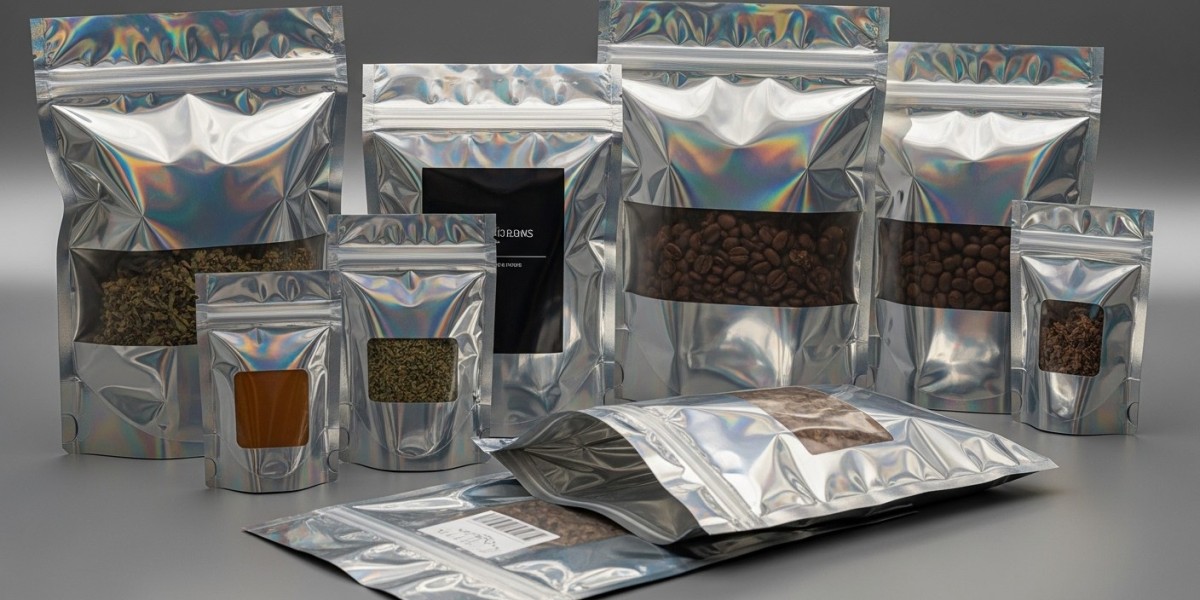

Packaging should shield the product and should stand out. Die cut mylar bags accomplish these two jobs by combining a high barrier metallized film with an outline that is not a standard rectangle. Analysts value the global flexible packaging market at roughly $270 billion and expect that each year it to grow 4 to 5 % through 2030 and distinctive formats keep gaining share within that growth.
Die Cutting:
Die cutting is a process that uses a blade and the shaped outline we want. The blade presses. Die cutting works like a cookie cutter. Die cutting can make corners, curved edges, handles and windows all with accuracy.
A converter loads stacked sheets. Rolls, under the press. The converter places the die. Then cuts. Each minute, Industrial presses can cut hundreds of units. Die cutting stays efficient for large orders.
How does a bag form between the initial and final stages?
The process of production follows four steps. Initially, the converter prints the artwork on the outer film. Secondly it laminates the layer to a metallized layer and a heat sealable inner lining. Thirdly it seals the bag. Fourthly the die cuts the final outline and any details like tear notches.
The stages are dependent. A misaligned print moves graphics off the cut line, and converters insert registration marks to hold artwork in place within circa 1 millimeter.
Why Quality of Film Matters?
Mylar does not tear easily. Tear easily. Manufacturers add a metallic coating to Mylar. This coating blocks more than 99 percent of visible light. It also limits oxygen flow.
Premium Mylar Bags Offer:
The category has quality levels. Premium Mylar bags have thinner film 4 to 6 mil, cleaner zippers, sealed seams and tighter print tolerances. Sturdier walls can withstand piercing by sharp material and tough lids endure delivery and abusive treatment.
What Products Fit this Format?
Lightweight, small, dry objects are most effective. Snacks, candy, tea, spices, vitamins, pet treats, and craft supplies all fit into a die cut bag without pushing the seal to its limits. Heavy or liquid products can put disproportionate pressure on the contours, and therefore brands tend to make the usual selection of a standard stand-up structure at that.
Mylar Pouches Differ From Bags
There is an intersection between the two terms, but they are commonly applied by buyers to other shapes. Mylar pouches tend to be small sizes with a flat or stand-up bottom, a zipper, and a tear notch, and are packaged in quantities between 10 and several hundred grams. Bags are more likely to characterize bigger, less complex formats of bulk items.
Size affects cost. Smaller pouches consume less film but more units per kilogram of product and thus the cost per ounce of packaging will tend to increase as the fraction decreases.
Should Brands Choose Custom Shaped Mylar Bags?
Stock outlines depict circles, hearts and some straightforward silhouettes. A brand that uses a mascot or logo might desire something special. Mylar bags with custom shapes are based on an outline that a designer draws, so that one has complete control over how things look, at the cost of tooling and approval processes.
What Does a Custom Order Involve?
Custom Die Cut Mylar Bags orders have a definite order of procedure. The seller submits artwork; the converter submits a digital proof. A sample is tested to ensure quality. Production follows approval.
Costs depend on quantity. A steel rule die can range from several hundred dollars and lead times are often four to six weeks. Digital cutting tables support a few hundred unit runs without a metal die, assisting small brands in trying an idea.
What is the Place of Sustainability?
10 percent of flexible plastic film is recovered by recyclers. Metallized laminates are even harder to recover because they contain multiple materials. Some suppliers now offer mono-material polyethylene structures with high-barrier coatings. These are easier to recycle in some cases. Many grocery chains accept film at drop off bins. Brands should carefully check regulations before printing any recycling statement.
Conclusion
Good packaging depends on balancing three things: product safety its look and not being expensive. When people know how a bag is made and what design rules apply they can choose a style that stands out and protects the product from the factory to the customer's house.
This kind of knowledge also helps people have talks with the people who make the packaging. Instead of just taking a normal choice they can ask for shapes and features that make their product look different on the shelf but still fit what can be made easily. The result is packaging that works well when it is moved, stored and sent without making the price too high.