
Real estate marketing has changed significantly as buyers and tenants increasingly search for properties online. Property websites, social media platforms, digital advertisements, and online listings help businesses reach potential customers. However, attracting visitors is only one part of the process. Real estate professionals must also answer questions, understand customer requirements, and encourage interested prospects to take the next step.
A Real Estate AI Chatbot can help businesses connect marketing activities with customer communication. By answering common questions, collecting property preferences, and guiding visitors toward relevant information, chatbot automation can support the journey from initial interest to a sales conversation.
What Is a Real Estate AI Chatbot?
A real estate AI chatbot is a digital assistant that interacts with website visitors and prospective customers through automated conversations. It can help people explore property information, submit enquiries, understand available services, and request assistance from a real estate agent.
Depending on its features and integrations, the chatbot may also collect lead details, recommend relevant listings, support appointment requests, and transfer conversations to a sales representative.
For example, someone who clicks a property advertisement may want to know the apartment's price, location, amenities, or availability. A chatbot connected to verified property information can answer these questions and help the visitor decide whether to request further details or arrange a viewing.
Why Real Estate Marketing Needs Better Lead Engagement
Digital marketing campaigns can attract visitors, but not every visitor is ready to contact an agent immediately. Some people are comparing prices, researching neighborhoods, or exploring different property types before making a decision.
Without an effective engagement process, businesses may miss opportunities to understand these visitors' needs. A chatbot can provide an interactive way to answer questions and invite interested people to share their requirements.
This approach helps connect marketing campaigns with lead management. Instead of directing every visitor to a basic contact form, businesses can offer a conversation that guides customers toward relevant information.
How AI Chatbots Support Real Estate Sales and Marketing
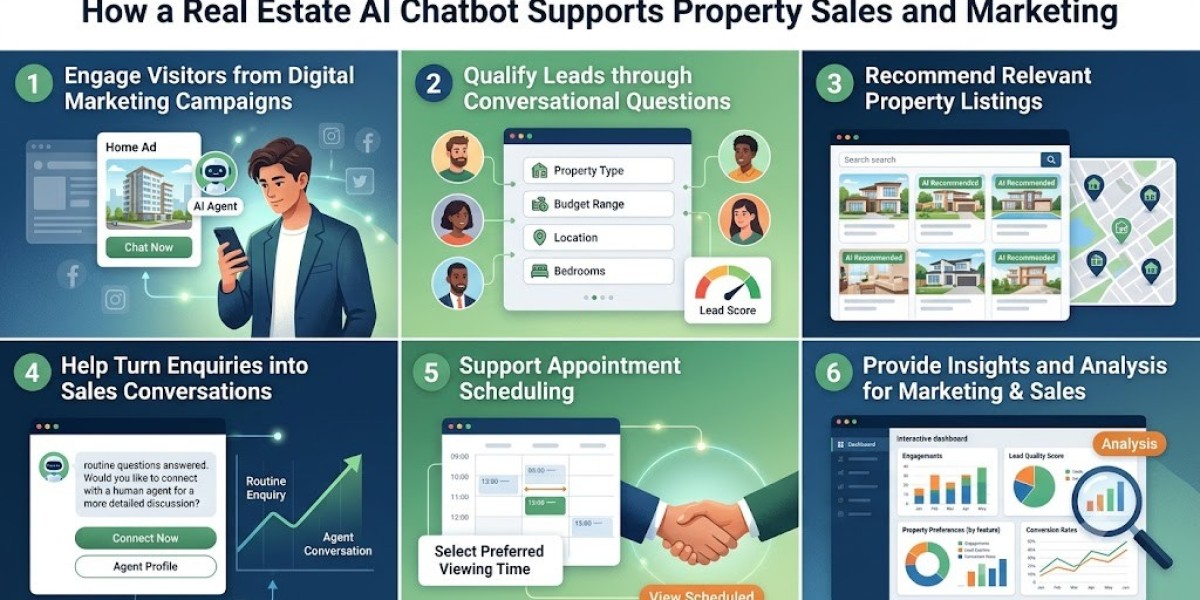
1. Engage Visitors from Digital Marketing Campaigns
Real estate companies often promote properties through search advertising, social media campaigns, and dedicated landing pages. When visitors arrive at a website, a chatbot can help them understand the advertised property and find answers to common questions.
For example, a person arriving from an advertisement for a residential apartment might ask about its configuration, facilities, or location. The chatbot can provide available information and invite the visitor to request a callback or property viewing.
Connecting customer conversations with marketing campaigns can help businesses understand which enquiries deserve follow-up. Tracking campaign sources may require suitable analytics or CRM integrations.
2. Qualify Leads through Conversational Questions
Sales teams need to understand customer preferences before recommending properties. A chatbot can collect relevant information through a short series of questions.
These questions may cover:
- Preferred property type, such as residential or commercial.
- Desired location or neighborhood.
- Approximate purchasing budget or rental range.
- Required property size or number of bedrooms.
- Expected timeline for purchasing or renting.
With this information, agents can better understand what each prospect needs and prepare more relevant recommendations. Businesses should collect only necessary details and explain how submitted information will be used.
3. Recommend Relevant Property Listings
Searching through a large collection of listings can be time-consuming for potential buyers and tenants. A chatbot connected to a suitable property database can help narrow the options based on budget, location, property type, and other preferences.
For example, a customer searching for a two-bedroom apartment in a preferred neighborhood can receive links to matching listings when relevant information is available.
Recommendations should rely on accurate property data. Businesses should regularly update listing details and avoid presenting unavailable properties as active options.
4. Help Turn Enquiries into Sales Conversations
Not every prospect is ready to schedule a viewing during the first interaction. Some may need additional information about amenities, nearby facilities, pricing, or the purchasing process.
A chatbot can answer routine questions and provide clear next steps, such as requesting a callback, speaking with an agent, or asking for more information about a property.
This makes the enquiry process more convenient and gives interested prospects an opportunity to connect with the sales team when they are ready.
5. Support Appointment Scheduling
Property viewings are an important step in the sales journey. A chatbot can collect preferred dates and times or present available appointment options when connected to an appropriate scheduling system.
Automated appointment requests can reduce back-and-forth communication and help agents organize their schedules. Businesses should confirm appointments against actual availability before communicating a final booking.
Benefits of AI Chatbots for Real Estate Marketing
When integrated into a well-planned marketing strategy, chatbot automation can offer several benefits:
- Faster enquiry responses: Visitors can receive automated answers to common property questions.
- Improved lead collection: Customer preferences can be gathered through guided conversations.
- Better lead qualification: Agents can use enquiry details to prioritize follow-ups.
- More convenient property discovery: Customers can explore relevant listings through interactive assistance.
- Reduced repetitive work: Sales representatives can spend less time handling routine questions.
- More organized sales processes: Suitable integrations can help connect enquiries with CRM records and appointment workflows.
These benefits depend on the chatbot's configuration, the quality of the property information, and the effectiveness of the sales team's follow-up process. Chatbots can support marketing performance, but they do not guarantee leads or sales.
How to Implement a Chatbot in Your Property Marketing Strategy
Choose a Clear Objective
Decide what you want the chatbot to accomplish. Possible goals include answering listing questions, collecting buyer requirements, generating callback requests, or helping customers arrange property visits.
Prepare Accurate Content
Provide reliable information about properties, prices, amenities, locations, and enquiry procedures. Establish a process to update information when listings change.
Connect the Chatbot with Your Sales Workflow
Where supported, integrate the chatbot with your CRM, appointment calendar, or lead management tools. Ensure that sales representatives can access the information needed to follow up with prospects.
Measure Results and Improve Performance
Track relevant metrics such as completed conversations, qualified enquiries, callback requests, scheduled viewings, and lead-to-customer conversion rates. Review customer feedback and unanswered questions to identify opportunities for improvement.
Explore AI Chatbot Solutions with The Bot Builder
Businesses interested in conversational automation can visit The Bot Builder to explore its chatbot solutions and evaluate how they may fit into their digital customer engagement processes.
Before choosing a solution, review its current features, customization options, supported channels, and integration capabilities. Select an approach that addresses your marketing objectives and makes it easier for potential customers to obtain relevant information.
A successful implementation should combine helpful automated conversations with reliable data and access to human support whenever necessary.
Conclusion
A Real Estate AI Chatbot can support property sales and marketing by engaging website visitors, answering common questions, qualifying enquiries, recommending relevant listings, and assisting with appointment requests.
For real estate agents, brokers, and property developers, chatbot automation offers a way to connect digital marketing with customer communication. By maintaining accurate information, designing useful conversations, and following up with qualified prospects, businesses can create a more organized property enquiry experience and support their overall sales strategy.