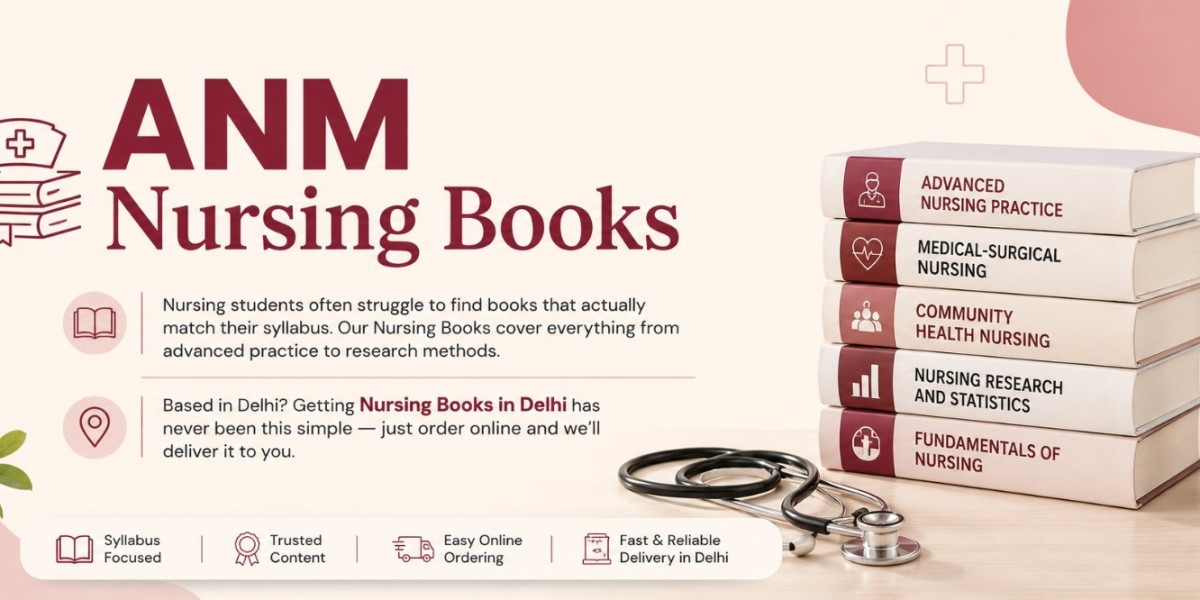

ANM Nursing Books for Better Learning and Exam Preparation
Most ANM students start the course with plenty of enthusiasm and one quiet worry: how will I remember all of this? Anatomy terms, vaccination schedules, nutrition charts, stages of labour. It arrives quickly, and classroom time alone rarely feels like enough. That is where your study material steps in. The right ANM Nursing Books let you go back over a topic at your own pace, in your own time, until it finally makes sense.
This guide explains what to look for, which subjects deserve your attention, how to choose between English and Hindi editions, and how to turn your books into steady, confident preparation.
Introduction to ANM Nursing Books
The Auxiliary Nursing Midwifery course trains students to work close to people: in sub-centres, villages, health camps, and community settings. You learn to care for mothers and newborns, support immunisation, promote hygiene and nutrition, and give basic nursing care.
ANM Nursing Books are textbooks written around this course. They explain each subject in a logical order, using language and examples that suit the level of the programme. Compared with a general medical book, they stay focused on what an auxiliary nurse midwife actually needs to know and do. That focus is what makes them valuable, and it is why choosing books made for your own course usually works better than borrowing from a higher-level programme.
Why Are the Right Books Important for ANM Students?
Think about how much a single lecture has to cover. A teacher may finish an entire unit in one session, and your ward posting will show you only the cases that happen to come in that week. Books fill the gaps.
A good textbook helps you in several ways:
- Understanding concepts. You can read slowly, re-read, and connect one idea to another.
- Exam preparation. Books written around the syllabus point you towards topics that matter.
- Building healthcare knowledge. Terms and ideas become familiar when you meet them repeatedly in context.
- Understanding responsibilities. Chapters on patient care and community work show you what is expected of you as a health worker.
The wrong book does the reverse. It can bury you in unnecessary detail or skip topics your paper expects. A few minutes of careful choosing at the start saves weeks of confusion later.
Important Subjects to Study in ANM Nursing
Subjects and their arrangement can vary by institution and state council, so always follow your current syllabus. In general, these are the areas where students most need dependable material.
Anatomy and Physiology
This subject explains how the human body is built and how its systems work. Everything else in nursing rests on it. Books with labelled diagrams and simple flow charts make it far easier to remember.
Fundamentals of Nursing
Here you learn the basics of patient care: hygiene, vital signs, comfort measures, infection prevention, and record keeping. Look for books that describe each procedure in clear steps, with pictures where possible.
Community Health Nursing
This is the heart of the ANM role. It covers primary healthcare, disease prevention, health programmes, and working with families and villages. Examples from real community settings help the ideas stick.
Midwifery
Midwifery covers pregnancy, labour, delivery, and the care of mother and baby afterwards. Choose books that explain the stages of labour clearly and describe warning signs that need a doctor’s attention.
Maternal Health
Maternal health looks at the mother’s wellbeing before, during, and after pregnancy, including antenatal check-ups, nutrition, and family planning. A good book links each stage to the nurse’s responsibilities.
Child Health Nursing
You study growth and development, vaccination, common childhood illnesses, and age-appropriate care. Milestone charts and vaccination tables are especially useful for revision.
Nutrition and Food Science
This subject covers nutrients, balanced diets, special diets, and nutrition education for families. Tables and diet charts make it easier to revise.
Psychology and Sociology
These subjects help you understand people: how they think, behave, and live within families and communities. They improve how you communicate with patients, which matters in every area of nursing.
How to Choose the Best ANM Nursing Books
With so many options around, a simple checklist keeps the decision clear.
- Syllabus coverage. Compare the book’s contents page with your syllabus units. Every unit should be there.
- Easy language. If you cannot follow a sample page, the book is not right for you yet.
- Accurate information. Check the author, edition, and publication year.
- Subject relevance. The book should be written for ANM, not for a different course.
- Clear explanations and diagrams. Visuals help in anatomy, procedures, and charts.
- Practical examples. Real-life situations, like explaining a vaccine schedule to a new mother, make learning stick.
- Revision material. Summaries, key points, and end-of-chapter questions save time later.
When you are comparing subjects and options side by side, browsing a well-organised range of ANM Nursing Books can help you see what suits each part of your course.
Benefits of Studying from Subject-Wise Nursing Books
You may wonder whether one combined guide could replace several books. It can help with quick revision, but dedicated subject books have clear advantages.
They keep your study organised. When you sit down for Child Health Nursing, you open one book and stay with it.
They also go deeper. A combined guide tends to skim, while a subject book gives each topic room to be explained properly.
And they make revision easier. You can mark difficult pages, add notes in the margins, and return to them week after week.
Many students find that the best approach is a mix: subject books for learning, and a short guide for the final days before an exam.
English and Hindi Nursing Books for Students
Language can make or break your understanding. Some students are comfortable reading in English. Others learn much faster in Hindi, especially when a topic is new or technical. Neither choice is wrong.
Here is a sensible way to decide:
- Read a page from a topic you find difficult in both languages, if both are available.
- Choose the one you can understand on the first read.
- Keep in mind the language of your exam. If you will write in English, it helps to learn key terms in English even if you study in Hindi.
- Before buying, check the language and edition printed in the book details.
Understanding always comes first. A book you can follow easily is worth more than a “better” one you struggle to read.
How to Use ANM Nursing Books for Exam Preparation
Owning the book is the first step. Using it well is what counts.
- Create a timetable you can follow. Plan around your classes and postings, not an ideal day that never happens.
- Read one topic at a time. Finish a topic before moving to the next.
- Prepare short notes. Writing in your own words helps memory far more than highlighting full pages.
- Revise definitions. Keep a small list of key terms and go through it often.
- Practise questions. Short answers, long answers, and objective questions show you where you are weak.
- Review regularly. Return to a topic after a day, a week, and a month.
Thirty to forty-five minutes of focused study every day will do more for you than one long session the night before a paper.
Importance of Nursing Books for Practical Knowledge
ANM is a hands-on course, and books support that in a very real way. They explain basic nursing procedures, patient care, maternal and child health, community healthcare, and professional responsibilities. When you read about a procedure before seeing it, you understand what your instructor is doing and why.
But one point must be clear. Reading is not a substitute for training. Practical procedures must be learned through supervised training and approved clinical guidance. Use your books to understand the reason behind each step, and use your lab and ward time to build the skill itself.
Common Mistakes Students Should Avoid While Choosing Nursing Books
Careful students slip up too. Watch out for these.
- Buying without checking the syllabus. A popular book can still miss half of what your exam covers.
- Ignoring publication details. Check the edition and year, since guidelines and programmes change over time.
- Choosing books that are hard to understand. Depth is useless if you cannot follow it.
- Relying on only one source. One book rarely explains every topic equally well.
- Postponing revision. Leaving everything for the last week makes even good books less useful.
- Buying for the whole course at once. Needs change each term, so buy what you need now.
Tips for Building an Effective ANM Nursing Study Plan
A good plan is simple enough to follow on a tiring day.
- Manage your time. Block fixed slots for study, even if they are short.
- Balance theory and practice. After reading a topic, try to connect it to what you have seen or done in the lab or ward.
- Revise on a schedule. Set aside one session every week just for review.
- Practise questions often. Do not wait for the exam month.
- Stay consistent. Small, daily effort adds up faster than occasional bursts.
Be kind to yourself, too. Rest, meals, and sleep are part of good studying. A tired mind does not remember much.
Conclusion
ANM is a course that prepares you to serve real people in real communities. The knowledge you build now will one day help a mother through childbirth, a child through vaccination, or a family through a health scare. Your study material is the base of that learning, so it deserves a little thought.
Begin with your syllabus. Choose a language you understand comfortably, check the edition, and compare more than one option before you buy. Then build steady habits: short daily study, regular revision, and plenty of supervised practice. When you are ready to explore books by subject, take a look at the available ANM Nursing Books and pick the ones that fit your syllabus, your needs, and your preferred language. No book can promise results on its own, but the right ones, used consistently, make your effort count for more.