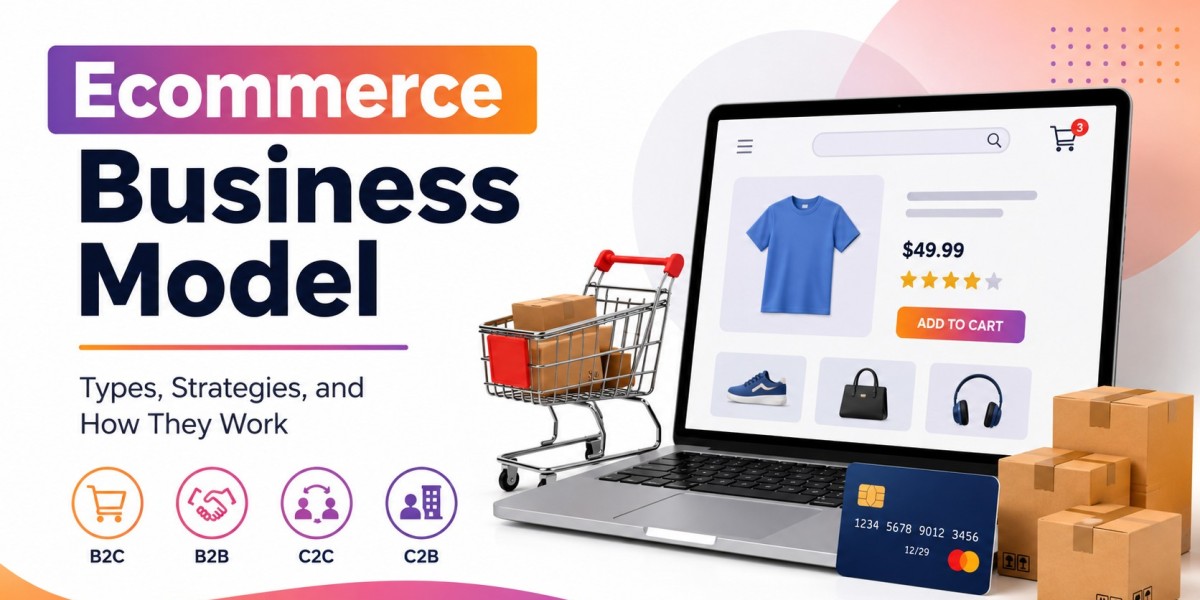

Starting an online business involves more than creating a website and listing products. Business owners need to decide what they will sell, who their customers will be, how orders will be fulfilled, and how the business will generate revenue. These decisions form the foundation of an ecommerce business model.
An ecommerce business model explains how a company sells products or services online and creates value for customers while earning revenue. Some businesses sell directly to consumers, while others supply products to retailers, connect buyers with sellers, or earn money through subscriptions.
Understanding the different ecommerce business models helps entrepreneurs select an approach that matches their products, budget, target audience, and long-term goals. It also helps established businesses identify opportunities to improve their online operations and explore new revenue streams.
What Is an Ecommerce Business Model?
An ecommerce business model describes how an online business operates, reaches customers, delivers its offerings, and earns money through digital transactions.
For example, a clothing brand might sell products directly through its website. Another company might purchase clothing from manufacturers and resell it online. Although both businesses operate through ecommerce, their sourcing, pricing, inventory management, and profit structures can differ significantly.
A well-planned model generally considers several important elements:
Target customers: The individuals or businesses the company serves.
Products or services: What the business offers to customers.
Revenue streams: How the company earns money.
Sales channels: Where customers discover and purchase products.
Order fulfillment: How products or services reach customers.
Operating costs: Expenses such as inventory, marketing, shipping, technology, and customer support.
These elements work together to determine whether an ecommerce business can operate efficiently and remain financially sustainable.
Main Types of Ecommerce Business Models
There is no single model that works for every online business. The right choice depends on the relationship between buyers and sellers, the nature of the offering, and how the company plans to generate revenue.
1. Business-to-Consumer (B2C)
Business-to-consumer ecommerce involves companies selling products or services directly to individual customers. It is one of the most familiar models in online retail.
Examples include online clothing stores, electronics retailers, beauty brands, and furniture websites. Customers browse products, compare prices, place orders, and receive their purchases through delivery or digital access.
A small skincare brand, for instance, could create an online store to sell its products directly to customers. By managing its own website, the business can control product presentation, pricing, customer communication, and the shopping experience.
However, B2C businesses must consider customer acquisition costs, competition, product returns, and the need to maintain a convenient purchasing process.
2. Business-to-Business (B2B)
Business-to-business ecommerce involves transactions between companies. Businesses may sell raw materials, office supplies, wholesale products, software licenses, or specialized services to other organizations.
For example, a packaging supplier could build an online ordering portal where retailers purchase cartons, labels, and shipping materials. Customers might receive negotiated pricing, bulk discounts, or access to repeat-order features.
B2B transactions often involve larger orders, multiple decision-makers, customized pricing, and longer sales cycles than typical consumer purchases.
A successful B2B ecommerce platform should make product discovery, quotation requests, account management, and order tracking straightforward. Integrations with inventory, accounting, and enterprise systems may also improve operational efficiency.
3. Consumer-to-Consumer (C2C)
Consumer-to-consumer ecommerce enables individuals to sell products or services to other individuals, often through an online marketplace.
Used-product marketplaces are common examples. One person can list a second-hand phone, while another person purchases it through the platform.
The marketplace may earn revenue by charging listing fees, transaction commissions, advertising fees, or optional seller services.
Building a C2C platform requires attention to seller verification, payment security, dispute resolution, and buyer trust. Clear listing rules and review systems can help participants make informed decisions.
4. Consumer-to-Business (C2B)
In the consumer-to-business model, individuals offer products or services to companies. This approach is common in freelancing, photography licensing, content creation, and influencer marketing.
For example, a freelance designer might sell website templates to businesses through an online platform. Similarly, a photographer could license images to companies for use in marketing materials.
Revenue may come from project fees, licensing payments, or platform commissions. The model can provide businesses with flexible access to specialized skills while allowing individuals to reach commercial customers online.
5. Direct-to-Consumer (D2C)
Direct-to-consumer is a retail approach in which a brand sells directly to customers instead of relying exclusively on traditional intermediaries such as wholesalers and retailers.
A footwear brand, for example, could sell its products through its own ecommerce website. This allows the company to manage its brand presentation, communicate directly with buyers, and collect customer feedback.
D2C businesses can have greater control over the customer experience, but they must also handle responsibilities that intermediaries might otherwise manage, including marketing, order fulfillment, returns, and customer service.
D2C is often considered a specific form of B2C rather than a completely separate transaction category.
Ecommerce Business Models Based on Revenue
The buyer-seller relationship is only one part of an ecommerce business model. Companies must also decide how they will generate revenue and cover their operating expenses.
Dropshipping
In dropshipping, a retailer sells products without keeping the inventory at its own premises. When a customer places an order, a supplier typically stores, packs, and ships the product.
This arrangement can reduce the need for upfront inventory investment. However, retailers have less direct control over product quality, stock availability, and shipping performance.
Before choosing dropshipping, businesses should evaluate supplier reliability, delivery times, product margins, and return policies.
Subscription-Based Ecommerce
Subscription businesses charge customers at recurring intervals for products or services. Examples include replenishment boxes, membership programs, and digital services.
A company selling coffee could offer customers scheduled monthly deliveries. Predictable recurring orders may support revenue planning, although the business must continue providing value to retain subscribers.
Subscription pricing, cancellation policies, delivery frequency, and customer retention are important considerations.
Marketplace Model
An ecommerce marketplace connects multiple sellers with potential buyers. Instead of selling only its own inventory, the platform provides infrastructure for product listings, transactions, and sometimes payments or shipping.
Marketplaces may earn commissions, seller subscription fees, advertising revenue, or charges for additional services.
The main challenge is attracting both buyers and sellers. Customers need enough relevant products, while sellers need access to an audience that makes participation worthwhile.
Wholesale and Reselling
Wholesalers sell products in bulk, often to retailers or other businesses. Online resellers purchase products from suppliers and sell them to their own customers, potentially in smaller quantities.
Both models depend on careful purchasing decisions, pricing, inventory management, and supplier relationships.
Businesses should calculate their product costs, storage expenses, shipping charges, and expected sales before committing to large inventory orders.
How to Choose the Right Ecommerce Business Model
Selecting an ecommerce business model requires a realistic assessment of business goals, available resources, and customer needs.
Understand Your Target Audience
Start by identifying who will purchase your products or services. Individual consumers, wholesalers, retailers, and corporate buyers have different expectations regarding pricing, ordering, delivery, and customer support.
Researching customer problems and purchasing habits can help determine which model offers the most suitable experience.
Evaluate Your Budget and Resources
Some models require significant investment in inventory, storage, and fulfillment. Others may reduce upfront inventory requirements but still involve marketing, supplier management, platform fees, or transaction costs.
Estimate your initial investment and ongoing expenses before selecting a model.
Assess Product Demand and Competition
Research existing competitors, product pricing, customer reviews, and market gaps. This can reveal opportunities to differentiate your business through product quality, specialized offerings, convenience, or customer service.
Avoid choosing a model solely because it appears popular. It should address a genuine customer need.
Plan Your Revenue and Costs
Estimate how much customers will pay and what it costs to serve them. Include product sourcing, packaging, shipping, payment processing, returns, marketing, and technology expenses.
Revenue alone does not indicate profitability. A business can generate substantial sales while struggling with high operating costs.
Select the Right Technology
Your ecommerce platform should support your chosen business model. A small B2C store may need product pages, checkout, payment processing, and inventory tracking. A B2B operation might require account-specific pricing, bulk ordering, quotation workflows, and business system integrations.
Choose technology based on current requirements and realistic future needs rather than adding unnecessary complexity.
Common Challenges in Ecommerce Business Models
Even a well-planned ecommerce business can face operational challenges. Competition may increase customer acquisition costs, while shipping delays and stock shortages can affect customer satisfaction.
Other difficulties include payment failures, product returns, changing customer preferences, and managing multiple sales channels.
Businesses can address these issues by monitoring order performance, maintaining reliable supplier relationships, improving website usability, and reviewing customer feedback regularly. Tracking metrics such as conversion rate, average order value, repeat purchases, and contribution margin can help identify areas that need improvement.
It is also important to review the business model as the company grows. An approach that works for a small store may require changes when order volumes, product categories, or customer expectations increase.
Conclusion
An ecommerce business model determines how an online company serves customers, manages operations, and earns revenue. B2C, B2B, C2C, and C2B describe different transaction relationships, while dropshipping, subscriptions, marketplaces, and wholesale represent different operating or revenue approaches.
Choosing the right model requires understanding your audience, evaluating costs, researching demand, and selecting technology that supports your business objectives. There is no universal solution for every company.
By starting with a clear customer need, testing assumptions, and monitoring financial and operational performance, entrepreneurs can build an ecommerce business that adapts to changing market conditions and supports sustainable growth.