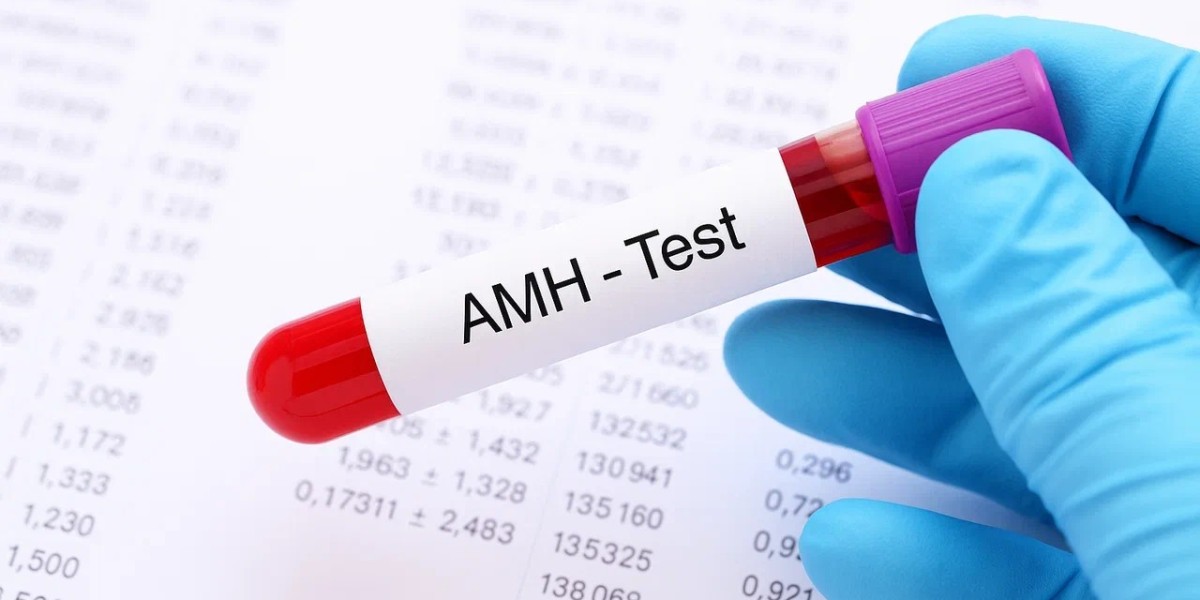

Understanding your reproductive health can help you make informed decisions about family planning, fertility treatment, and future pregnancy goals. One blood test that often plays an important role in this process is the Anti-Müllerian Hormone (AMH) test. It provides information about ovarian reserve, which refers to the remaining supply of eggs in the ovaries.
The Anti-Müllerian Hormone Test in Dubai is commonly recommended for people undergoing fertility assessments, considering in vitro fertilization (IVF), or seeking a better understanding of their reproductive health. It may also help healthcare professionals evaluate certain conditions, including polycystic ovary syndrome (PCOS), when interpreted alongside symptoms and other investigations.
However, AMH results can be confusing without the right context. A high or low result does not tell the whole story about fertility, egg quality, or the likelihood of natural pregnancy.
This guide explains what the Anti-Müllerian Hormone test measures, why it is performed, how to interpret AMH levels, and what your results may mean for your reproductive health.
What Is the Anti-Müllerian Hormone Test?
The Anti-Müllerian Hormone test is a blood test that measures the amount of AMH circulating in your bloodstream. AMH is a hormone produced by small developing follicles in the ovaries. These follicles contain immature eggs that may develop further during the menstrual cycle.
Because AMH levels generally reflect the number of small follicles present in the ovaries, the test is widely used as a marker of ovarian reserve.
In fertility care, ovarian reserve testing can help clinicians estimate how the ovaries may respond to fertility medications, particularly during assisted reproductive treatments such as IVF.
AMH is also produced in males during specific stages of development, where it has a different biological role. In adult reproductive healthcare, however, the test is most commonly discussed in relation to ovarian function and fertility assessment.
It is important to understand that AMH is not a direct egg count. It does not measure every egg in the ovaries, assess egg quality, or determine with certainty whether someone can become pregnant naturally.
Why Do Doctors Recommend an AMH Blood Test?
A healthcare professional may recommend an AMH test for several reasons, depending on your age, symptoms, reproductive history, and treatment goals.
Assessing Ovarian Reserve
The test can provide an estimate of ovarian reserve. A lower AMH level may indicate a smaller remaining pool of developing follicles, while a higher level may indicate a larger pool.
These results must be interpreted in relation to age and medical history. A low AMH level does not necessarily mean pregnancy is impossible, and a high level does not guarantee better fertility.
Planning IVF and Other Fertility Treatments
AMH testing is commonly used before IVF to help estimate how the ovaries might respond to ovarian stimulation medication.
A higher AMH level may be associated with a stronger response and a greater risk of ovarian hyperstimulation syndrome (OHSS), while a lower level may suggest that fewer eggs could be retrieved during a stimulation cycle.
Doctors use AMH alongside ultrasound findings, age, and other clinical information to individualize fertility treatment.
Investigating Possible PCOS
Polycystic ovary syndrome is a hormonal condition that may affect menstrual cycles, ovulation, and androgen levels. People with PCOS can have elevated AMH because they may have a larger number of small ovarian follicles.
However, an AMH test alone cannot diagnose PCOS. Diagnosis depends on appropriate clinical criteria and may involve assessment of menstrual patterns, androgen levels, and ovarian appearance on ultrasound.
Evaluating Certain Ovarian Conditions
In selected situations, AMH testing may help assess ovarian function after certain medical treatments or surgeries. It may also be used in specialist care when evaluating some ovarian tumors that produce AMH.
The reason for testing determines how the result should be interpreted.
How Is the AMH Test Performed?
The Anti-Müllerian Hormone test is relatively straightforward and usually requires a blood sample taken from a vein in your arm.
A healthcare professional collects the sample and sends it to a laboratory for analysis. The laboratory measures the concentration of AMH and reports the result using the units supported by its testing method.
Preparation: In most cases, no fasting is required for an AMH test. Unlike some reproductive hormones, AMH levels are relatively stable throughout the menstrual cycle, so testing can often be performed on different days. Nevertheless, follow the instructions provided by your healthcare professional or laboratory.
Timing: You generally do not need to wait for a specific menstrual cycle day unless your clinician is coordinating AMH testing with other fertility investigations.
Results: The time needed to receive your report depends on the laboratory and its testing process.
Tell your healthcare professional about any relevant medical conditions, ovarian surgery, fertility medications, or hormonal contraceptive use. Some factors, including hormonal contraception, may influence AMH measurements in certain individuals.
Understanding AMH Levels: What Do Your Results Mean?
AMH results are usually interpreted using laboratory reference ranges, age, and the purpose of testing. There is no single AMH value that can accurately describe fertility for every person.
The following table provides a general explanation of how AMH results may be understood.
| AMH result pattern | Possible interpretation | What it does not establish |
|---|---|---|
| Lower AMH | May indicate reduced ovarian reserve or a lower expected response to ovarian stimulation | It does not prove infertility or rule out natural pregnancy |
| Within the laboratory's expected range | May suggest ovarian reserve consistent with that laboratory's reference information | It does not guarantee egg quality or pregnancy |
| Higher AMH | May indicate a larger pool of small ovarian follicles | It does not guarantee higher fertility |
| Markedly elevated AMH | Can occur in PCOS and may predict a stronger response to ovarian stimulation | It cannot diagnose PCOS on its own |
AMH is commonly reported in nanograms per milliliter (ng/mL) or picomoles per liter (pmol/L). These units are not numerically interchangeable, so always check the unit printed on your report.
Reference ranges differ among laboratories, assays, and age groups. Avoid comparing your result with an online chart unless the units, testing method, and clinical context are appropriate.
Does Age Affect AMH Levels?
Yes. AMH levels generally decline as people with ovaries get older because the pool of developing follicles decreases over time. However, the rate of decline varies considerably between individuals.
Age is also an important factor in egg quality and the likelihood of pregnancy. AMH is more useful for estimating ovarian reserve and response to fertility medication than for predicting the quality of eggs or the chance of natural conception.
For this reason, clinicians consider AMH together with age rather than using it as a standalone fertility score.
Low AMH Levels: Possible Causes and Next Steps
A low Anti-Müllerian Hormone Test result may indicate diminished ovarian reserve, meaning the number of remaining developing follicles is lower than expected for a particular context.
Potential reasons include:
Normal age-related changes in ovarian reserve
Previous ovarian surgery or certain ovarian conditions
Chemotherapy or other treatments that may affect ovarian function
Individual biological variation
Certain genetic or medical factors
In some cases, a low AMH result is discovered during a fertility assessment in someone who has regular periods and no obvious symptoms.
The appropriate next step depends on your goals. If you are trying to conceive, your clinician may consider your age, menstrual history, partner-related factors, and other fertility investigations. An ultrasound measuring the antral follicle count may provide additional information.
There is currently no proven treatment that reliably restores the natural egg supply or reverses age-related loss of ovarian reserve. Supplements marketed to increase AMH should be approached cautiously because evidence that they improve fertility outcomes is limited.
A low result should be discussed with a qualified healthcare professional rather than interpreted as a definitive prediction of infertility.
High AMH Levels: Is a Higher Result Always Better?
Not necessarily. Higher AMH levels may indicate a larger number of small ovarian follicles, but they do not automatically mean that conception will be easier.
One possible explanation for elevated AMH is polycystic ovary syndrome. People with PCOS may have many small follicles that do not develop and release eggs regularly. As a result, irregular ovulation can make conception more difficult for some individuals despite relatively high AMH levels.
High AMH may also help fertility specialists anticipate a stronger response to ovarian stimulation medication. This information can guide treatment planning and help reduce the risk of OHSS.
If your result is elevated, your clinician may assess your menstrual cycle, acne, excess facial or body hair, androgen levels, and ultrasound findings when clinically appropriate.
The aim is to understand why AMH is high and whether any further assessment is needed, rather than trying to lower the number itself.
AMH Test vs. Other Fertility Investigations:
The AMH test is useful, but it is only one component of a comprehensive fertility assessment.
Antral follicle count: This ultrasound examination estimates the number of small follicles visible in the ovaries. It complements AMH when assessing ovarian reserve.
Follicle-stimulating hormone (FSH): FSH is another hormone used in selected ovarian reserve assessments. It is usually measured early in the menstrual cycle and may be interpreted alongside estradiol.
Estradiol: This hormone helps clinicians understand ovarian hormone activity and interpret certain other fertility test results.
Ovulation assessment: Menstrual history and, when indicated, blood tests or ultrasound can help determine whether ovulation is occurring.
Semen analysis: When pregnancy is not occurring as expected, evaluating sperm health may be an important part of the fertility assessment.
Fallopian tube and uterine evaluation: Depending on the situation, additional tests may assess whether the fallopian tubes are open and whether the uterus has structural concerns.
These investigations answer different questions. A normal AMH result cannot confirm that ovulation is regular, the fallopian tubes are open, sperm parameters are normal, or pregnancy will occur.
Frequently Asked Questions About the AMH Test:
Can I get pregnant naturally with low AMH?
Yes, natural pregnancy may still be possible with low AMH. The result primarily provides information about ovarian reserve and does not directly measure the ability to conceive naturally in a given cycle. Age, ovulation, sperm health, and fallopian tube function also matter.
Does the AMH test tell me how many eggs I have left?
No. AMH provides an indirect estimate of ovarian reserve based on hormone production by small follicles. It does not count all remaining eggs or provide an exact number of eggs available throughout your reproductive life.
Is the AMH test painful?
The test involves a routine blood draw. You may experience brief discomfort or mild bruising at the collection site, but serious complications are uncommon.
Can AMH levels improve naturally?
AMH levels can fluctuate, and measurements may vary with testing methods and individual factors. However, there is no established lifestyle change, food, or supplement that reliably increases the underlying egg supply. Healthy habits support general reproductive health but cannot guarantee an increase in AMH.
When should I consider an AMH test?
The test may be useful when planning fertility treatment, investigating ovarian reserve, or assessing certain reproductive conditions. It is not necessary for everyone, and routine AMH testing is not recommended as a definitive screening test for natural fertility in people without a specific clinical reason.
Final Thoughts: Use Your AMH Result as Information, Not a Fertility Verdict
The Anti-Müllerian Hormone Lab tests can provide valuable information about ovarian reserve, help fertility specialists plan treatment, and contribute to the evaluation of conditions such as PCOS. However, its meaning depends on age, medical history, symptoms, and the reason the test was ordered.
A low AMH result does not automatically mean you cannot become pregnant, just as a high result does not guarantee fertility. The test is most useful when combined with other clinical findings and interpreted by a qualified healthcare professional.
If you have received an abnormal AMH result or are planning a pregnancy, discuss what your specific number means and whether further testing would be helpful. Understanding the limitations and benefits of the AMH blood test can help you make informed decisions about your reproductive health and future family-planning options.