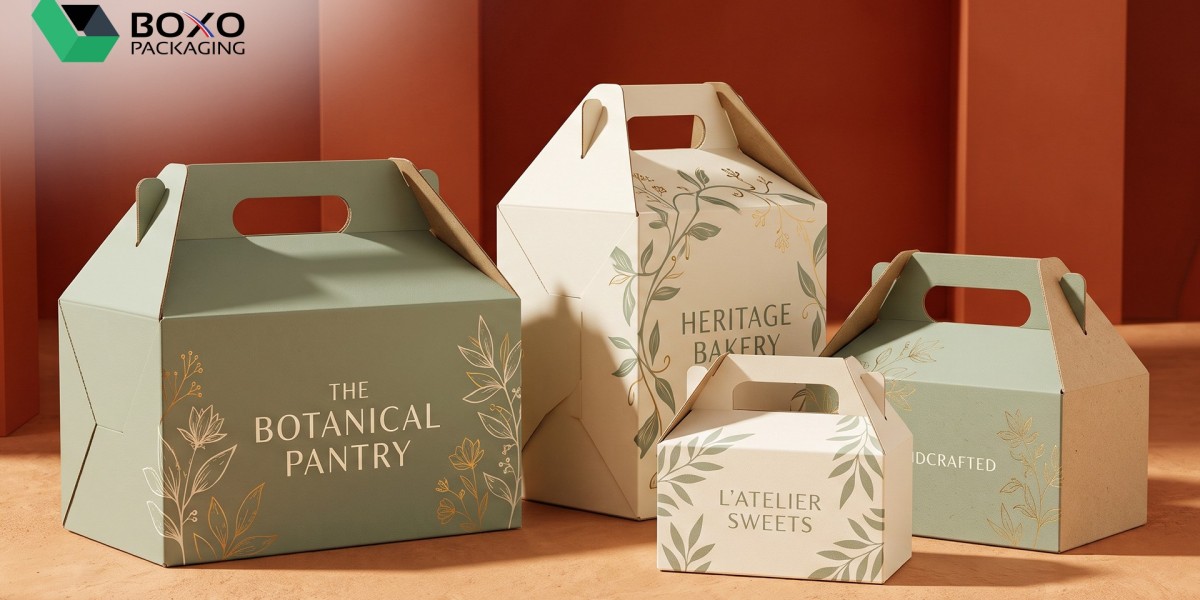

A gable box has a sloped, roof shaped top that doubles as a carry handle, and the lock decides how well it stays shut. Many bakers, sweet shops and gift sellers choose snap lock gable boxes because the closure clicks into place without tape or glue. This guide covers the structure, materials and cost factors so you can brief a supplier clearly.
How the Snap Lock Works
A snap lock gable box is a folding carton with two angled panels that meet at the top. Small tabs or slots on those panels press together and hold the roof closed, so the box stays secure while being carried.
It arrives flat, so storage space stays low, and staff can assemble it by hand in seconds. The lock and handle are part of the structure, so their strength depends on the board weight and the contents.
Products That Suit This Format
Four uses are especially common:
- Cupcakes, cookies and pastries sold as takeaway treats.
- Sweets, chocolates and party favors packed as small gift sets.
- Small gifts and hampers where a playful shape adds appeal.
- Hot takeaway meals, provided the board is coated or lined against grease.
Size the box around your heaviest item, then adapt it for lighter ones.
Board Choices and Food Safety
Kraft paperboard of around 300 to 350 GSM gives a natural look, while white SBS board of 300 to 400 GSM holds sharper color. Board that is too thin can let the lock tabs bend or pop open, while very thick board makes the roof harder to fold.
For anything touching food, ask your supplier for board suitable for direct contact and confirm it meets UK food contact rules. A greaseproof liner is often safer than printing on the inner surface.
At Boxo Packaging, we usually ask for product weight, box dimensions and whether items are served warm or cold before suggesting a board grade.
Lock Strength and Testing
A snap lock should hold when the box is lifted by the handle and gently shaken. Heavier contents put more strain on the tabs, so test with the real product rather than a lighter stand in.
Repeated opening can also weaken a lock. If customers will reopen the box often, ask your supplier about reinforced tabs.
What Affects the Price
Order quantity has the biggest effect, since setup and tooling are spread across more units. Board grade, size, print colors and finishing then add to the total, and a new cutting die is a one off charge.
A window adds cost too, and plastic film must be removed before recycling. A paper film or open cut out is easier to dispose of, although it protects less.
Ordering Tips Before You Commit
Request a physical sample, fill it with real products and carry it by the handle. Check that the lock stays closed and the base keeps its shape.
Look for FSC certified board and water based inks, and avoid claiming a box is “fully green”, as every material has some footprint. Allow extra lead time, since production and freight can take several weeks. A reliable supplier will question your specification rather than simply accept it. That is how we work at Boxo Packaging, because fixing a problem early costs far less than a reprint, especially with snap lock gable boxes.
Custom Packaging Manufacturers: A Practical Guide to Choosing the Right Partner
Working with custom packaging manufacturers is a bigger decision than comparing prices on a quote sheet. Factory capability, quality checks and honest advice on specifications matter just as much. This guide covers what to look for, which materials to ask about and how costs are built so you can compare makers clearly.
What a Packaging Manufacturer Does
A manufacturer cuts, prints, folds and glues packaging to your size and design, usually in its own factory. Some firms outsource part of the process, so ask which steps happen in house and which do not.
That detail affects lead time, quality control and who takes responsibility if a batch goes wrong. A good maker should also advise on structure and board choice, not just run your artwork.
Packaging Types and Materials to Ask About
The right choice depends on product weight, fragility and sales channel. Four options cover most requests:
- Mailer boxes: self locking corrugated boxes that suit ecommerce orders.
- Folding cartons: lightweight, flat packed boxes for cosmetics, supplements and dry food.
- Rigid boxes: thick, wrapped boxes for gifts and premium goods, though they take more storage space.
- Shipping cartons: plain corrugated boxes for heavier parcels.
Folding cartons usually use board of 300 to 400 GSM. Corrugated boxes use E flute for rigidity or B flute for cushioning, with double wall board for heavy loads.
For anything touching food, ask for board suitable for direct contact and confirm it meets UK food contact rules.
At Boxo Packaging, we usually ask for product weight, dimensions and delivery route before suggesting a board grade, because these details decide strength far more than appearance does.
How to Judge a Manufacturer
Look beyond the headline price. Check minimum order quantities, proof options, lead times and whether tooling and delivery are included in the quote.
Ask for a physical sample and a clear explanation of their quality checks. A maker who hesitates on either is worth questioning.
Cost Factors and Sustainability
Order quantity has the biggest effect on price, since setup and tooling are spread across more units. Board grade, size, print colours and finishing then add to the total, and a new cutting die is a one off charge.
Look for FSC certified board, water based inks and single material designs that recycle more easily. Avoid claiming a box is “fully green”, as every material has some footprint. Plastic windows and heavy lamination can complicate recycling.
Ordering Tips Before You Commit
Request a physical sample and fill it with real stock. Check the dieline proof, test the closure and drop a packed box from a realistic height.
Allow extra lead time, since production and freight can take several weeks. A reliable manufacturer will question your specification rather than simply accept it. That is how we work at Boxo Packaging, because fixing a problem early costs far less than a reprint, especially when choosing custom packaging manufacturers.