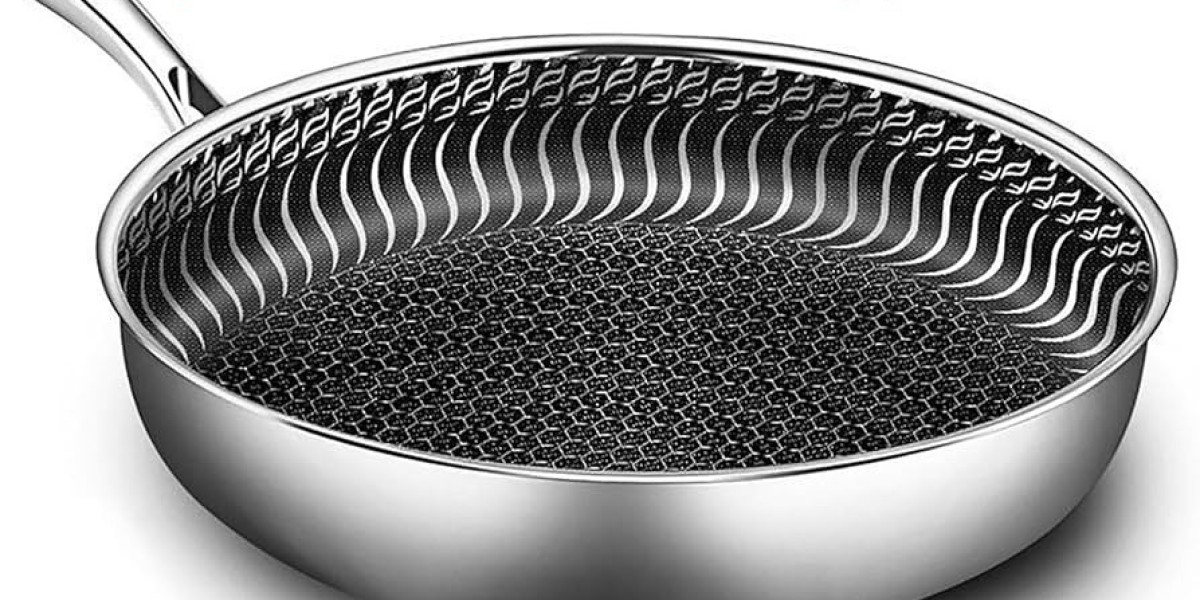

Uncoated Non-Stick Frying Pans can interest cookware buyers comparing surface materials, construction methods, and cooking requirements before placing an order. For importers, wholesalers, and private-label brands, selecting a suitable model involves more than checking its appearance or diameter. Buyers should clarify the intended cooking applications, material specifications, heat-source compatibility, and expected order quantity. It is also important to distinguish a bare metal cooking surface from a conventional applied coating, since these designs can offer different cooking experiences and maintenance requirements.
Clarify the Intended Cooking Applications
Begin by identifying the customers who will use the product and the meals they typically prepare. Household kitchens, restaurants, catering businesses, and retail customers may have different expectations regarding weight, capacity, handling, and cleaning.
A compact pan may suit smaller households, while a wider model can provide more cooking space for family meals. Commercial users may prioritize durability, frequent handling, and convenient storage. These differences influence which dimensions and construction features buyers should consider.
Discuss expected applications with the manufacturer before choosing a model. Clear information about cooking habits, customer preferences, and intended sales channels helps both parties establish practical product requirements.
Examine Material and Surface Construction
The body material influences weight, heating behavior, maintenance, and suitability for different cooking tasks. Stainless steel, carbon steel, cast iron, and aluminum each have their own characteristics.
Stainless steel is commonly used in cookware designed for a range of everyday applications. Carbon steel can develop a seasoned surface when users follow appropriate preparation and maintenance practices. Cast iron retains heat effectively but can be heavier to handle. Aluminum is relatively lightweight, while its heating characteristics depend partly on the body design and thickness.
Buyers should request specific information about the material, body thickness, base construction, and surface finish. They should also confirm whether the product receives additional surface treatment. Accurate specifications help purchasers compare models and prepare reliable descriptions for distributors or retail customers.
Confirm Dimensions and Heat Compatibility
The size and shape of a pan affect its cooking capacity, storage requirements, and suitability for different kitchens. Buyers should review the overall diameter, usable cooking area, sidewall height, handle length, and product weight.
Heat-source compatibility also deserves attention. A model intended for induction cooking requires a suitable base construction, and not every metal pan is automatically compatible. Ask the manufacturer to confirm which cooking surfaces the specific model supports, including gas, electric, ceramic, or induction where applicable.
If the product range includes several sizes, check whether they share consistent design features and packaging arrangements. This can simplify inventory management and help retailers present related products as a coordinated range.
Assess Handle Design and Product Handling
The handle influences comfort, balance, storage, and safe handling during cooking. Buyers should check its shape, length, material, attachment method, and suitability for the intended environment.
When reviewing a sample, consider how the handle feels when the pan is lifted and whether its proportions suit the body size. Examine the attachment points for visible irregularities and ask about the manufacturer’s inspection procedures.
Oven use should also be verified for the exact model. Handle materials and other components can have different temperature limits, so buyers should request clear instructions instead of assuming that every design is suitable for oven cooking.
Review Cleaning and Maintenance Requirements
Maintenance guidance can affect customer satisfaction and product selection. Different materials may require different cleaning, drying, and storage practices.
For example, certain carbon steel and cast iron products need seasoning and careful drying to help manage rust. Stainless steel has different care requirements, although food residue may still need soaking or suitable cleaning methods. Buyers should confirm whether dishwasher use is permitted and which cleaning tools or agents are recommended.
Manufacturers can provide care instructions for packaging inserts, product pages, and user manuals. Clear guidance helps customers understand how to use and maintain the cookware according to its intended design.
Discuss Customization and Bulk Purchasing
For wholesale and private-label orders, product specifications are only one part of the purchasing process. Buyers may also need custom logos, packaging designs, labels, carton specifications, or particular quantities.
Prepare a written specification covering the selected model, dimensions, materials, surface finish, handle design, branding, and packaging requirements. Ask which features can be customized and whether a sample can be approved before mass production.
Before confirming an order, clarify the minimum order quantity, sample arrangements, production schedule, inspection procedures, and shipping terms. Written confirmation helps reduce misunderstandings and gives both parties a shared reference throughout the project.
Evaluate Product Information and Communication
Clear communication helps buyers assess whether a manufacturer understands their requirements. Request specification sheets, available model details, packaging information, and relevant quality-control procedures.
When a sample arrives, compare it with the agreed specifications. Check its dimensions, surface condition, base flatness, handle attachment, and packaging. If a feature cannot be confirmed through visual inspection, ask whether additional documentation or testing information is available.For repeat orders, retaining the approved sample and specification sheet can make replenishment easier to coordinate. Buyers can refer to the same requirements when discussing changes to dimensions, packaging, or branding. cookware-supplier provides a starting point for reviewing cookware options and discussing manufacturing requirements for different markets. To review available products and prepare for a sourcing discussion, visit https://www.cookware-supplier.com/product/ with your preferred specifications, estimated order quantity, and packaging requirements.