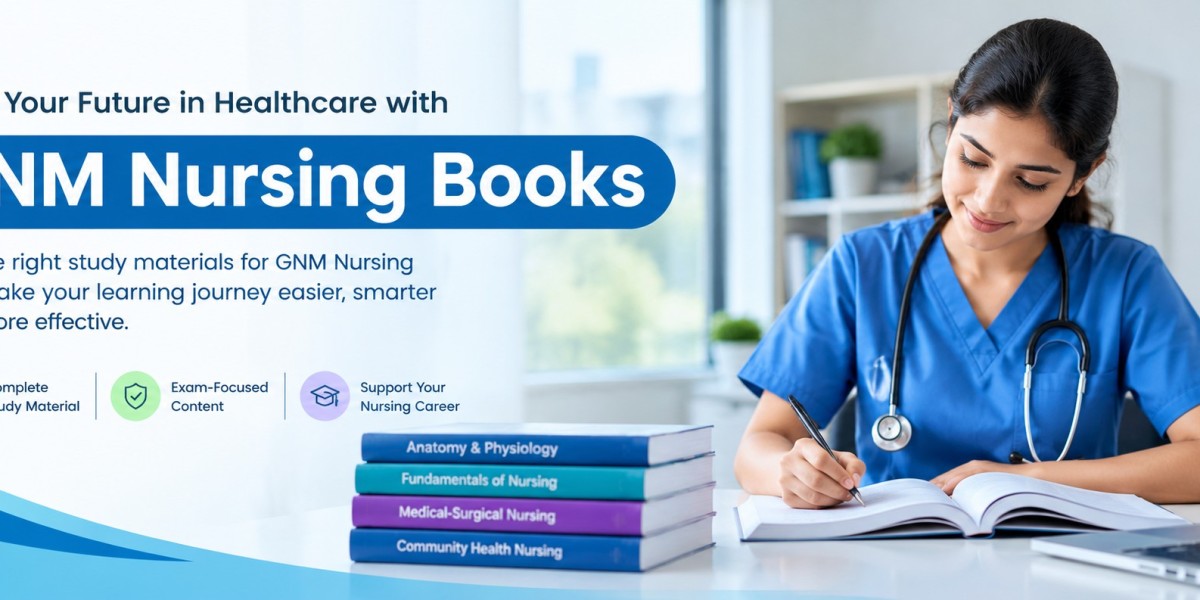

GNM Nursing Books: A Complete Guide for Nursing Students
Introduction to GNM Nursing Books
The GNM course asks a lot from a student. You attend classes in the morning, spend hours in the hospital ward, and then come back to your room to study for the next test. In the middle of this busy routine, your textbooks are the one steady support you have. They hold the knowledge you need to understand patients, answer exam questions, and perform your duties with confidence.
That is why the right GNM Nursing Books are so important. They explain topics in a clear order, help you revise on your own time, and connect what you learn in class to what you see in the ward. This guide will help you understand the subjects you will study, how to choose suitable books, and how to make the best use of them.
Why Are Nursing Books Important for GNM Students?
Nursing is not learned by listening alone. A teacher can explain a topic once, but a book lets you return to it as many times as you need. When you are confused about a procedure or forget a definition, the textbook is there to help.
Good books also build your understanding of patient care. They show you why a certain step is taken, what signs to watch for, and how to respond when something changes. This kind of understanding stays with you far longer than memorised lines.
Textbooks are also the base of exam preparation. Most questions in nursing exams come from the prescribed syllabus, so a book that covers it well can save you a great deal of stress.
Important Subjects Covered in the GNM Course
The GNM programme covers a wide range of subjects. The exact names and order may differ depending on the curriculum your institute follows, so always check your own syllabus. Here are the main subjects most students will meet.
Fundamentals of Nursing
This is where your journey begins. You learn basic procedures, patient hygiene, safety, observation of vital signs, and the everyday skills of caring for a patient. A good book here explains each procedure step by step and also gives the reason behind it.
Anatomy and Physiology
These subjects teach you how the human body is built and how it works. Without this knowledge, it is hard to understand any disease or treatment. Look for books with clear, labelled diagrams, because pictures often explain what words cannot.
Medical Surgical Nursing
Here you study common illnesses, patient assessment, treatment support, and your responsibilities as a nurse. It is a large subject, so a book with simple headings and short sections will make it easier to study in small parts.
Community Health Nursing
This subject focuses on public health, disease prevention, health education, and care in community settings. Practical examples from villages and health centres make this subject easier to grasp.
Midwifery and Gynaecological Nursing
You will learn about pregnancy, childbirth, postnatal care, and women's reproductive health. Because this subject involves both theory and hands on skill, students should choose books that explain procedures clearly and describe care at every stage.
Child Health Nursing
This subject covers the healthcare needs of children, along with growth, development, and basic paediatric nursing care. Books that include charts and simple tables help a lot when you need to remember stages and schedules.
How to Choose the Right GNM Nursing Books
Buying books without a plan often leads to wasted money. Keep this simple checklist in mind.
- Check the latest syllabus. Your syllabus tells you what to study. Pick books that cover every unit in it.
- Follow the reading list from your teachers. They know the exam pattern and can guide you well.
- Look for clear explanations and diagrams. If a chapter confuses you after two readings, the book may not suit you.
- Check the edition. Make sure it fits the current curriculum.
- Look for practice questions. Exercises at the end of chapters help you test your understanding.
- Choose according to your academic year. A first year student does not need the same material as a final year student.
- Compare your options. Take a little time to look at more than one book before you decide.
Before you buy, read one difficult topic from the book. If it makes sense to you, that is a good sign. Many students also browse a trusted range of GNM Nursing Books to compare titles and see which one fits their subject and year.
Benefits of Using the Right Nursing Study Materials
Well chosen study materials do much more than help you pass.
- They make difficult concepts easier to understand.
- They make revision faster because the content is already organised.
- They strengthen your theory, which supports your practical work.
- They give you confidence when you step into the ward for training.
When your books, notes, and ward experience all support one another, learning begins to feel natural.
Tips for Studying GNM Nursing Books Effectively
Owning the right books is only half the work. How you study decides how much you gain.
Create a Daily Timetable
Set aside fixed hours for study and stick to them. A simple plan that you can follow every day is better than a perfect plan that you drop after a week.
Break Large Chapters Into Small Parts
A long chapter can feel scary. Divide it into smaller topics and finish one at a time. You will feel progress quickly, and that keeps you motivated.
Make Short Notes
After finishing a topic, write the key points in your own words. These notes will be a great help during revision week.
Revise Diagrams, Definitions, and Procedures
Draw diagrams by hand and say procedures aloud. This builds memory much faster than silent reading.
Practise Earlier Question Papers
Solving previous questions shows you how topics are asked and how to manage your time in the exam hall.
Ask Your Instructors
If something stays unclear, do not carry the doubt for weeks. Ask your teacher. A short explanation can solve what hours of reading could not.
Connect Theory With Ward Practice
When you are on duty, think back to what you read. Seeing a condition in a real patient, under the guidance of your supervisor, helps the topic come alive. Students who keep using their GNM Nursing Books alongside clinical postings often find that both the book and the ward make more sense.
Common Mistakes to Avoid When Selecting Nursing Books
Many students make the same mistakes year after year. A little planning can help you avoid them.
- Choosing books without checking the syllabus. This is the most common and most costly mistake.
- Buying outdated editions. Older books may miss newer guidelines and practices.
- Collecting too many reference books. More books do not mean more marks. A few good ones, studied well, are enough.
- Depending only on memorisation. Nursing needs understanding. If you only memorise, you will struggle when a question comes in a different form.
The best way to avoid these errors is to plan your studies early, follow your course requirements, and ask your teachers when you are unsure.
Frequently Asked Questions About GNM Nursing Books
Which subjects should GNM students focus on?
Focus on the subjects listed in your current syllabus for your academic year, and keep your exam dates in mind. In the early months, fundamentals of nursing, anatomy, and physiology usually deserve the most attention because later subjects depend on them.
How can students select suitable GNM textbooks?
Check how well the book covers your syllabus, look at the reading list given by your teachers, and review the edition. Most importantly, choose a book whose explanations you can follow without constant struggle.
Are reference books useful for GNM students?
Yes, they can be. Reference books give extra information on topics that feel difficult. However, they should support your prescribed textbooks and not replace them. Always follow what your instructors recommend first.
How can nursing books help with examination preparation?
Books help you revise on a regular schedule. Read each topic, write short notes, solve practice questions, and go back over important concepts often. Steady effort always works better than last minute cramming.
Conclusion
Choosing suitable textbooks is one of the smartest decisions a GNM student can make. The right books make lessons clearer, exams less stressful, and ward duty more confident. Keep your syllabus at the centre of every choice, pay attention to the edition and the way a book explains things, and avoid buying more than you can realistically study.
If you are building your study shelf, take your time with
GNM Nursing Books: A Complete Guide for Nursing Students
Introduction to GNM Nursing Books
The GNM course asks a lot from a student. You attend classes in the morning, spend hours in the hospital ward, and then come back to your room to study for the next test. In the middle of this busy routine, your textbooks are the one steady support you have. They hold the knowledge you need to understand patients, answer exam questions, and perform your duties with confidence.
That is why the right GNM Nursing Books are so important. They explain topics in a clear order, help you revise on your own time, and connect what you learn in class to what you see in the ward. This guide will help you understand the subjects you will study, how to choose suitable books, and how to make the best use of them.
Why Are Nursing Books Important for GNM Students?
Nursing is not learned by listening alone. A teacher can explain a topic once, but a book lets you return to it as many times as you need. When you are confused about a procedure or forget a definition, the textbook is there to help.
Good books also build your understanding of patient care. They show you why a certain step is taken, what signs to watch for, and how to respond when something changes. This kind of understanding stays with you far longer than memorised lines.
Textbooks are also the base of exam preparation. Most questions in nursing exams come from the prescribed syllabus, so a book that covers it well can save you a great deal of stress.
Important Subjects Covered in the GNM Course
The GNM programme covers a wide range of subjects. The exact names and order may differ depending on the curriculum your institute follows, so always check your own syllabus. Here are the main subjects most students will meet.
Fundamentals of Nursing
This is where your journey begins. You learn basic procedures, patient hygiene, safety, observation of vital signs, and the everyday skills of caring for a patient. A good book here explains each procedure step by step and also gives the reason behind it.
Anatomy and Physiology
These subjects teach you how the human body is built and how it works. Without this knowledge, it is hard to understand any disease or treatment. Look for books with clear, labelled diagrams, because pictures often explain what words cannot.
Medical Surgical Nursing
Here you study common illnesses, patient assessment, treatment support, and your responsibilities as a nurse. It is a large subject, so a book with simple headings and short sections will make it easier to study in small parts.
Community Health Nursing
This subject focuses on public health, disease prevention, health education, and care in community settings. Practical examples from villages and health centres make this subject easier to grasp.
Midwifery and Gynaecological Nursing
You will learn about pregnancy, childbirth, postnatal care, and women's reproductive health. Because this subject involves both theory and hands on skill, students should choose books that explain procedures clearly and describe care at every stage.
Child Health Nursing
This subject covers the healthcare needs of children, along with growth, development, and basic paediatric nursing care. Books that include charts and simple tables help a lot when you need to remember stages and schedules.
How to Choose the Right GNM Nursing Books
Buying books without a plan often leads to wasted money. Keep this simple checklist in mind.
- Check the latest syllabus. Your syllabus tells you what to study. Pick books that cover every unit in it.
- Follow the reading list from your teachers. They know the exam pattern and can guide you well.
- Look for clear explanations and diagrams. If a chapter confuses you after two readings, the book may not suit you.
- Check the edition. Make sure it fits the current curriculum.
- Look for practice questions. Exercises at the end of chapters help you test your understanding.
- Choose according to your academic year. A first year student does not need the same material as a final year student.
- Compare your options. Take a little time to look at more than one book before you decide.
Before you buy, read one difficult topic from the book. If it makes sense to you, that is a good sign. Many students also browse a trusted range of GNM Nursing Books to compare titles and see which one fits their subject and year.
Benefits of Using the Right Nursing Study Materials
Well chosen study materials do much more than help you pass.
- They make difficult concepts easier to understand.
- They make revision faster because the content is already organised.
- They strengthen your theory, which supports your practical work.
- They give you confidence when you step into the ward for training.
When your books, notes, and ward experience all support one another, learning begins to feel natural.
Tips for Studying GNM Nursing Books Effectively
Owning the right books is only half the work. How you study decides how much you gain.
Create a Daily Timetable
Set aside fixed hours for study and stick to them. A simple plan that you can follow every day is better than a perfect plan that you drop after a week.
Break Large Chapters Into Small Parts
A long chapter can feel scary. Divide it into smaller topics and finish one at a time. You will feel progress quickly, and that keeps you motivated.
Make Short Notes
After finishing a topic, write the key points in your own words. These notes will be a great help during revision week.
Revise Diagrams, Definitions, and Procedures
Draw diagrams by hand and say procedures aloud. This builds memory much faster than silent reading.
Practise Earlier Question Papers
Solving previous questions shows you how topics are asked and how to manage your time in the exam hall.
Ask Your Instructors
If something stays unclear, do not carry the doubt for weeks. Ask your teacher. A short explanation can solve what hours of reading could not.
Connect Theory With Ward Practice
When you are on duty, think back to what you read. Seeing a condition in a real patient, under the guidance of your supervisor, helps the topic come alive. Students who keep using their GNM Nursing Books alongside clinical postings often find that both the book and the ward make more sense.
Common Mistakes to Avoid When Selecting Nursing Books
Many students make the same mistakes year after year. A little planning can help you avoid them.
- Choosing books without checking the syllabus. This is the most common and most costly mistake.
- Buying outdated editions. Older books may miss newer guidelines and practices.
- Collecting too many reference books. More books do not mean more marks. A few good ones, studied well, are enough.
- Depending only on memorisation. Nursing needs understanding. If you only memorise, you will struggle when a question comes in a different form.
The best way to avoid these errors is to plan your studies early, follow your course requirements, and ask your teachers when you are unsure.
Frequently Asked Questions About GNM Nursing Books
Which subjects should GNM students focus on?
Focus on the subjects listed in your current syllabus for your academic year, and keep your exam dates in mind. In the early months, fundamentals of nursing, anatomy, and physiology usually deserve the most attention because later subjects depend on them.
How can students select suitable GNM textbooks?
Check how well the book covers your syllabus, look at the reading list given by your teachers, and review the edition. Most importantly, choose a book whose explanations you can follow without constant struggle.
Are reference books useful for GNM students?
Yes, they can be. Reference books give extra information on topics that feel difficult. However, they should support your prescribed textbooks and not replace them. Always follow what your instructors recommend first.
How can nursing books help with examination preparation?
Books help you revise on a regular schedule. Read each topic, write short notes, solve practice questions, and go back over important concepts often. Steady effort always works better than last minute cramming.
Conclusion
Choosing suitable textbooks is one of the smartest decisions a GNM student can make. The right books make lessons clearer, exams less stressful, and ward duty more confident. Keep your syllabus at the centre of every choice, pay attention to the edition and the way a book explains things, and avoid buying more than you can realistically study.
If you are building your study shelf, take your time with GNM Nursing Books, pick titles that match your year and syllabus, and study them with a steady routine. A few well chosen books, used well, will support you through the course and into your nursing career.
, pick titles that match your year and syllabus, and study them with a steady routine. A few well chosen books, used well, will support you through the course and into your nursing career.