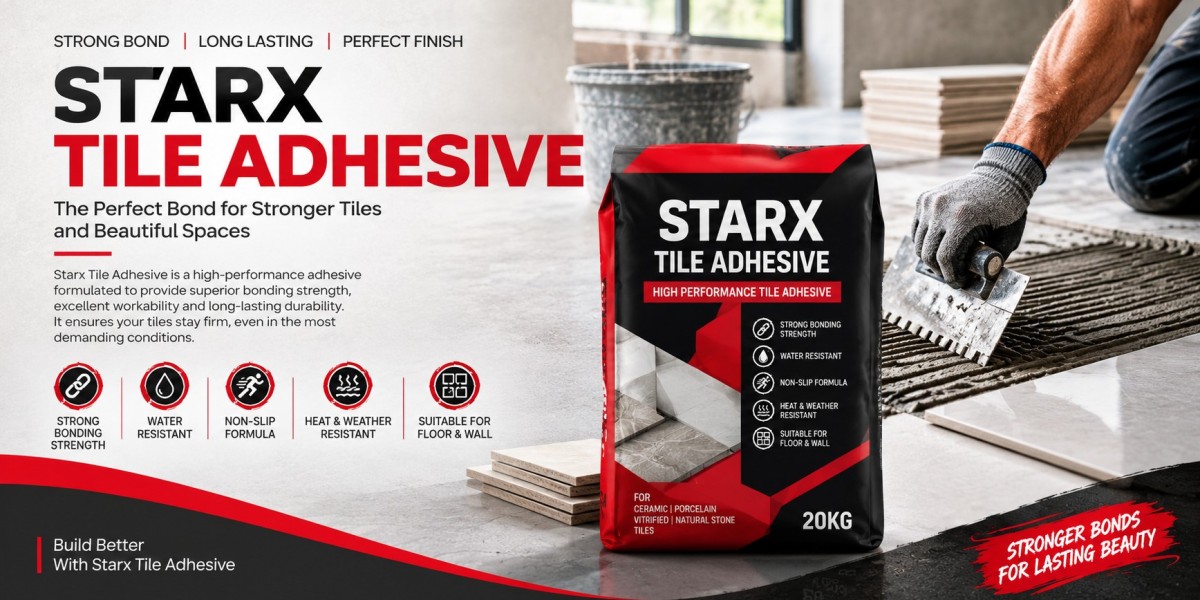

Starx Tile Adhesive: A Guide to Strong and Durable Tile Installation
Introduction to Starx Tile Adhesive
Walk into any finished home or shop and the first thing your eyes settle on is often the floor or the wall. Tiles shape how a space looks and feels, but what holds them in place is something most people never see. That hidden layer decides whether your tiles stay firm for years or start to crack, lift, and sound hollow after a few seasons.
This is where Starx Tile Adhesive comes into the picture. Choosing the right bonding material is just as important as choosing the tile itself. In this guide, we will look at what tile adhesive is, where it is used, how to pick the right one, and how to apply it properly, so your next project turns out neat and lasting.
What Is Tile Adhesive?
Tile adhesive is a bonding material used to fix tiles onto a surface such as a floor or wall. Most cement based adhesives are a mix of cement, polymers, minerals, and fine aggregates. You add water as per the maker's instructions, stir it into a smooth paste, and spread it on the surface before placing the tile.
Older methods used plain cement and sand mortar. These still work in some cases, but a ready made adhesive is more consistent because the ingredients are already balanced. That makes the result easier to repeat from one room to the next.
Keep one point in mind. There is no single adhesive that suits every job. The right choice depends on the tile type, the surface you are fixing it to, and where the tile will be used.
Key Benefits of Using Tile Adhesive
A suitable adhesive can make a real difference to both the look and the life of your tiling work.
Strong Bonding
When the surface is properly prepared, a good adhesive helps tiles stay firmly attached. This reduces the chances of tiles coming loose with daily use.
Better Installation Quality
Even spreading of adhesive helps you place tiles evenly. That gives cleaner lines, level surfaces, and a more professional finish.
Easy Preparation
Powder adhesives that come ready to mix save time on site. When you follow the maker's directions, mixing is simple and does not need guesswork.
Smoother Construction Work
The right product, applied correctly, can help cut down on problems and rework. Fewer repairs mean less cost and less delay.
Different Types of Tile Adhesive
Different tiling jobs call for different adhesive grades. Knowing the main types helps you ask better questions before you buy.
Floor Tile Adhesive
This type is meant for fixing ceramic and vitrified tiles on suitable indoor floor surfaces. Floors carry weight and foot traffic, so a firm and even bond matters a lot here.
Wall Tile Adhesive
Walls bring a different challenge, because gravity pulls on the tile. The adhesive must hold the tile in place while it sets. Always think about the size and weight of the tiles you plan to fix.
Flexible and High Performance Adhesive
Some formulations are made for demanding installations, where the surface may move slightly or face changes in temperature. Check the stated specifications to see if a product fits your needs.
Adhesive for Large Tiles and Special Uses
Large format tiles, outdoor areas, wet zones, and unusual surfaces often need specialised products. In such cases, it is wise to talk to a qualified installer before you decide.
Many builders and homeowners look through a trusted range of Starx Tile Adhesive to understand which grade is meant for which kind of work.
Where Can Tile Adhesive Be Used?
The answer depends on the grade you pick and the instructions given by the maker. Common uses include:
- Floors and walls in homes
- Kitchens and bathrooms
- Offices and commercial buildings
- Shops and showrooms
- Renovation and remodelling work
- Selected outdoor or specialised installations, using suitable products
Not every adhesive suits every surface or setting, so always match the product to the job.
How to Choose the Right Tile Adhesive
Before you buy, think through these points.
- Tile material, size, and weight. Heavier and larger tiles need a stronger bond.
- The surface. Check whether it is solid, clean, and in good condition.
- Indoor or outdoor. Outdoor work faces sun, rain, and temperature swings.
- Moisture and heat. Bathrooms, kitchens, and terraces need extra care.
- Technical details. Read what the maker says about use, thickness, and setting time.
- Expert advice. When in doubt, ask an experienced installer.
Reading the product sheet may feel boring, but it saves you from costly mistakes later.
Steps for Applying Tile Adhesive Correctly
Even the best product will fail if it is applied badly. Here is a simple overview of the process.
- Clean the surface and remove loose particles, dust, and oil.
- Check that the base is sound and properly prepared.
- Mix the adhesive as per the maker's instructions.
- Spread it with the recommended notched trowel.
- Place the tiles and adjust them within the working time.
- Let the adhesive set for the recommended period before grouting or using the area.
Mixing ratios, working time, coverage, and setting periods differ from one product to another. Weather and room conditions also play a part, so always read the instructions on the pack.
When you plan a project with Starx Tile Adhesive, following these steps and the product guidance together gives you the best chance of a clean and lasting finish.
Common Tile Adhesive Mistakes to Avoid
Most tiling problems come from a few avoidable errors.
- Picking the wrong grade. A product for light indoor work may not suit a heavy or outdoor job.
- Working on a dusty or weak surface. The adhesive cannot hold well on a poor base.
- Mixing it wrongly. Too much or too little water changes how the adhesive behaves.
- Spreading too much at once. Adhesive that dries before the tile is placed will not bond well.
- Ignoring the recommended thickness. Layers that are too thin or too thick can cause trouble.
- Allowing walking too early. Give the adhesive enough time to set.
- Skipping instructions for wet or outdoor areas. These places need special attention.
Frequently Asked Questions About Tile Adhesive
Is tile adhesive suitable for both floors and walls?
Some products are made for both, while others have a more specific purpose. Check the product details before you buy.
How do I select tile adhesive for my project?
Look at the tile material, size, the surface, the location, and the guidance given by the maker. If you are still unsure, ask a qualified installer.
How long does tile adhesive take to set?
It depends on the product, the temperature, the humidity, the surface, and the working conditions. Follow the instructions on the pack for the exact time.
Can tile adhesive be used in bathrooms?
Yes, but you must choose an adhesive that is suitable for wet areas. In many cases, proper waterproofing is also needed, so plan this before you start tiling.
Conclusion
A tiled surface is only as good as the bond behind it. The right adhesive, a clean and sound base, and careful application all work together to give you a floor or wall that looks neat and lasts. Take time to understand your tile, your surface, and your location before you decide on a product.
If you are planning a new build or a renovation, consider Starx Tile Adhesive and read the product details with care so you can match the right grade to your job. A little planning at the start will save you money and effort later, and it will leave you with tiles you can be proud of for years.