
Earbuds on Sheikh Zayed Road and in Riyadh cafés tell the same story: audio is booming across the region, and listeners are getting pickier as it does. That raises the bar for anyone launching a show, because the question is no longer whether to start but how professional the first episode needs to sound. Here is what the boom means for your production choices, and where a podcast studio in Dubai fits in.
What Is Driving the Boom
Behind the growth of podcasting in the Middle East sit a few practical drivers. The region has one of the youngest populations in the world and a large appetite for digital content. Smartphone penetration is high in the UAE, Saudi Arabia, and Egypt, so podcasts suit a mobile-first routine: people listen while driving, working out, or commuting, with no need to sit at a computer. Saudi Arabia and the UAE are currently the largest markets for consumption, followed closely by Egypt. Together, these factors explain why creators in Dubai, Riyadh, and Cairo are flocking to the medium.
Content is the third driver. For years, audiences consumed shows made elsewhere and adapted Western advice to local contexts. Listeners now want material that reflects their own culture, challenges, and humour. Arabic is the fastest-growing language segment, while English stays strong in business hubs like Dubai and for expat-focused shows. The takeaway for you is to choose a niche with a local angle; storytelling, business, and self-improvement are among the topics regional creators already use.
Why Production Quality Is Now the Entry Ticket
In the early days, a show could get away with poor audio. As the growth of podcasting in the Middle East accelerates, audience expectations rise with it. Listeners compare local shows with international chart-toppers, and crackly audio or grainy video sends them elsewhere. Production value also tells potential sponsors you are serious, which makes it a business decision as much as a creative one.
Better production tends to bring better planning. Creators now study data such as retention rates, and some use AI tools to keep standards high without burning out. Borrow that mindset: before you record, decide what a good episode looks like in length, structure, and audio quality, then judge every episode against it. A quick audit also helps: play your latest episode next to a show you admire and note where yours falls short on sound or picture.
What Professional Standards Look Like in Practice
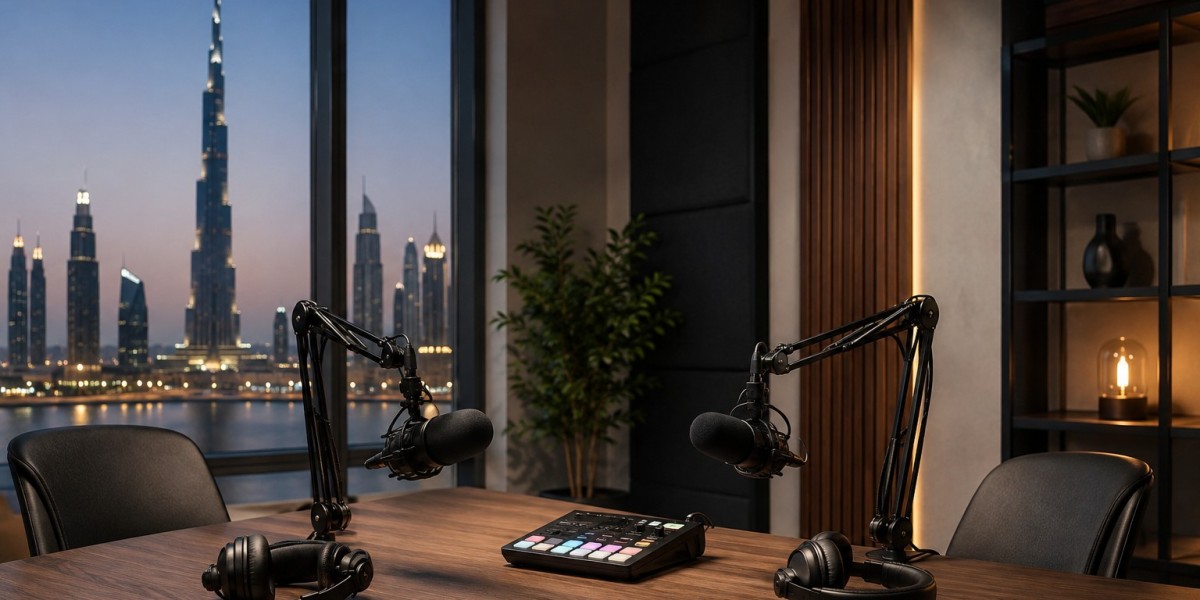
Riyadh is the other hub to watch, with Vision 2030 driving investment in entertainment and media and shows on entrepreneurship, culture, and social change growing quickly. Dubai leads on production, with established media free zones, a government pushing a digital economy, and rising demand for high-quality production. Creators here are no longer recording in bedrooms. At Gulf Podcast Studios in Business Bay, a booking comes with:
A sound-treated room with broadcast-grade microphones and a professional mixer
Three 4K cameras and professional lighting for video-first shows
A dedicated operator managing camera angles and audio levels
Seating for up to four guests, from solo episodes to small panels
Optional professional editing with branding, colour grading, and two rounds of revisions
Recording only starts at AED 450 per hour, and the Recording and Professional Edit option is AED 900 per hour, so booking a podcast studio in Dubai is a way to raise your standard without buying equipment first.
Turning an Audience Into a Business
A few years ago, monetisation was a struggle because brands did not understand the medium. That has changed. Regional brands now value loyal, engaged audiences, and podcasts allow niche targeting that radio cannot match: a fintech company can sponsor a show about investing in Dubai and reach exactly the right listeners. Creators also build businesses around their shows through courses, merchandise, and events. Common routes include sponsorships, affiliate marketing, selling your own services or products, and platform creator funds.
The challenges that remain point to practical moves:
Discoverability: finding local shows is still harder than a quick search, so publish on Spotify, Apple Podcasts, and YouTube, and cut short clips for social posts
Measurement: analytics are split across platforms, so track the same few numbers, such as retention, in one place
Infrastructure: professional recording spaces outside the major hubs can be hard to find, while Dubai creators can book one by the hour
Gulf Podcast Studios formats delivery for Spotify, Apple Podcasts, and YouTube and cuts social clips for Reels and Shorts, which covers the first of those moves. Treat the list as a starting plan rather than a full strategy: pick one monetisation route, one distribution habit, and one metric to track across your first ten episodes.
Conclusion
The region's audio boom rewards creators who pair a local voice with professional quality. The growth of podcasting in Middle East has opened real room for new shows, but listeners and sponsors now expect clean sound, clear video, and consistent publishing. A podcast studio in Dubai covers the production side, so your time goes into your niche and your story. If you are sizing up your first episode, a short enquiry to Gulf Podcast Studios is an easy way to see what your setup could look like.
FAQs
1. Is the Middle East podcast market saturated?
Not yet. Many niches remain untapped compared with Western markets, so there is room for new, high-quality shows.
2. Which countries listen to podcasts the most?
Saudi Arabia and the UAE are the largest markets for consumption, followed closely by Egypt. Together, these factors explain why creators in Dubai, Riyadh, and Cairo are flocking to the medium.
3. Do I need a professional studio to start?
You can start at home, but competition is high. A professional studio helps you meet the quality listeners now expect.
4. Which languages are most popular?
Arabic is the fastest-growing segment, while English remains strong in business hubs like Dubai and for expat-focused content.
5. Where is the studio located?
In Business Bay, in the Tamani Arts building, Office 1027. It is open 10am to 10pm Monday to Friday, with weekends on request.