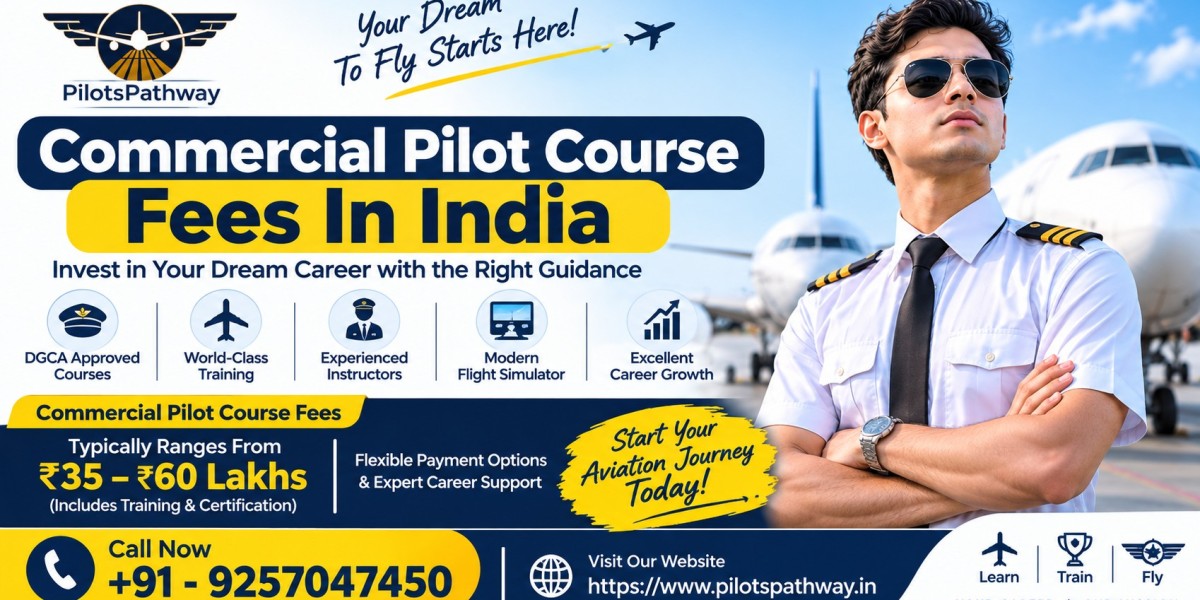

Becoming a commercial pilot is a goal for many students who enjoy aviation and want to build a career in flying. It is a profession that requires proper training, discipline, practical skills, and a clear understanding of aviation rules. If you want to fly aircraft professionally, a Commercial Pilot Course is an important step towards understanding the knowledge and skills required for this career. Before joining a course, students should learn about eligibility, training fees, ground classes, simulator practice, flying lessons, and the process of obtaining a commercial pilot licence.
At Pilots Pathway, students can explore pilot training courses and understand the different stages involved in preparing for a career in aviation. Choosing the right training route is important because pilot training requires time, effort, and financial planning. By learning about the course structure and requirements before enrolling, students can make better decisions and prepare for their future with realistic expectations.
What Is a Commercial Pilot Course?
A Commercial Pilot Course is a training programme for people who want to work towards obtaining a Commercial Pilot Licence (CPL). In India, the Directorate General of Civil Aviation (DGCA) regulates civil aviation licensing and the applicable requirements for pilot training. Students must meet the relevant educational, medical, examination, and flight experience requirements to qualify for the licence.
The training includes theoretical lessons and practical flying experience. In ground classes, students study subjects such as air navigation, meteorology, aviation regulations, aircraft technical knowledge, and flight planning. These subjects help them understand how aircraft operate, how weather affects flying, and how pilots prepare for safe flights. Practical flight training allows students to apply their knowledge under the supervision of qualified instructors.
Who Can Apply for a Commercial Pilot Course?
Students who want to become commercial pilots should first check the eligibility requirements. The exact requirements depend on the applicable DGCA rules and the stage of training. Understanding these conditions before admission can help students avoid unnecessary delays and expenses.
Educational qualifications are an important part of the process. For the commercial pilot route in India, students generally need to meet the prescribed Class 12 Physics and Mathematics requirements or an accepted equivalent qualification. Students who have not studied these subjects should check the currently accepted options for completing the requirements before choosing a training programme.
Why Choose an Aviation Course After 12th?
Choosing an Aviation course after 12th can be a practical starting point for students who want to explore their future in the aviation industry. However, not every aviation course leads to a pilot licence. Students who want to become commercial pilots should select a programme that matches the requirements of their intended licensing route.
After Class 12, eligible students can begin researching pilot ground training, medical requirements, examinations, and flight training options. Learning about these steps early can help students understand what they need to complete and how to organise their education and finances.
It is also important to understand the difference between an introductory aviation course and professional pilot training. An introductory course may provide basic knowledge about aviation, while a commercial pilot training pathway includes specific theoretical and practical requirements. Students should ask what qualification a course prepares them for and whether the provider offers ground classes, flight training, simulator sessions, or only selected services.
Before enrolling, consider the course structure, total expected cost, training schedule, and support available to students. A clear understanding of these details can help you choose a suitable programme instead of making a decision based only on advertising.
At Pilots Pathway, students can explore pilot training options and learn about the preparation involved in pursuing their aviation goals. The best starting point is to understand your eligibility and identify the training that matches your career plans.
Commercial Pilot Course Fees In India
One of the biggest questions for aspiring pilots and their families is the cost of training. Commercial Pilot Course Fees In India vary from one training provider to another. The total amount depends on factors such as the flying school, location, aircraft used, training hours, accommodation, examination expenses, and services included in the package.
Students should understand that the advertised course fee may not cover every expense. The overall budget may include ground classes, practical flying, instructor charges, aircraft usage, medical assessments, examination fees, study materials, accommodation, transportation, and licensing-related expenses. Additional flying hours or repeated examinations may also increase the total cost.
For this reason, it is important to request a written fee breakdown before paying an admission amount. Ask which services are included, which expenses must be paid separately, and whether any additional charges may apply during training. Comparing these details across different providers gives students a more realistic view of the total investment.
Training duration can also affect the budget. Weather conditions, aircraft maintenance, scheduling, examination results, and individual progress may influence how quickly a student completes the required training. Students should ask how delays are handled and how extra training hours are charged.
Families should prepare a financial plan that considers the complete training journey rather than only the initial admission fee. They should also read the refund policy and payment terms carefully before making a commitment.
Pilots Pathway encourages aspiring pilots to understand their training options and plan carefully before beginning their journey. A well-planned budget can help students focus on learning without being surprised by expenses they could have considered earlier.
The Importance of Pilot Simulator Training
Pilot Simulator Training helps students become familiar with aircraft controls, cockpit instruments, and selected flight procedures in a controlled learning environment. A flight simulator can reproduce aspects of an aircraft cockpit, allowing students to practise specific tasks and understand how pilots use different instruments.
For beginners, simulator practice can make the cockpit environment easier to understand. Students can learn about instrument scanning, basic flight procedures, navigation tasks, and communication with an instructor. Depending on the simulator and programme, they may also practise responding to selected abnormal situations without facing the risks associated with practising those situations in an actual aircraft.
Simulator sessions can also help students repeat exercises and review mistakes. An instructor can explain what went wrong, demonstrate the correct procedure, and allow the student to practise again. This can support learning and help students become more familiar with procedures before applying their skills in practical flight training.
However, simulator practice does not replace all actual flying requirements. The training credit available depends on the type of simulator, its approval status, and the applicable rules. Students should ask their provider what kind of simulator is used, which exercises are included, and whether any sessions count towards the requirements of their intended licence.
A well-planned training programme explains how ground classes, simulator practice, and actual flying support one another. Each stage has a different purpose, and students should understand how the activities fit into their overall learning plan.
How to Choose a Pilot Training Centre in India
Selecting the right pilot training centre in india is an important decision for anyone planning to pursue a career as a pilot. Students should look beyond advertisements and compare the actual training offered, the provider's credentials, instructor experience, facilities, and fee structure.
Start by identifying whether you need ground training, practical flight training, simulator practice, or a combination of these services. Some providers focus on classroom preparation, while others arrange practical flight training through an authorised flying school. Students should not assume that every aviation academy provides all these services.
If the programme includes practical flight training, check the relevant approvals and arrangements for the flying school. Ask about aircraft availability, instructor schedules, flying hours, student progress, and the process for arranging practical lessons. These details can help you understand what the training experience may involve.
The fee structure should be clear and available in writing. Ask whether the quoted amount includes examinations, additional flying hours, study materials, accommodation, and other expected expenses. It is also useful to understand the provider's policies for cancellations, refunds, and training delays.
Students should ask direct questions during the admission process. A responsible provider should explain the course requirements, expected costs, and limitations without making unrealistic promises about licensing or employment. You should also verify important information independently before paying fees.
At Pilots Pathway, students can explore pilot training courses and learn about the different stages of preparation. When comparing providers, choose the option that best matches your eligibility, budget, learning needs, and long-term goals.
How to Find DGCA Approved Flying Schools in India
Students who plan to complete their practical flight training should carefully research DGCA approved flying schools in India. The approval status of a training provider matters because flight training and pilot licensing must follow the applicable aviation regulations.
The first step is to check the latest information published by the DGCA. Confirm the current status of the school and the specific training activities it is authorised to conduct. Do not assume that a provider is approved for practical flight training simply because it offers aviation courses or has simulator facilities.
Students should also ask about the aircraft used for training, instructor availability, scheduling arrangements, and the process for recording completed flying hours. Understanding these details can help students assess whether the programme is suitable for their needs.
Private Pilot Training In India: What Students Should Know
Private Pilot Training In India is generally intended for people who want to learn to fly for private or personal purposes. It is associated with the Private Pilot Licence (PPL), which has different privileges and requirements from a Commercial Pilot Licence.
Private pilot training introduces students to aircraft handling, navigation, meteorology, aviation regulations, and other essential subjects. Students complete the training and examinations required for the relevant licence. The purpose is to develop the knowledge and flying skills needed to operate an aircraft within the privileges permitted by that licence.
Students who want to work as professional pilots should understand that a PPL is not the same as a CPL. A private pilot licence does not, by itself, provide the privileges required to work as a commercial pilot. The commercial route has its own training, examination, medical, and flight experience requirements.
Before choosing between private and commercial pilot training, consider your long-term goal. If you want to fly for personal interest, research the PPL route. If your goal is professional flying, focus on the CPL requirements and ask the training provider to explain the correct pathway.
Understanding this difference early can save time and help you plan your training expenses more accurately. Students should always confirm the latest licensing rules before making a final decision.
What Do Students Learn During Commercial Pilot Training?
Commercial pilot training combines theoretical knowledge with practical flying skills. Both parts are important because a pilot needs to understand why procedures are followed as well as how to perform them correctly.
Ground classes cover subjects such as air navigation, meteorology, aircraft technical knowledge, air regulations, and flight planning. Students learn how weather affects aircraft operations, how navigation information is used, and why aviation rules are essential for safe flying. They also study aircraft systems and the principles of flight.
Practical lessons allow students to develop flying skills under the supervision of qualified instructors. Depending on the approved programme and the student's progress, training may include aircraft handling, take-offs, landings, navigation exercises, and other required manoeuvres. Students gradually develop their ability to follow procedures and apply their classroom knowledge.
Examination preparation is another important part of the journey. Students need to understand the subjects, revise regularly, and practise applying what they have learned. Asking questions and reviewing difficult topics can help build a strong foundation.
The training also encourages responsibility and careful decision-making. Pilots must follow instructions, assess conditions, communicate clearly, and understand the importance of safety. These habits are useful throughout a professional aviation career.
Career Opportunities After a Commercial Pilot Course
After completing the required training and obtaining the appropriate licence, pilots may explore different professional flying opportunities. The available options depend on their qualifications, experience, additional ratings, and the requirements of employers.
Airline flying is a common goal for many students. However, obtaining a CPL does not automatically guarantee an airline position. Airlines may have additional recruitment requirements, selection tests, technical interviews, simulator assessments, medical standards, and other conditions that applicants must satisfy.
Depending on their qualifications and experience, pilots may also explore opportunities in charter operations, cargo operations, and other commercial aviation activities. Each role has its own requirements, so students should research the qualifications and experience needed for the positions they want to pursue.
Building strong theoretical knowledge, maintaining professional discipline, and improving communication skills can help students prepare for future opportunities. It is also useful to understand the recruitment process before completing training so that you can plan your next steps.
Students should maintain realistic expectations about employment. A licence is an important qualification, but career opportunities also depend on recruitment demand, experience, and meeting the conditions of individual employers.
Common Mistakes to Avoid Before Joining a Course
One common mistake is choosing a training provider based only on the lowest advertised fee. Students should compare the full cost, training facilities, course structure, and services included before making a decision. A clear written fee breakdown is more useful than an attractive price without supporting details.
Another mistake is ignoring medical requirements until late in the process. Understanding the applicable medical standards early can help students plan their training more confidently. Educational eligibility should also be checked before admission.
Students should avoid assuming that every aviation academy is authorised to provide practical flight training. Always verify the relevant approvals and understand what the provider actually offers. Ground classes, simulator training, and practical flying are different activities, even when they are part of the same overall learning journey.
It is also important to be cautious about promises of guaranteed licences, fixed completion times, or guaranteed airline jobs. Training progress depends on several factors, and employment depends on the requirements of the employer. Students should take time to read the terms and conditions and ask questions before making payments.
Finally, do not rush into a decision. Research the training route, compare available options, and discuss the financial commitment with your family. Careful planning can help you make a more informed choice.
How Pilots Pathway Can Help Aspiring Pilots
Pilots Pathway offers pilot training courses for students who want to explore aviation education and prepare for different stages of their pilot training journey. Depending on the programme available, students can explore options such as Private Pilot Licence preparation, CPL ground training, CPL flight training pathways, flight simulator practice, airline preparation, cadet pilot courses, and foundation courses.
Before choosing a course, students should identify their current level of preparation and the qualification they want to pursue. Beginners may need foundational knowledge and guidance on eligibility, while other students may be ready to focus on ground examinations or a particular stage of pilot preparation.
Students should ask what subjects are covered, how classes are conducted, what practical support is available, and which steps must be completed separately. Understanding these details helps students plan their learning and avoid confusion about what a course includes.
The purpose of training is to build the knowledge and skills needed for the next stage of the licensing process. Regular study, careful practice, and a responsible approach to learning can help students make the most of their training opportunities.
By researching the available options and understanding the requirements, aspiring pilots can choose a training route that matches their goals and circumstances.
Conclusion
A Commercial Pilot Course is an important starting point for students who want to work towards a professional flying career. Before enrolling, students should understand the eligibility requirements, medical standards, ground examinations, practical flight training, and total expected costs. Comparing Commercial Pilot Course Fees In India, researching DGCA approved flying schools in India, and understanding the role of Pilot Simulator Training can help students make informed decisions.
Students should also learn the difference between commercial and private pilot training before choosing their route. Whether you are exploring an Aviation course after 12th, looking for a suitable pilot training centre in india, or researching Private Pilot Training In India, it is important to check the programme details and confirm the current requirements.
With proper research, realistic financial planning, and consistent preparation, students can take meaningful steps towards their aviation goals. Pilots Pathway provides pilot training courses to help students explore their options and prepare for the next stage of their journey. The right course is one that matches your career plans, meets your learning needs, and gives you a clear understanding of the work required to pursue a future in aviation.