
Market Overview:
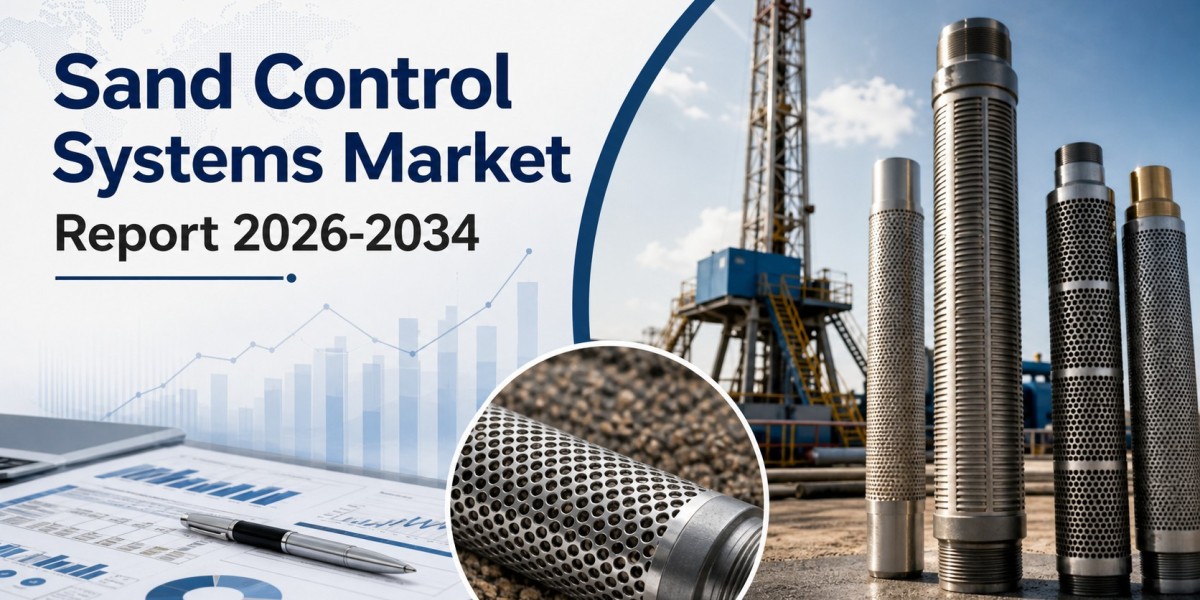
According to IMARC Group’s latest research publication, “Sand Control Systems Market Size, Share, Trends and Forecast by Well Type, Sand Control Method, Application, and Region”, the global sand control systems market size reached USD 3.3 Billion in 2025. Looking forward, IMARC Group expects the market to reach USD 4.5 Billion by 2034, exhibiting a growth rate (CAGR) of 3.52% during 2026-2034, with the market witnessing steady expansion. North America currently dominates the market, supported by extensive oil and gas operations, particularly in the United States and Canada.
This detailed analysis primarily encompasses industry size, business trends, market share, key growth factors, and regional forecasts. The report integrates research findings, market assessments, and data from different sources. It covers market dynamics such as drivers and challenges, and highlights growth opportunities, technological improvements, emerging trends, and innovations. It also provides a regional evaluation and a competitive landscape analysis.
How Advanced Sand Control Technologies Are Reshaping Oil and Gas Well Performance
Technological advancements have enabled the development of innovative sand screens, autonomous inflow control devices (AICDs), expandable sand control systems, and chemical consolidation methods that improve efficiency and effectiveness.
Advanced sand screens are designed to enhance sand exclusion capabilities while maximizing well productivity, while AICDs help regulate fluid flow in the wellbore, optimizing reservoir management and minimizing sand production.
Expandable sand control systems allow for more efficient installation and improved zonal isolation, while chemical consolidation methods involve the injection of resins or chemicals to stabilize the formation and prevent sand migration.
Continual advancements in intelligent sand control systems using sensors and real-time monitoring technology provide valuable data on sand production rates, reservoir conditions, and equipment integrity.
Key players are integrating digital technologies such as machine learning (ML) and artificial intelligence (AI) that enable predictive modeling and improved sand control system design.
Grab a sample copy of this report: https://www.imarcgroup.com/sand-control-systems-market/requestsample
Key Trends in the Sand Control Systems Market
Growing Focus on Well Integrity and Production Optimization: Sand production can lead to erosion of downhole equipment, formation damage, and wellbore instability, causing operational challenges and reducing production rates, necessitating effective sand control systems to mitigate these issues and ensure long-term well integrity.
Rapid Technological Advancements: Advancements in sand screen designs, gravel packing techniques, chemical consolidation methods, and expandable sand control systems have resulted in more robust and efficient solutions offering enhanced sand exclusion capabilities and extended well life.
Increase in Focus on Unconventional Reservoirs: The exploration and production sector has witnessed a significant shift toward unconventional reservoirs such as shale gas and tight oil, which often have high sand production potential due to complex geology and low permeability.
Growth in Hydraulic Fracturing: The rapid growth in hydraulic fracturing techniques has amplified the importance of sand control, as the injection of high-pressure fluids can mobilize sand particles and lead to production challenges.
Rising Global Demand for Offshore and Deepwater E&P: Increasing global demand for oil and gas exploration and production activities in challenging reservoir environments, such as offshore and deepwater, is stimulating market growth.
Growth Factors in the Sand Control Systems Market
Maximizing Hydrocarbon Recovery: The growing focus on maximizing hydrocarbon recovery and optimizing production rates has accelerated product adoption, with sand control systems allowing operators to manage sand production, control inflow rates, and enhance reservoir management.
Minimizing Detrimental Effects of Sand Production: The rising number of operators seeking to minimize the detrimental effects of sand production on well performance and equipment integrity has augmented demand for sand control systems.
Technological Innovations: Numerous technological advancements and innovations in sand control techniques and equipment that enhance their effectiveness and cost-efficiency are propelling market growth across applications.
Long-Term Well Viability: By implementing reliable sand control techniques, operators can minimize equipment failures, extend well life, and optimize production rates, supporting sustained adoption across onshore and offshore operations.
Shift Toward Unconventional Resources: With the rising demand for unconventional resources worldwide, the growing focus on implementing reliable and efficient sand control systems is expected to remain a major trend, particularly in shale gas and tight oil formations.
Leading Companies Operating in the Global Sand Control Systems Industry:
Baker Hughes Company
Halliburton Company
NOV Inc.
SLB
Variperm Energy Services
Weatherford International plc
Sand Control Systems Market Report Segmentation:
Breakup By Well Type:
Open Hole
Cased Hole
Cased hole dominates the market. Cased hole refers to a wellbore condition where the reservoir section is lined with casing, a steel pipe inserted and cemented into the wellbore to provide structural integrity and isolate different zones. Sand control in cased hole wells typically involves the use of screens or other tools placed inside the casing to prevent sand production, commonly used in situations where the reservoir section requires additional support or when sand production is anticipated.
Breakup By Sand Control Method:
Passive Sand Control
Active Sand Control (Gravel Pack, Slotted Liners, Frack Pack, Others)
Active sand control (gravel pack) represents the most popular sand control method. Active sand control methods refer to the implementation of proactive measures and equipment to actively manage and control sand production, including gravel packing, chemical consolidation, and mechanical methods such as standalone screens, expandable screens, and autonomous inflow control devices (AICDs).
Passive sand control relies on the inherent properties of the reservoir formation to control sand production, involving the selection and design of well completions and configurations that naturally inhibit or minimize the migration of sand particles into the wellbore.
Breakup By Application:
Onshore
Offshore
Onshore holds the largest share in the market, referring to the application of these systems in oil and gas wells located on land. Onshore sand control systems are employed in various geological formations where sand production poses challenges, designed to prevent sand influx into the wellbore, maintain well integrity, and optimize production rates through techniques such as gravel packing, standalone screens, and chemical consolidation.
Offshore sand control systems are specifically designed for oil and gas wells located in offshore environments, typically in water depths ranging from shallow to ultra-deep, addressing challenges posed by sand production in offshore reservoirs where the presence of loose or unconsolidated sands can lead to operational and equipment issues.
Breakup By Region:
North America (United States, Canada)
Europe (Germany, France, United Kingdom, Italy, Spain, Others)
Asia Pacific (China, Japan, India, South Korea, Australia, Indonesia, Others)
Latin America (Brazil, Mexico, Others)
Middle East and Africa
North America exhibits a clear dominance in the market, since the region has extensive oil and gas operations, particularly in the United States and Canada. Europe also contributes significantly with its active exploration and production activities, especially in countries like Germany, France, the United Kingdom, and Russia. Asia Pacific fuels the market with its growing energy demand and substantial oil and gas production activities in countries such as China, Japan, India, and Australia.
Latin America plays a role through countries like Brazil and Mexico, which have substantial offshore and onshore oil and gas reserves, while the Middle East and Africa region drives growth with their rich hydrocarbon resources and the presence of major oil-producing countries like Saudi Arabia, the United Arab Emirates, and Nigeria.
Recent News and Developments in the Sand Control Systems Market
Key players are integrating digital technologies such as machine learning and artificial intelligence that enable predictive modeling and improved sand control system design, supporting proactive decision-making and optimized sand control strategies.
The market is likely to witness a paradigm shift with the development of nanotechnology-based sand control solutions, which involve the use of nanomaterials to enhance sand consolidation and particle retention.
Continual advancements in intelligent sand control systems using sensors and real-time monitoring technology are providing valuable data on sand production rates, reservoir conditions, and equipment integrity.
The market is expected to witness new entrants, consolidation of portfolio, and increased collaborations among major industry players to drive healthy competition within the domain.
Note: If you require specific details, data, or insights that are not currently included in the scope of this report, we are happy to accommodate your request. As part of our customization service, we will gather and provide the additional information you need, tailored to your specific requirements. Please let us know your exact needs, and we will ensure the report is updated accordingly to meet your expectations.
About Us:
IMARC Group is a global management consulting firm that helps the world’s most ambitious changemakers to create a lasting impact. The company provide a comprehensive suite of market entry and expansion services. IMARC offerings include thorough market assessment, feasibility studies, company incorporation assistance, factory setup support, regulatory approvals and licensing navigation, branding, marketing and sales strategies, competitive landscape and benchmarking analyses, pricing and cost research, and procurement research.
Contact Us:
IMARC Group
134 N 4th St. Brooklyn, NY 11249, USA
Email: [email protected]
Tel No:(D) +91 120 433 0800
United States: +1-201-971-6302