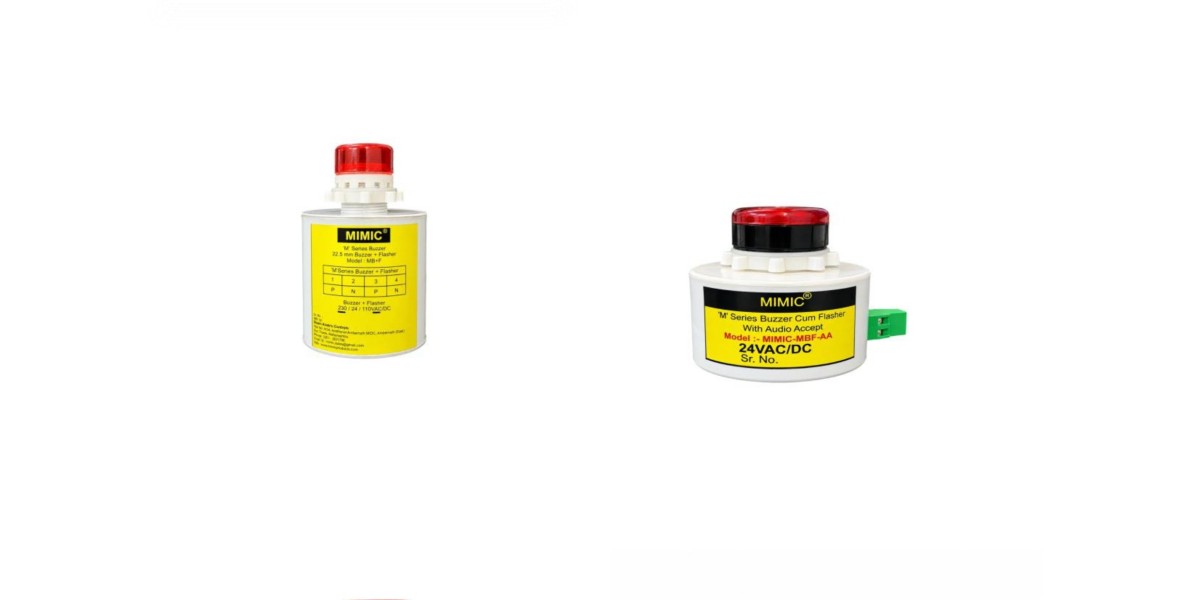

An Industrial flasher buzzer can support this communication by providing an audible alert and a flashing visual indication. Installed as part of a suitable control arrangement, it helps make selected equipment conditions more noticeable to operators and maintenance personnel.
For businesses looking to improve how alerts are communicated around machinery and electrical panels, a combined warning device can be a useful addition to the overall signalling arrangement.
Why Maintenance Teams Need Clear Indications
Industrial maintenance teams often work across different sections of a facility. A technician may be inspecting a motor while an operator monitors a production line. Another team member may be checking a control panel or responding to a maintenance request.
When a monitored condition changes, a clear indication can help draw attention to the relevant equipment. Without an effective warning, a small indicator may be overlooked, especially when personnel are occupied with other tasks.
A combined sound and light signal offers another way to communicate that a connected circuit has been activated. It can prompt staff to investigate the equipment and follow the appropriate operating or maintenance procedure.
How an Industrial Flasher Buzzer Supports Awareness
An Industrial flasher buzzer combines an audible buzzer with a flashing light. When the connected control circuit activates the unit, it produces sound and visual indication according to the model's design.
These two forms of notification serve different purposes. The sound can attract attention when a person is not facing the panel. The flashing light provides a visible signal that can help identify the active warning location.
The device is not a replacement for diagnostic equipment, alarms that provide detailed fault information, or established safety systems. It is a signalling component that communicates a condition determined by the connected control arrangement.
Practical Maintenance Applications
Equipment Stop Indication
A machine stop signal may be connected to an audible and visual warning so that nearby personnel know the equipment requires attention. The maintenance team can then inspect the machine display and control system to determine the cause.
Motor and Pump Monitoring
Industrial motors and pumps are often part of larger production or utility systems. Where the control arrangement generates a warning signal, a buzzer-cum-flasher may be used to notify personnel of the selected condition.
Production Line Supervision
A production line may include multiple machines operating in sequence. A warning device positioned near the relevant section can help operators notice when a monitored condition occurs.
Electrical Panel Alerts
Maintenance teams regularly inspect electrical panels. A combined warning indicator can be included in the panel design to communicate selected alerts from relays or control logic.
Utility and Service Equipment
Ventilation systems, compressors, and other utility equipment may use control circuits that generate operating or fault indications. The suitability of a warning device depends on the system's electrical requirements and installation environment.
Making Warning Signals Meaningful
A warning is most useful when people understand what it means. If every device produces a similar sound and flashing light for unrelated conditions, operators may find it difficult to identify the correct response.
Industrial teams should therefore define the purpose of each alert. Labels, panel drawings, operating instructions, and staff training can help connect the signal to the relevant equipment or process.
It is also important to avoid activating warnings for conditions that do not require attention. Poorly planned alerts can lead to alarm fatigue, where personnel become less responsive because warnings occur too frequently or without clear meaning.
The control logic should be designed and reviewed by competent personnel so that each signal has an appropriate purpose.
Choosing a Device for Maintenance Applications
Before selecting an Industrial flasher buzzer, consider the following requirements:
Electrical supply: Confirm the required AC or DC voltage and match it with the product rating.
Signal awareness: Check whether the audible and visual indications suit the work area.
Installation position: Choose a location that is accessible for maintenance and visible to the intended users.
Environmental conditions: Review the product's stated protection rating and operating limits.
Control integration: Confirm that the device is compatible with the relay, PLC, or other circuit that will activate it.
Inspection access: Make sure the device can be checked and maintained without unnecessary difficulty.
These checks help ensure that the warning component is selected for its actual working conditions.
Mimic Products for Industrial Warning Requirements
Mimic Products offers a range of buzzer-cum-flasher devices for electrical switchgear and industrial signalling applications. The available category includes multiple BZ-series products with different voltage requirements, providing options for buyers working with different control arrangements.
Maintenance departments, panel builders, electrical contractors, and automation professionals can review the range when specifying an audible and visual warning component.
The listed models include options such as BZ-1, BZ-2, BZ-3, BZ-4, and BZ-5. As electrical ratings and other features can differ, check the individual model details before selecting a product. This helps ensure that the chosen unit is appropriate for the intended panel or machine.
Installation and Testing for Dependable Indication
The device should be installed by qualified personnel using the manufacturer's instructions and the site's electrical safety procedures. Before connecting it, confirm the supply voltage, wiring arrangement, and control output requirements.
The unit should be positioned where personnel can notice the signal. Avoid installing it behind obstructions or in a location where background noise makes the buzzer ineffective.
After installation, test both the audible and visual functions. Confirm that the warning activates under the intended control condition. Maintenance teams should also inspect the wiring, mounting, and physical condition at planned intervals.
A Useful Part of a Wider Maintenance Strategy
An audible and visual warning device can support maintenance awareness, but it should form part of a broader approach. Preventive maintenance schedules, equipment inspections, fault diagnostics, operator training, and suitable safety procedures remain important.
When the control system is modified, the warning arrangement should be reviewed to ensure that the signal still represents the correct condition. This helps keep the indication useful as the installation changes over time.
Conclusion
Industrial maintenance depends on clear communication between operators, technicians, and control systems. An Industrial flasher buzzer can help make selected equipment conditions more noticeable by combining sound with a flashing visual alert.
Mimic Products offers buzzer-cum-flasher models for different electrical requirements and industrial signalling applications. Explore the available range and compare the specifications to find a suitable option for your maintenance or control-panel requirements.