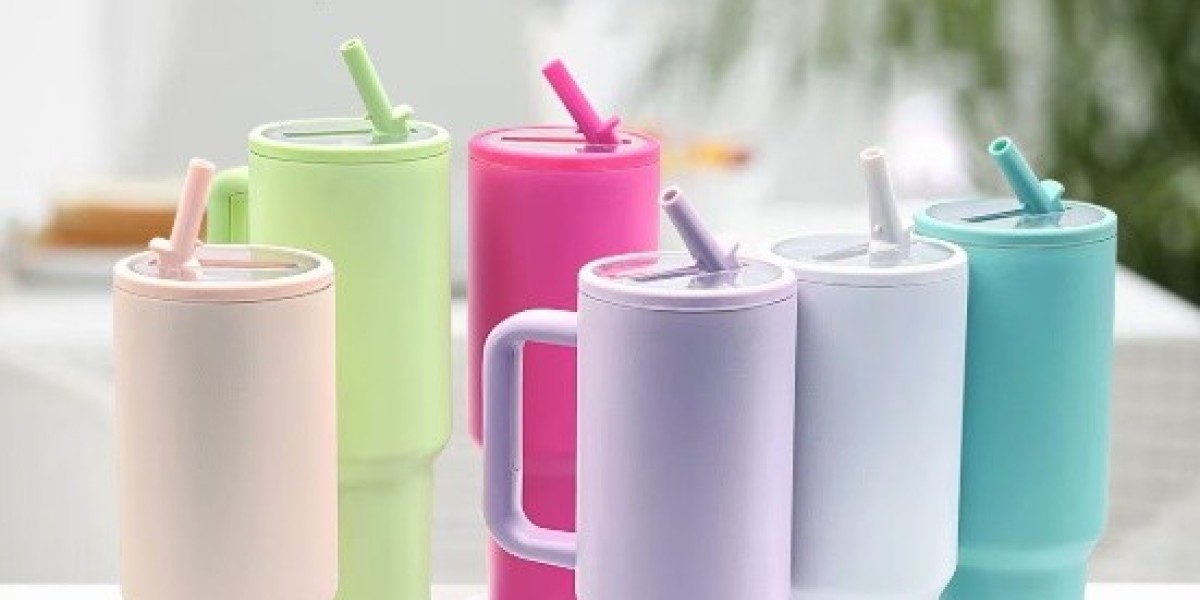

Insulated Straw Mug purchasing decisions involve more than comparing colors, shapes, and advertised capacity. For wholesalers, distributors, and private-label businesses, understanding material specifications, insulation construction, lid compatibility, and manufacturing capabilities can help reduce uncertainty during product sourcing. A suitable drinking cup should match customer preferences, daily usage habits, and the requirements of the intended sales market. Before confirming an order, buyers should communicate with manufacturers and evaluate several important factors.
Examine Material Specifications and Body Construction
Material selection is an important starting point when evaluating reusable drinkware. Buyers should ask manufacturers about the materials used for the inner wall, outer body, lid, handle, and sealing components.
For stainless steel models, purchasers can request information about the steel grade and surface treatment. Materials intended for food contact should comply with applicable regulations in the destination market. Relevant documentation can also help importers prepare product information for distribution.
The exterior finish deserves attention as well. Powder coating, polished surfaces, and other finishing methods create different visual effects. Buyers should compare available finishes with their target customers and retail positioning.
Evaluate the Lid Structure and Sealing Performance
The lid influences how customers interact with a drinking cup throughout the day. Its opening mechanism, sealing components, and overall structure should be reviewed before purchasing.
Buyers can examine several details:
Whether the lid fits securely onto the body.
Whether the opening matches the supplied drinking accessory.
Whether silicone seals are properly positioned.
Whether the lid can be opened and closed conveniently.
Whether detachable components are accessible for cleaning.
Different customer groups may have different preferences. Office users might prioritize convenient drinking, while commuters may pay closer attention to carrying arrangements and spill resistance.
Manufacturers should clarify the intended usage conditions of each lid configuration. If sealing performance is an important requirement, buyers can request relevant testing information before making purchasing decisions.
Compare Capacity, Dimensions, and Handling
Capacity can influence how customers use drinkware during work, travel, and outdoor activities. Some customers prefer larger containers, while others may choose compact models that are easier to carry.
However, volume is only one part of product evaluation. Height, base diameter, opening width, handle dimensions, and overall weight can also affect convenience.
For example, customers who frequently drive may need a base that fits their vehicle cup holders. Office users may prefer a design that sits comfortably on a desk without occupying excessive space.
Buyers should request a detailed specification sheet containing accurate measurements. Physical samples can also help them evaluate grip, balance, weight, and overall proportions before confirming an order.
Consider Cleaning and Maintenance Requirements
Cleaning convenience is another factor worth considering during product selection. Lid grooves, removable seals, narrow internal spaces, and detachable accessories can influence how easily users maintain their drinkware.
Buyers should check whether individual components can be removed according to the manufacturer's instructions. They can also ask about suitable cleaning tools and recommended maintenance methods.
For products with multiple detachable parts, clear care instructions can help customers understand correct assembly and cleaning procedures.
These details are useful for preparing retail descriptions, packaging information, and customer support materials. Buyers should also confirm whether specific components are dishwasher-safe instead of assuming that all parts share the same cleaning requirements.
Discuss Customization and Production Capabilities
Customization is an important consideration for wholesalers and private-label businesses developing their own product collections.
Before requesting a quotation, buyers should prepare project details such as preferred colors, logo artwork, surface finishes, packaging styles, and estimated order quantities.
At dingchuncup, buyers can discuss product specifications and customization requirements with the manufacturing team. Depending on the selected model and available production capabilities, options may include logo application, color selection, and packaging coordination.
It is also useful to confirm sample approval procedures, production schedules, inspection arrangements, and order specifications. Keeping these details in written records helps both parties maintain consistent expectations throughout manufacturing.
Review Quality Inspection and Packaging
Quality inspection should cover more than the external appearance of a finished product. Buyers can discuss inspection points involving body dimensions, surface condition, lid assembly, accessory compatibility, and sealing components.
Packaging is equally relevant to international distribution. Individual boxes, protective inserts, printed labels, and outer cartons should match transportation arrangements and retail presentation requirements.
Requesting a packaging sample before mass production can help identify possible concerns with product placement and protection. Importers may also discuss replacement lids and other accessories when planning future orders.
Confirming these arrangements before production begins can make order coordination easier, particularly when multiple colors, sizes, or customized designs are involved.
Prepare Questions Before Confirming an Order
A structured purchasing discussion helps buyers compare manufacturers and understand the details behind a quotation. Instead of focusing only on unit pricing, importers should ask about material documentation, sample arrangements, customization costs, production schedules, inspection standards, and shipping terms.
It is also helpful to clarify how design changes and production updates will be communicated. Written specifications provide both parties with a shared reference throughout the order.For wholesalers, distributors, and private-label businesses, drinkware sourcing involves balancing product design, manufacturing requirements, and customer expectations. Reviewing these factors before purchasing can make product development and supplier communication more organized. Businesses interested in customized drinkware, wholesale purchasing, or product specifications can visit dingchuncup at https://www.dingchuncup.com/ to review available products and contact the company about their sourcing requirements.