
Introduction
Display technology continues to evolve as businesses look for better ways to communicate information, promote products, and create engaging visual experiences. From corporate offices and shopping malls to control rooms and commercial showrooms, high-quality digital displays have become an important part of modern business environments.
Among the latest developments in LED display technology, Chip-on-Board (COB) technology has gained attention for its compact LED packaging, pixel protection, and suitability for fine-pitch display applications.
A COB LED display in Pakistan can be an option for organizations looking for detailed indoor visuals, professional presentation systems, and advanced digital display solutions. Understanding how COB technology works, its advantages, and its differences from conventional SMD displays can help businesses select the right equipment for their requirements.
What Is COB LED Display Technology?
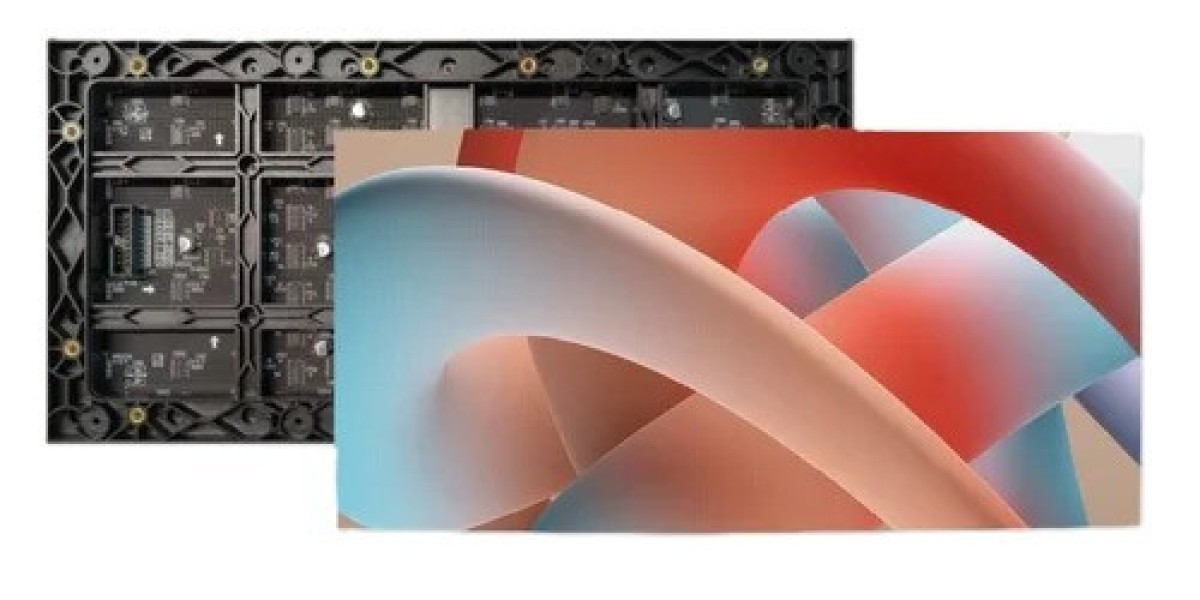
COB stands for Chip-on-Board. It is an LED packaging technology in which multiple LED chips are mounted directly onto a printed circuit board (PCB) and protected using a specialized encapsulation layer.
Unlike conventional Surface-Mounted Device (SMD) technology, where individual LED packages are mounted onto the circuit board, COB technology integrates the LED chips more directly into the display module.
This construction can create a compact pixel structure and a more continuous display surface.
COB LED technology is particularly relevant for fine-pitch indoor displays where image detail, close viewing distances, and pixel protection are important considerations.
How Does a COB LED Display Work?
A COB LED display uses multiple LED chips arranged across a circuit board to produce images, videos, graphics, and other visual content.
Each pixel contains LED elements that generate light according to the signals received from the display control system.
The display system processes digital content and sends the required signals to individual pixels, allowing the screen to reproduce different colors and visual information.
The general process includes:
Digital content is provided through a compatible media source.
The display control system processes the visual information.
Receiving cards distribute the required signals to the LED modules.
LED chips produce the corresponding colors and brightness levels.
Multiple modules combine to create the complete display.
This modular structure allows businesses to use COB technology in different screen dimensions and installation configurations, depending on the available product specifications.
7 Major Benefits of COB LED Displays
1. Compact LED Packaging
One of the major characteristics of COB technology is its compact LED chip arrangement.
By mounting LED chips directly onto the circuit board, manufacturers can create display modules with high pixel density.
This makes COB technology particularly suitable for fine-pitch applications where businesses need detailed visual content within a relatively small display area.
2. Improved Pixel Protection
COB LED modules generally use an encapsulation layer to cover and protect the LED chips.
This protective structure can help reduce exposure to dust, moisture, and accidental physical contact compared with exposed LED chip packages.
The actual protection level depends on the module's construction and manufacturer specifications, so businesses should always check the product's rated protection capabilities before purchasing.
3. Detailed Image Presentation
Fine-pitch COB displays can support high pixel density, making them suitable for applications where viewers sit or stand relatively close to the screen.
They can be useful for:
Corporate presentation screens.
Conference rooms.
Control room displays.
High-end retail environments.
Professional monitoring systems.
Indoor digital signage.
The final image quality also depends on pixel pitch, resolution, processing equipment, and viewing distance.
4. Seamless Visual Appearance
COB display modules can provide a relatively smooth display surface because of their integrated packaging and protective construction.
This can help create a professional visual appearance in indoor environments where audiences view content from shorter distances.
Businesses can use such displays for presentations, product demonstrations, and large-format digital communication.
5. Suitability for Fine-Pitch Applications
Fine-pitch display technology is important when viewers need to see detailed images without standing far away from the screen.
COB technology is often used in fine-pitch LED display applications because its packaging approach supports compact pixel arrangements.
However, the right pixel pitch should always be selected according to the viewing distance and screen dimensions.
6. Potentially Lower Exposure to Physical Damage
The encapsulated structure of COB modules can provide additional protection against certain types of physical contact.
This can be useful in commercial environments where displays may be exposed to frequent handling or accidental contact.
Nevertheless, COB screens are not indestructible. They still require proper installation, cleaning, handling, and maintenance.
7. Professional Indoor Display Applications
COB technology is particularly relevant for indoor environments where visual detail and a professional presentation are priorities.
Businesses can consider it for conference rooms, corporate offices, monitoring facilities, and selected retail installations.
The suitability of a particular screen depends on its resolution, brightness, refresh rate, control system, and overall product quality.
COB LED vs SMD LED Displays: What Is the Difference?
COB and SMD are two different LED packaging technologies. Both are used in modern digital display systems, but their construction and typical applications can differ.
| Feature | COB LED Display | SMD LED Display |
|---|---|---|
| Technology | LED chips mounted directly on PCB | Packaged LEDs mounted on PCB |
| Pixel structure | Integrated chip arrangement | Individual LED packages |
| Surface protection | Encapsulated surface | Depends on package and module design |
| Fine-pitch applications | Commonly used | Also widely available |
| Maintenance | Depends on module design | Depends on module design |
| Applications | Fine-pitch indoor displays | Indoor and outdoor displays |
Which Technology Should Businesses Choose?
The right option depends on the intended application.
COB displays may be suitable for businesses prioritizing fine-pitch indoor visuals and additional pixel protection.
SMD displays offer a broad range of pixel pitches and are commonly used in indoor and outdoor advertising, video walls, retail installations, and commercial display projects.
Rather than assuming one technology is always better, businesses should compare the actual specifications, installation requirements, and total project costs.
Where Are COB LED Displays Used?
1. Corporate Offices and Boardrooms
Corporate organizations can use COB LED displays for presentations, meetings, dashboards, and internal communication.
Their fine-pitch capabilities can support detailed visual information in professional environments.
2. Control Rooms
Monitoring facilities require displays capable of presenting detailed information across large viewing surfaces.
COB display systems can be considered for selected control room applications where close viewing and image detail are important.
3. Shopping Malls and Retail Spaces
Retail businesses can use fine-pitch LED displays to showcase promotional videos, product advertisements, and brand content.
The display can become part of a modern retail environment and improve the presentation of marketing messages.
4. Conference Halls
Conference venues can use large LED displays for presentations, corporate events, training sessions, and audience communication.
5. Educational Institutions
Universities and training centers can use professional LED displays for lectures, presentations, seminars, and collaborative learning environments.
Important Factors to Consider Before Buying a COB LED Display in Pakistan
Selecting a COB display requires evaluating its technical specifications and intended installation environment.
Pixel Pitch and Resolution
Pixel pitch determines the distance between adjacent pixels. A smaller pixel pitch generally provides greater pixel density and supports detailed images at shorter viewing distances.
Brightness
Brightness should match the lighting conditions of the installation area. A corporate boardroom and a brightly illuminated commercial space may require different display configurations.
Refresh Rate
Refresh rate affects how frequently the screen updates its displayed image. Businesses using video content or camera-recorded presentations should consider this specification.
Color Performance
Evaluate color reproduction, grayscale performance, and brightness consistency to ensure that the display meets the requirements of the intended application.
Control System Compatibility
Check whether the COB display supports the required video processors, receiving cards, media players, and content management systems.
Installation and Maintenance
Review mounting requirements, module replacement procedures, warranty coverage, and technical support before making a purchase.
What Affects COB LED Display Prices in Pakistan?
The cost of a COB LED display depends on several technical and commercial factors.
Pixel pitch: Finer pixel pitches generally require greater component density.
Screen dimensions: Larger displays require more LED modules and supporting equipment.
Module quality: LED chips, circuit boards, and encapsulation materials influence product quality.
Brightness and performance: Different applications require different performance specifications.
Control equipment: Video processors and receiving systems can affect the overall project budget.
Installation: Structural preparation, electrical work, and professional installation contribute to the final cost.
For an accurate quotation, businesses should provide the required screen dimensions, viewing distance, installation location, and intended use.
How to Select the Right COB LED Display Supplier
Choosing a reliable supplier is important for achieving consistent display performance.
Before finalizing a purchase, businesses should consider:
Product specifications and technical documentation.
Available pixel pitch options.
Display quality and component specifications.
Installation and configuration support.
Warranty terms and after-sales assistance.
Maintenance and module replacement arrangements.
Requesting a complete technical quotation makes it easier to compare different display solutions.
Why Choose PAK SMD SCREEN for LED Display Solutions?
Selecting suitable LED technology requires an understanding of the installation environment, viewing distance, screen size, and performance requirements.
PAK SMD SCREEN provides LED display solutions for businesses and organizations looking to improve their advertising and digital communication infrastructure.
Whether you are planning an indoor display, a commercial video wall, or an advanced digital advertising installation, selecting the right display configuration is essential for achieving the desired results.
Businesses can explore the available display solutions from PAK SMD SCREEN and discuss their project requirements before making an investment.
Conclusion
COB LED display technology offers an alternative approach to LED packaging, with characteristics that make it suitable for fine-pitch indoor display applications.
Its compact chip arrangement, encapsulated surface, and potential for detailed image presentation make it relevant for corporate offices, control rooms, conference halls, and selected commercial environments.
Before purchasing a COB LED display in Pakistan, businesses should evaluate pixel pitch, brightness, resolution, control system compatibility, maintenance requirements, and total project costs.
Understanding these factors helps organizations choose display technology that matches their operational needs and long-term objectives.








