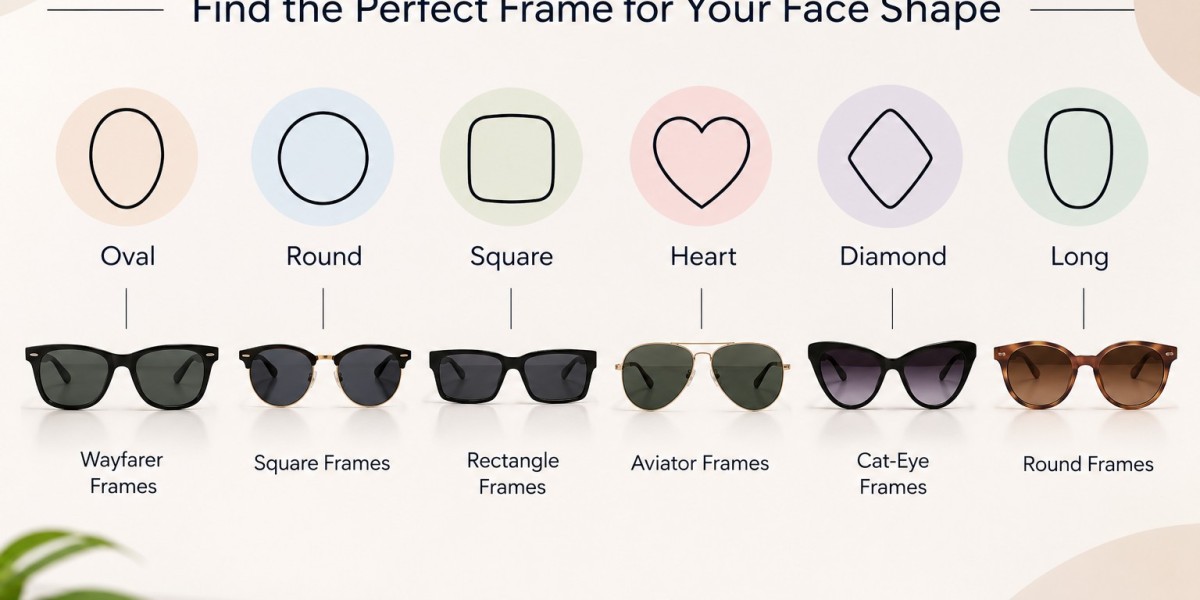

Two people can try on the same pair of sunglasses and have completely different experiences. One may find the frame comfortable and well-balanced, while the other notices pressure near the temples or lenses that sit too close to the cheeks. The difference often comes down to facial proportions and frame geometry. A suitable shape should complement the natural contours of the face while keeping the lenses correctly positioned. Understanding how these features work together makes it easier to select eyewear based on fit rather than appearance alone.
“The right frame does not change the shape of a face; it works naturally with it.”
1. Why Does Facial Structure Matter When Selecting Eyewear?
Facial structure influences how sunglasses rest on the nose, temples, and ears. A design that suits one person's proportions may appear too narrow or oversized on someone else.
Face-shape categories can offer a starting point, but they should not be treated as strict rules. People rarely have perfectly round, square, oval, or heart-shaped faces. A combination of features is more common, so actual measurements and comfort should guide the selection.
2. How Do Different Frame Shapes Change Facial Proportions?
Frame geometry creates different visual effects. Angular designs introduce defined lines, while curved frames can soften the appearance of stronger facial features. The lens size also influences how much of the face the sunglasses cover.
A rectangular frame may create a longer horizontal appearance, whereas a round design draws attention to curved outlines. Aviator shapes often have a wider upper section and a tapered lower portion. These differences are useful when comparing styles, but the best option still depends on how the frame sits when worn.
3. Which Frame Shapes Commonly Suit Different Face Types?
These suggestions are useful starting points rather than fixed rules.
- Square faces: Oval and rounded designs may soften prominent jaw and forehead contours.
- Oval faces: Many shapes can work, provided the frame remains proportionate to the face.
- Heart-shaped faces: Light, oval, or bottom-weighted designs may balance a broader forehead.
- Long faces: Frames with greater lens height can add visual balance.
- Diamond-shaped faces: Oval and cat-eye-inspired designs may complement prominent cheekbones.
- Broad faces: Frames with sufficient front width can prevent pressure around the temples.
Trying different shapes is more reliable than choosing solely from a face-shape chart.
4. How Does Frame Width Affect the Overall Fit?
Frame width determines how comfortably the front of the sunglasses sits across the face. A narrow design may press against the temples, while an excessively wide one can slide down or move during normal activity. When comparing sunglasses frames, check the total front width alongside lens width, bridge measurement, and temple length. These measurements work together to determine whether the glasses remain properly positioned.
The frame should sit evenly without squeezing the sides of the head. Its outer edges should also avoid creating unnecessary obstruction around the eyes. A balanced fit is usually more important than following a particular fashion trend.
- Narrow frames: Check for pressure around the temples.
- Wide frames: Make sure the arms remain secure rather than spreading outward.
- Medium-width frames: Assess whether the front follows the natural width of the face.
- Large lenses: Check that they do not touch the cheeks during normal movement.
- Small lenses: Confirm that they provide suitable coverage for the intended use.
- Temple arms: Make sure they rest comfortably behind the ears.
A frame that feels stable without constant adjustment is generally a better choice for everyday wear.
5. Why Is the Nose Bridge Important for Frame Positioning?
The bridge connects the two lenses and helps determine how high or low the sunglasses sit. Its design must work with the shape and width of the wearer's nose. A bridge that is too wide may allow the glasses to slip, while a narrow one can create uncomfortable pressure.
Some frames have adjustable nose pads, which allow an optician to make small fitting changes. Other designs use a fixed bridge, so the original measurement becomes particularly important. The lenses should remain aligned with the eyes rather than sitting too high or dropping towards the cheeks.
6. How Do Designer Frame Styles Combine Shape and Fit?
Designer eyewear often uses recognisable shapes, materials, and construction details to create a particular appearance. For example, Persol sunglasses include designs with different lens proportions, bridge styles, and temple details, so buyers should compare individual models instead of assuming every frame fits in the same way. The brand name alone cannot determine whether a particular shape will suit someone's facial measurements.
A frame may look balanced in a product photograph but feel different when worn. Lens width, bridge construction, and the angle of the temples can all change its position. Checking the model's measurements and trying it on, where possible, provides a more dependable assessment than choosing by appearance alone.
- Rectangular designs: Can create a defined appearance across softer facial contours.
- Rounded designs: Offer curved outlines that may complement angular features.
- Aviator designs: Usually have a wider upper structure and a tapered lower lens.
- Square designs: Create a more pronounced geometric appearance.
- Oval designs: Provide a softer alternative to strongly angular frames.
- Oversized designs: Require careful attention to lens coverage and cheek clearance.
The construction and fit of each model should be assessed separately.
7. Can Lens Height Change How Sunglasses Look on the Face?
Lens height affects both facial proportions and the amount of coverage provided by the sunglasses. Taller lenses occupy more vertical space, while shorter lenses create a more compact appearance. This difference can change how a frame relates to the forehead, cheeks, and overall face length.
A suitable lens height should allow the frame to sit comfortably without touching the cheeks when smiling or moving the face. It should also provide appropriate coverage for the intended activity. People who need prescription sunglasses should ask an optician to assess lens positioning and compatibility with their prescription.
8. How Can You Test Whether a Frame Fits Properly?
A practical fitting test can reveal problems that may not be visible in photographs or product descriptions. Wear the sunglasses for several minutes and notice whether the bridge, temples, and lens position remain comfortable. Move your head naturally and check whether the frame shifts or requires repeated adjustment.
Look straight ahead and towards the sides to make sure the frame does not unnecessarily obstruct your field of view. The arms should rest comfortably without squeezing behind the ears. If the glasses feel uneven, an optician may be able to adjust the nose pads or temple alignment, depending on the frame construction.
“A good fit becomes noticeable through comfort, not constant adjustment.”
9. What Should You Check Before Buying Sunglasses Online?
Online shopping requires extra attention because a photograph cannot show exactly how a frame will sit on your face.
- Read the listed lens, bridge, and temple measurements.
- Compare the dimensions with a pair that already fits comfortably.
- Check the frame material and construction details.
- Review the lens information, including documented UV protection.
- Look at photographs from the front and side to assess proportions.
- Read the seller's return and exchange conditions.
- Ask for clarification if important measurements or product details are missing.
These checks help reduce uncertainty before placing an order.
10. How Can You Keep Sunglasses Comfortable and Well-Maintained?
A suitable frame still needs proper care to retain its fit and condition. Dirt around the nose pads, loose hinges, and damaged temple arms can affect how the glasses sit over time.
- Clean lenses with a suitable microfibre cloth.
- Rinse away dust before wiping to avoid surface scratches.
- Store sunglasses in a protective case.
- Avoid leaving them in excessive heat, such as on a hot dashboard.
- Check screws and hinges for looseness.
- Have uncomfortable or uneven frames assessed by an optician.
- Avoid bending the frame yourself, particularly if it is made from delicate materials.
Routine care helps preserve the frame's alignment and keeps the lenses clear.
Comparison Table: Frame Shapes and Their Fit Characteristics
| Rectangular | Adds angular definition | Check front width and temple pressure |
| Round | Creates softer outlines | Check lens size and cheek clearance |
| Square | Gives a pronounced geometric look | Ensure the frame is not too wide |
| Aviator | Wider upper section with tapered lenses | Check bridge position and lens height |
| Oval | Creates a softer appearance | Assess overall facial proportions |
| Oversized | Provides greater visual coverage | Check weight and peripheral vision |
Frequently Asked Questions
1. Which sunglasses shape is suitable for a round face?
Rectangular and square frames are common options because their angular outlines can contrast with rounded facial features. The correct size remains important.
2. Do round sunglasses suit every face shape?
They can work with several face shapes, but lens size, bridge width, and overall proportions determine how balanced they appear.
3. How can I tell if sunglasses are too small?
Pressure around the temples, outward-bending arms, and a front that appears narrower than the face may indicate an unsuitable size.
4. Does nose shape affect sunglasses fit?
Yes. Nose width and bridge structure influence how securely sunglasses sit and whether they slide or create pressure.
5. Should sunglasses touch the cheeks?
They should generally remain clear of the cheeks during normal facial movements. Repeated contact can indicate that the frame sits too low or the lenses are too large.
Final Thoughts
Frame shape influences more than the appearance of sunglasses. It affects how the lenses sit, how the frame follows facial contours, and whether the temples and bridge provide comfortable support. Face-shape suggestions can help narrow down styles, but measurements and a practical fitting test offer more dependable guidance. Comparing lens width, bridge size, temple length, and lens height helps identify eyewear that feels balanced during everyday use.
“The most suitable frame is the one that feels naturally balanced on the face.”