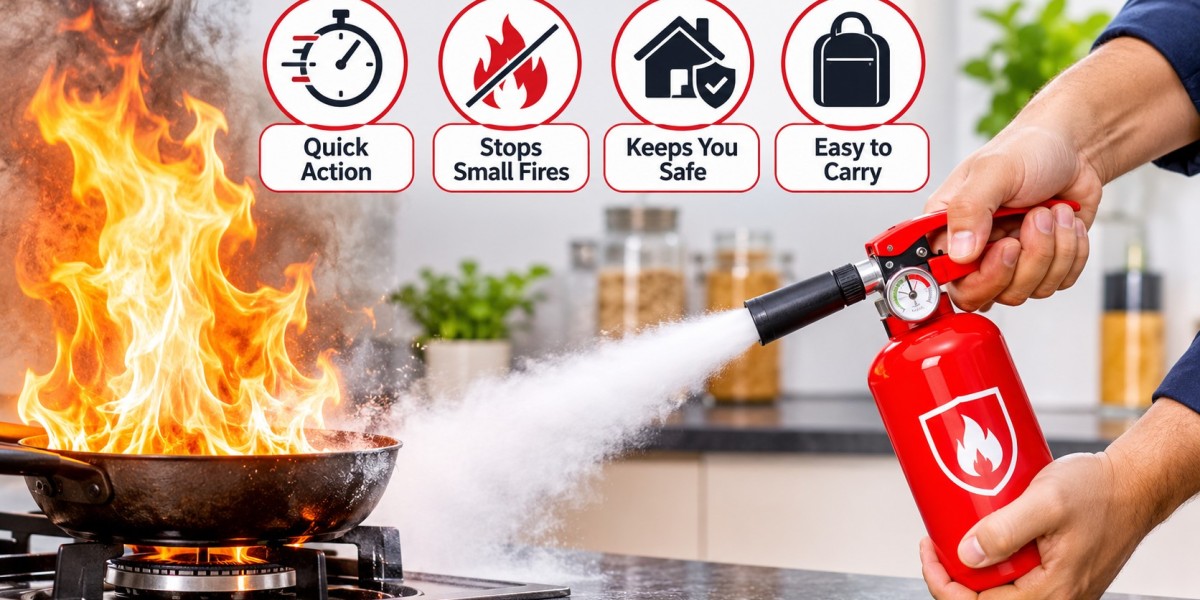

A small fire can develop into a serious emergency if it is not recognized and handled appropriately. A burning waste bin, overheated electrical appliance, or accidental ignition in a confined area may require an immediate response. Compact extinguishers are designed to provide a portable firefighting option for certain early-stage fires. Their usefulness, however, depends on the type of fire, the extinguishing agent, the equipment's rating, and whether the person responding can act without putting themselves in danger.
Why Are Compact Fire Extinguishers Useful in Everyday Settings?
Space and accessibility can influence where firefighting equipment is installed. Large extinguishers may not be practical in every vehicle, small workshop, office, or residential setting. Compact models offer an alternative where a smaller unit is appropriate for the identified fire risks.
Their portable design can make them easier to store in accessible locations. However, a smaller cylinder usually contains a limited amount of extinguishing agent, which means its discharge time and firefighting capacity may also be limited.
A compact unit should never be selected simply because it takes up less space. Its fire rating and suitability must match the hazards in the area it is intended to protect.
Which Types of Small Fires Can a Mini Extinguisher Handle?
The type of fire an extinguisher can control depends on its extinguishing agent and classification. Different agents are developed for different burning materials, so one compact model cannot be considered suitable for every situation.
For example, some extinguishers are rated for ordinary combustible materials such as paper, wood, and textiles. Others are designed for flammable liquids or electrical equipment, subject to their product rating and instructions. Cooking oil fires require an appropriate Class F or Class K-rated wet chemical extinguisher, depending on the applicable classification system.
Before purchasing, check the fire classes and ratings printed on the cylinder. The label provides more useful information about performance than the extinguisher's physical size alone.
How Does a Mini Fire Extinguisher Work During an Emergency?
A Mini Fire Extinguisher releases a stored extinguishing agent through its nozzle or hose when the operating mechanism is activated. Depending on the agent, it may cool the burning material, separate it from oxygen, interrupt the combustion process, or work through a combination of these effects.
The correct operating method depends on the extinguisher model. Many portable units follow the familiar PASS technique: Pull the safety pin, Aim at the base of the fire, Squeeze the handle, and Sweep across the burning area. Always follow the instructions printed on the specific cylinder.
An extinguisher should only be used when the fire is small and contained, the correct unit is available, and a clear escape route remains behind the person operating it. If flames spread or smoke becomes heavy, evacuate immediately and contact emergency services.
What Features Should You Check Before Choosing a Compact Unit?
A compact extinguisher should be evaluated by its performance specifications rather than its appearance. Two cylinders of similar size may contain different agents and have different firefighting capabilities.
Important details to review include:
- Extinguishing agent: Confirm whether the contents are suitable for the identified fire hazards.
- Fire rating: Check the classifications and performance rating shown on the label.
- Operating instructions: Make sure the activation and discharge method is clear.
- Cylinder condition: Look for visible damage, corrosion, leakage, or other signs of deterioration.
- Certification and documentation: Review applicable approvals and manufacturer information.
- Maintenance requirements: Confirm inspection, servicing, and replacement guidance.
These checks help buyers avoid selecting a product that is portable but unsuitable for the intended application.
Where Can Small Fire Extinguishers Be Useful?
Compact extinguishers may be appropriate in locations where the fire risks are limited, and a smaller unit provides the required protection. Depending on the product rating and local safety requirements, possible applications can include small offices, certain workshops, vehicles, and selected residential areas.
In vehicles, the unit should be secured in an accessible position where it will not become a loose object during sudden braking. Buyers comparing vehicle safety products may also investigate the 1kg fire extinguisher price in Pakistan , but the lowest price should not determine the final choice. The agent, fire rating, mounting arrangement, and suitability for the vehicle's potential hazards are more important considerations.
A compact extinguisher is not a replacement for a properly designed building fire protection system or the larger equipment required in high-risk environments.
How Should a Compact Extinguisher Be Stored and Maintained?
Even a suitable extinguisher may fail to perform correctly if it is damaged, poorly stored, or overdue for servicing. Its location should allow quick access without exposing the user to unnecessary danger.
Keep the cylinder in the storage conditions recommended by its manufacturer. Avoid placing it where it may be crushed, obstructed, exposed to unsuitable temperatures, or damaged by regular movement.
Routine checks should include the following:
- Confirm that the extinguisher remains in its designated location.
- Check the pressure indicator where the model includes one.
- Inspect the cylinder, hose, nozzle, and safety pin for visible damage.
- Ensure operating instructions and labels remain readable.
- Arrange professional inspection and servicing according to the manufacturer's guidance and applicable requirements.
After any discharge, the extinguisher should be removed from service and recharged or replaced as directed by the manufacturer, even if some agent remains inside.
When Is a Mini Extinguisher Not Enough to Control a Fire?
A compact extinguisher has limitations. It may not contain enough agent to control a fire that has spread across a large area or reached several materials. It may also be unsuitable for hazards requiring specialized firefighting systems.
People should not attempt to fight fires involving rapidly spreading flames, heavy smoke, pressurized containers, or unknown chemical substances unless they are specifically trained and equipped to respond.
Electrical and cooking-related fires also require careful equipment selection. Never use water on energized electrical equipment or burning cooking oil. If there is uncertainty about the fire type or the correct extinguisher, prioritize evacuation and emergency assistance.
Frequently Asked Questions
1. What is a mini fire extinguisher used for?
It is designed to provide a portable option for controlling certain small, early-stage fires. Its suitability depends on the extinguishing agent and fire rating.
2. Can a small extinguisher put out every type of fire?
No. Different extinguishers are designed for different fire classifications. Always check the product label before use.
3. Is a compact extinguisher suitable for a car?
Some compact models may be suitable for vehicles if their fire rating, storage conditions, and mounting arrangements meet the relevant requirements.
4. How long can a mini extinguisher discharge?
Discharge time varies according to cylinder capacity, extinguishing agent, and design. Check the manufacturer's specifications for the exact model.
5. Does a mini extinguisher need regular inspection?
Yes. It should be checked and serviced according to the manufacturer's instructions and applicable safety requirements to confirm that it remains ready for use.
6. Should a discharged mini extinguisher be used again?
It should not be relied upon until it has been professionally serviced or replaced according to the manufacturer's instructions.
Conclusion
A compact fire extinguisher can provide a useful first-response option for certain small fires when the equipment matches the hazard, and the situation is safe to approach. Its portability makes it convenient for selected locations, but its limited capacity must be considered during selection. Checking the fire rating, inspecting the cylinder, following operating instructions, and maintaining a clear escape route are essential parts of responsible use. The right extinguisher is not simply the smallest or cheapest model; it is the one designed for the risks it is expected to address.