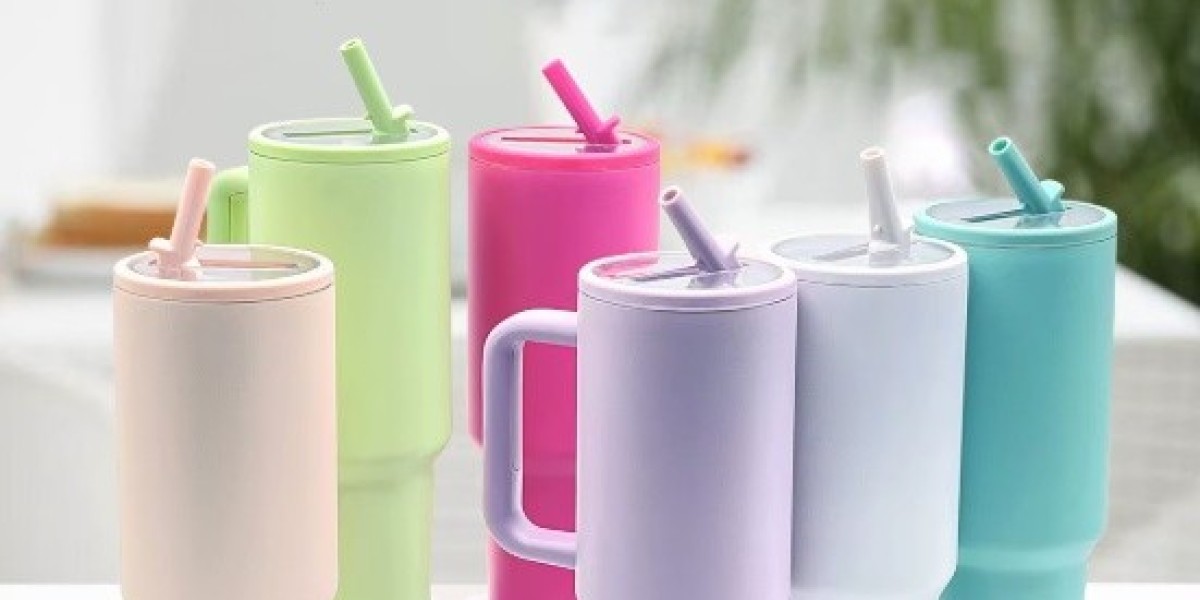

Insulated Straw Mug selection involves several factors that influence product performance, customer satisfaction, and purchasing costs. For importers, wholesalers, retailers, and private-label businesses, choosing a suitable model requires more than comparing colors or catalogue prices. Buyers should examine the body construction, temperature retention, lid design, material specifications, and available customization options. A clear understanding of these details helps businesses evaluate whether a product matches their target market and intended sales channel.
Understand the Target Market
Before comparing individual models, buyers should identify the needs of their potential customers. Office workers may prefer a compact cup that fits easily on a desk, while commuters may pay more attention to portability and compatibility with vehicle cup holders.
Outdoor users may look for a larger capacity, a comfortable handle, and a body that is convenient to carry. These different applications can influence product dimensions, weight, shape, and accessories.
Retailers should also consider local purchasing habits, preferred colors, and common price ranges. Understanding the market before selecting specifications can make product planning more focused and reduce the risk of choosing an unsuitable design.
Examine the Body Structure
The body construction affects durability, appearance, and temperature retention. Buyers can ask whether a model uses a double-wall vacuum structure and request details about the materials used for its inner and outer walls.
For stainless steel products, the specified steel grade should be clearly identified. Other details worth checking include wall thickness, rim finishing, base stability, and exterior coating.
Ask the supplier for technical specifications rather than relying entirely on general descriptions. Clear documentation makes it easier to compare different models and communicate requirements to purchasing teams, distributors, and retail partners.
Evaluate Temperature Retention
Temperature retention is an important consideration for customers who use drinkware throughout the day. Buyers should ask how the manufacturer evaluates this performance and whether test information is available for the specific model.
Relevant conditions include the starting beverage temperature, liquid volume, surrounding temperature, testing duration, and lid position. These factors can influence test results, so comparisons should use consistent conditions.
A practical sample evaluation can provide additional information. Buyers may test the product under conditions that resemble its intended application and record the results for comparison with other available models.
Inspect the Lid and Sealing Components
The lid influences drinking convenience and carrying suitability. Different models may feature flip openings, sliding covers, screw-on structures, or removable accessories.
Buyers should check whether the lid connects securely to the body and whether the sealing ring fits correctly. The opening should be convenient to operate, while the assembled components should remain stable during normal use.
It is also necessary to clarify whether the product is designed for upright carrying or offers additional protection against liquid leakage when tilted. These are different expectations and should be confirmed before an order is approved.
Check Materials and Product Documentation
Material information should be available for the main body and individual accessories. Buyers can request details about stainless steel, plastic components, silicone seals, coatings, and other materials used in the finished product.
For products intended for food and beverage contact, ask for relevant documentation applicable to the destination market. Requirements may vary according to the country, product category, and sales channel.
A complete specification sheet should identify the materials used in each component. This helps buyers organize product information, prepare retail descriptions, and reduce misunderstandings during production.
Consider Cleaning and Maintenance
A product that is easy to maintain can be more convenient for regular use. Buyers should examine whether removable components can be separated and whether narrow internal areas are accessible during cleaning.
The lid deserves particular attention because small joints and concealed spaces may collect beverage residue. Suitable cleaning accessories can help users reach narrow areas, while removable parts may simplify routine washing.
Ask the manufacturer for care instructions covering the body, lid, seals, and other accessories. Do not assume that every component can be cleaned using the same method. Clear guidance can also be included with the retail package.
Discuss Customization Requirements
Private-label businesses often need product designs that match their existing brand identity. Customization options may include body colors, surface finishes, logo placement, accessory colors, and packaging designs.
At dingchuncup, buyers can discuss their preferred requirements and confirm which options are available for the selected model. Preparing artwork files, color references, estimated quantities, and packaging details can help make the communication process more efficient.
Before confirming the project, ask about minimum order quantities, sample arrangements, customization charges, and production schedules. Written confirmation of these details helps both parties work from the same specifications.
Review Samples and Quality Inspection
A sample allows buyers to examine product details that may not be clear in photographs. Check the surface finish, rim, lid connection, handle attachment, dimensions, and overall assembly.
Practical testing can include filling the cup, operating the lid, checking the sealing components, and cleaning removable parts. Record any issues and discuss possible adjustments before approving the final sample.
For bulk orders, buyers should also agree on inspection requirements. These may cover incoming materials, dimensional measurements, appearance, assembly, and packaging. An approved sample and written specification sheet can serve as references during subsequent production.
Confirm Packaging and Delivery Details
Packaging should protect the product while supporting the requirements of the sales channel. Buyers can ask about individual boxes, protective inserts, printed labels, customized cartons, and packing quantities.
For distributors and importers, carton dimensions and total shipment volume are useful details when planning storage and transportation. Confirm these specifications before finalizing the order.A quotation should clearly identify product costs, customization expenses, packaging charges, payment terms, and estimated production time. Reviewing these details in advance can help buyers prepare purchasing budgets and coordinate delivery arrangements.A successful purchasing decision depends on matching product specifications with customer expectations and business requirements. By examining materials, testing samples, confirming customization details, and agreeing on inspection procedures, buyers can establish a clearer basis for supplier cooperation. For product information, customized drinkware projects, and wholesale enquiries, visit https://www.dingchuncup.com/ to contact dingchuncup and discuss suitable options for your market.