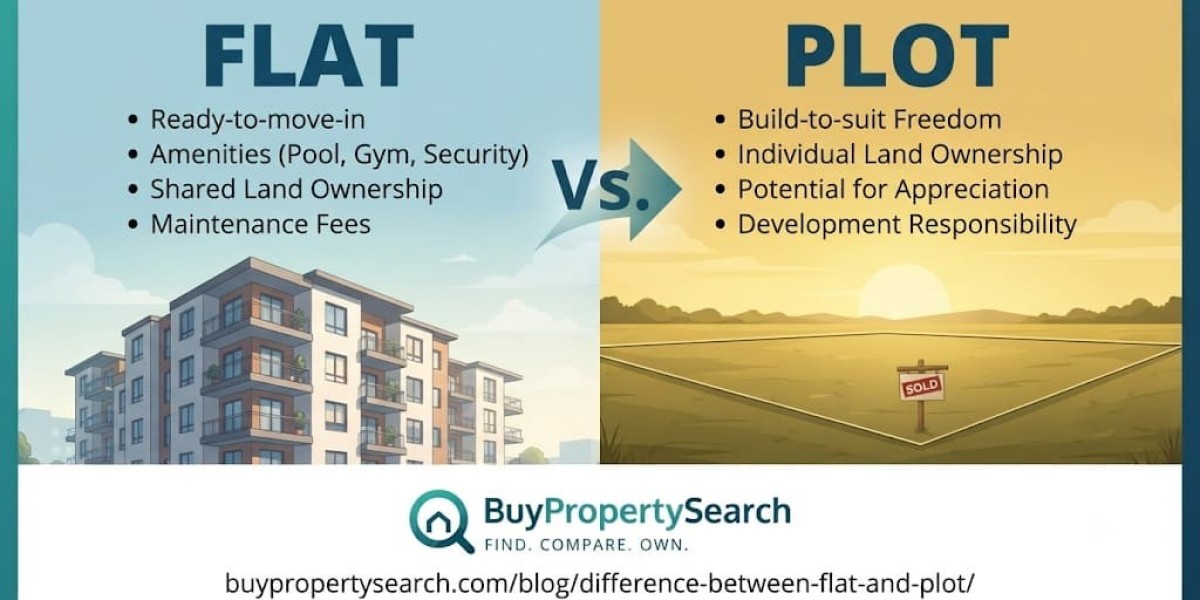

Choosing the right property is an important decision for anyone planning to invest in real estate or purchase a place to live. Two popular options in the property market are flats and residential plots. Both offer different advantages, investment opportunities, and ownership benefits. Understanding the Difference Between Flat And Plot can help buyers make informed decisions according to their financial plans, lifestyle preferences, and long-term goals.
A flat is a residential unit located within a larger building or apartment complex, whereas a plot is a piece of land that buyers can purchase for future construction or investment. Before making a decision, it is important to understand their features, costs, ownership structures, and future potential.
What Is a Flat in Real Estate?
A flat is an independent residential unit situated inside a multi-storey building or apartment complex. It generally includes bedrooms, bathrooms, a kitchen, a living room, and other essential facilities.
Flats are popular among families and working professionals because they offer ready-to-use residential spaces along with shared amenities.
Common features of a flat include:
- Multiple bedrooms and bathrooms.
- Kitchen and living room.
- Parking facilities.
- Security arrangements.
- Elevators and common areas.
- Shared recreational facilities.
- Maintenance services.
Flats are suitable for buyers who want an organised residential environment without managing the entire construction process.
What Is a Plot in Real Estate?
A plot is a defined piece of land purchased for residential, commercial, or investment purposes. Unlike flats, plots generally do not include a constructed building. Buyers can use the land according to applicable zoning regulations and local development rules.
Residential plots are particularly attractive to people who want to construct a customised house according to their preferences.
Important features of a residential plot include:
- Independent land ownership.
- Flexibility in house construction.
- Freedom to plan the building layout.
- Potential for long-term appreciation.
- Possibility of future development.
- Different sizes and locations.
However, buyers should verify land ownership documents, zoning permissions, road access, and applicable construction regulations before purchasing a plot.
Advantages of Buying a Flat
Flats are a convenient option for people looking for an immediately usable residential property. They are commonly available in developed residential areas with access to essential facilities.
Some major advantages include:
1. Ready-to-Move Options
Buyers can choose completed flats and move in after fulfilling the required legal and financial formalities.
2. Shared Amenities
Many apartment projects offer parking, security, lifts, gardens, community spaces, and other facilities.
3. Rental Income Opportunities
Flats located near business districts, educational institutions, and transportation facilities may attract tenants.
4. Convenient Maintenance
Apartment associations or management companies generally coordinate maintenance of common areas and shared facilities.
5. Suitable for Urban Living
Flats are often available in developed locations, making daily commuting and access to essential services more convenient.
Advantages of Buying a Plot
Buying a plot offers flexibility and long-term opportunities, especially for people interested in constructing their own residential property.
Important advantages include:
- Construction Freedom: Buyers can design and construct a house according to their requirements and approved building plans.
- Long-Term Appreciation: Land in developing locations may experience value appreciation as infrastructure and connectivity improve.
- Lower Building Maintenance: Vacant land generally does not require the same level of maintenance as a constructed apartment.
- Flexible Investment: Buyers can hold the land for future development or consider selling it when market conditions are favourable.
- Customised Living: A plot provides an opportunity to create an independent house with preferred layouts and outdoor spaces.
Which Is More Affordable: A Flat or a Plot?
The affordability of a flat or plot depends on its location, size, surrounding infrastructure, and market value.
A flat may have a higher purchase price in a premium residential area, but it already includes a constructed living space. A plot may have a lower initial purchase cost in certain locations, but buyers must separately arrange construction, approvals, utilities, and other expenses.
Before purchasing either option, consider the following expenses:
- Registration and stamp duty.
- Legal verification charges.
- Property taxes.
- Construction expenses, where applicable.
- Maintenance and society charges.
- Water and electricity connections.
- Loan interest, if financing is required.
Comparing the total investment rather than only the purchase price can help buyers make a practical financial decision.
Important Factors to Consider Before Buying Property
Whether purchasing a flat or plot, buyers should carefully evaluate the property and its documentation.
Here are some essential considerations:
- Location: Check connectivity, nearby markets, schools, workplaces, and transportation facilities.
- Legal Documents: Verify ownership records, title documents, and applicable approvals.
- Budget: Calculate the complete purchase and additional expenses.
- Future Development: Research upcoming infrastructure and development projects.
- Resale Potential: Consider demand for similar properties in the area.
- Builder Reputation: For flats, examine the developer's track record and project approvals.
- Land Permissions: For plots, verify land-use classification and construction permissions.
Frequently Asked Questions (FAQs)
1. What is the main Difference Between Flat And Plot?
A flat is a constructed residential unit inside an apartment building, whereas a plot is a piece of land that can be used for construction according to applicable regulations.
2. Is buying a plot better than buying a flat?
Both options have advantages. A plot offers greater construction flexibility, while a flat provides an already constructed residential space. The better choice depends on individual requirements and investment goals.
3. Which property requires less maintenance?
A vacant plot generally requires less regular maintenance than a flat, which may involve building maintenance and society charges.
4. Can I construct my own house on a residential plot?
Yes, provided the plot has the appropriate land-use permissions and the proposed construction follows local building regulations.
5. Which is better for rental income: a flat or a plot?
A flat is generally more suitable for generating immediate rental income. A plot usually needs to be developed before it can generate residential rental income.
6. Do plots offer better long-term investment opportunities?
Plots in developing locations may offer strong appreciation potential. However, returns depend on location, infrastructure, legal status, and market demand.
7. What documents should I check before purchasing a flat or plot?
Buyers should verify title documents, ownership records, registration details, applicable approvals, and other legal documents relevant to the property.
Conclusion
Understanding the Difference Between Flat And Plot is essential before making a real estate investment. Flats are suitable for buyers looking for ready-to-use homes, shared amenities, and rental opportunities. Plots are more appropriate for individuals who prefer independent land ownership, customised construction, and potential long-term appreciation.
Both property options can offer valuable opportunities when selected carefully. Buyers should compare their budgets, preferred locations, legal requirements, and future objectives before making a final decision. A well-researched property purchase can help create long-term financial value and provide greater confidence in real estate investment.