
Silicon On Insulator (SOI) Market to Reach USD 10.14 Billion by 2034 at 19.5% CAGR as 5G, AI Chips and Advanced Semiconductor Manufacturing Accelerate
Growing adoption of RF-SOI, FD-SOI, energy-efficient processors, automotive semiconductors and silicon photonics creates strategic investment opportunities across the global semiconductor supply chain.
Maximize Market Research presents its latest strategic assessment of the global Silicon On Insulator (SOI) Market, highlighting the increasing importance of engineered semiconductor substrates in high-performance computing, wireless communication, automotive electronics and energy-efficient chip manufacturing.
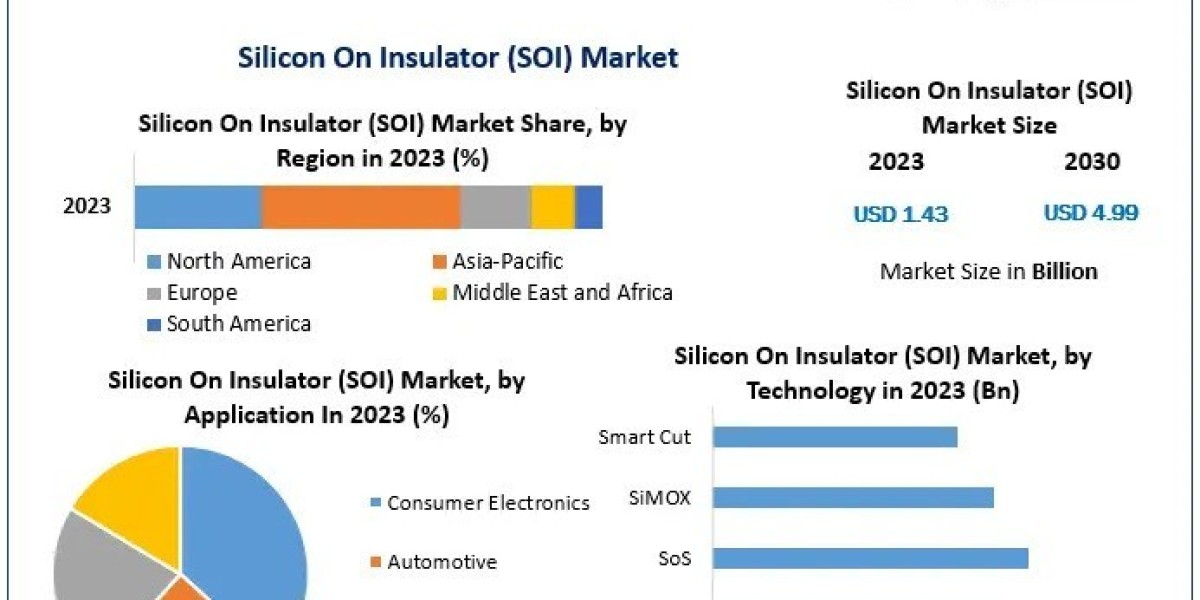
The market, valued at USD 2.04 Billion in 2025, is projected to reach USD 10.14 Billion by 2034, registering a CAGR of 19.5% from 2026 to 2034.
Increasing demand for smaller semiconductor devices, reduced power consumption, improved processing efficiency and advanced radio-frequency technologies supports substantial market expansion.
Semiconductor manufacturers increasingly consider SOI technology an important platform for developing specialized chips that deliver dependable performance under demanding operating conditions.
The research identifies significant commercial opportunities across engineered wafer production, semiconductor fabrication, RF components, automotive microcontrollers, optical communications and advanced electronic systems.
???????? ??? ???????? @ https://www.maximizemarketresearch.com/request-sample/11657/
Silicon On Insulator Technology Strengthens Semiconductor Performance
Silicon On Insulator technology uses a layered semiconductor structure consisting of a thin silicon layer separated from the underlying silicon substrate by an insulating layer.
This configuration reduces unwanted electrical interactions and supports improved transistor performance in applications where power efficiency, signal integrity and operating speed are essential.
Compared with conventional bulk silicon approaches, appropriately designed SOI devices can offer advantages involving reduced parasitic capacitance, lower leakage and improved electrical isolation.
These characteristics make the technology valuable in radio-frequency circuits, low-power processors, specialized sensors and selected power applications.
The commercial importance of SOI extends beyond individual semiconductor components.
Engineered substrates influence fabrication processes, chip architecture, device reliability and overall electronic system performance.
Manufacturers increasingly evaluate SOI technology according to application requirements, production economics and long-term product competitiveness.
5G Connectivity Strengthens Demand for RF-SOI Semiconductor Wafers
Expansion of advanced wireless communication infrastructure creates significant opportunities for RF-SOI technologies.
Modern smartphones and connected devices require sophisticated radio-frequency components capable of managing multiple communication bands and complex signal conditions.
RF-SOI technology supports switches, tuning circuits and other radio-frequency functions where isolation and signal performance are important.
Increasing wireless connectivity requirements encourage semiconductor companies to improve RF component efficiency and integration.
As communication devices incorporate additional frequency bands and wireless capabilities, demand for suitable semiconductor substrates continues to develop.
The report identifies RF-SOI as one of the most attractive wafer-type categories.
For substrate suppliers and semiconductor manufacturers, commercial opportunities depend on delivering consistent wafer quality, dependable production capacity and competitive device performance.
Artificial Intelligence and Edge Computing Create New Technology Requirements
Artificial intelligence increasingly influences semiconductor architecture and electronic system development.
While AI accelerators use several semiconductor platforms, SOI technology offers opportunities in selected low-power controllers, edge processors, RF interfaces and optical communication components.
Edge computing applications frequently require efficient processing within limited thermal and energy budgets.
FD-SOI technology provides design flexibility for specialized processors and embedded systems requiring careful power management.
Semiconductor developers increasingly evaluate these characteristics when designing connected sensors, intelligent industrial equipment and portable electronic devices.
AI-oriented data infrastructure also creates interest in silicon photonics and advanced optical communication technologies.
For technology providers, the opportunity involves identifying applications where SOI delivers measurable electrical or manufacturing advantages rather than treating it as a universal replacement for conventional silicon.
Automotive Electronics Support Long-Term SOI Adoption
Automotive semiconductor requirements continue evolving as vehicles incorporate advanced electronic controls, communication systems and intelligent functionality.
Electric vehicles, driver-assistance technologies and connected automotive platforms increase demand for reliable semiconductor components.
SOI technologies support selected automotive applications through electrical isolation, power-management capabilities and suitability for specialized integrated circuits.
FD-SOI is relevant to low-power automotive controllers, while power-oriented SOI structures serve particular high-voltage and isolation requirements.
Vehicle manufacturers and semiconductor suppliers increasingly prioritize durability, performance consistency and long-term component availability.
These requirements create opportunities for engineered wafer manufacturers capable of supporting automotive qualification and dependable production.
Successful suppliers must combine technological capability with rigorous quality systems and stable customer relationships.
RF-SOI and FD-SOI Lead Wafer Technology Development
Based on wafer type, the market includes RF-SOI, FD-SOI, PD-SOI, Power SOI and Emerging-SOI.
RF-SOI represents an important commercial category because of its applications in mobile communication devices and radio-frequency front-end components.
FD-SOI offers opportunities in energy-efficient processors, embedded electronics and selected automotive and industrial applications.
PD-SOI remains relevant to specialized semiconductor applications requiring particular device characteristics.
Power SOI supports selected integrated circuits where electrical isolation and higher-voltage operation are important.
Emerging SOI technologies create opportunities for additional device architectures and specialized electronic systems.
The commercial attractiveness of each category depends on manufacturing complexity, device performance, foundry availability and customer design requirements.
Suppliers developing diverse engineered substrate portfolios can address changing semiconductor demand more effectively.
300 mm Wafers Strengthen Advanced Semiconductor Manufacturing
By wafer size, the market is segmented into 200 mm and Less Than 200 mm, and 300 mm.
The selection of wafer dimensions influences semiconductor manufacturing productivity, equipment compatibility and production economics.
Larger 300 mm wafers support established high-volume semiconductor fabrication environments and can improve manufacturing efficiency where production processes are suitably optimized.
Smaller wafer formats remain relevant for specialized devices, mature manufacturing processes and applications where established equipment remains commercially competitive.
Transitioning between wafer sizes requires careful assessment of manufacturing investment and production volume.
For engineered wafer suppliers, demand forecasting must consider customer fabrication capabilities, technology roadmaps and qualification requirements.
Investment decisions increasingly favor capacity aligned with confirmed semiconductor manufacturing demand.
Smart Cut Technology Advances Engineered Wafer Production
The market's technology classification includes BESOI, ELTRAN, Silicon-on-Sapphire (SoS), SiMOX and Smart Cut.
Smart Cut is identified in the report as the technology category with the highest projected growth rate.
The process supports the production of engineered substrates through controlled layer transfer techniques.
Its commercial relevance comes from the ability to produce specialized wafer structures suited to different semiconductor applications.
Alternative fabrication approaches remain important where specific technical characteristics or established production methods provide advantages.
Manufacturers increasingly assess substrate technologies through wafer uniformity, defect control, production yield and overall fabrication economics.
Companies investing in advanced manufacturing processes can strengthen competitiveness when technical improvements translate into dependable customer value.
Consumer Electronics Maintains Strong Application Demand
By application, the market includes Consumer Electronics, Automotive, Datacom and Industrial.
Consumer electronics represents the leading application category in 2025, supported by demand for mobile devices and energy-efficient electronic components.
Smartphones, tablets, wearable electronics and connected consumer products require semiconductor technologies that support compact designs and efficient operation.
SOI-based radio-frequency components contribute to wireless connectivity in many of these devices.
The datacom segment creates opportunities through high-speed communication and optical connectivity requirements.
Industrial applications include selected sensors, controllers and automation equipment.
Automotive electronics provides another important source of demand through increasingly sophisticated vehicle systems.
Manufacturers serving multiple application categories can reduce dependence on individual technology cycles.
Silicon Photonics Expands Opportunities in Data Communications
Silicon photonics is becoming increasingly relevant to high-speed data transmission and advanced computing infrastructure.
Optical communication systems use light to transfer information, creating opportunities for specialized semiconductor fabrication platforms.
Optical SOI substrates support the development of photonic devices such as waveguides and integrated optical components.
These technologies are important for selected data center interconnects and high-bandwidth communication applications.
As computing infrastructure expands, system developers increasingly evaluate optical connectivity according to performance, power consumption and integration requirements.
The report's product segmentation includes MEMS, RF SOI, Optical SOI, Memory Devices, SOI Transistors and Image Sensor Markets.
For semiconductor companies, optical SOI offers an opportunity to participate in advanced communication infrastructure while addressing technically demanding manufacturing requirements.
Asia Pacific Leads Global Silicon On Insulator Demand
Asia Pacific holds the largest regional share in 2025, supported by extensive semiconductor manufacturing capabilities and strong electronics production.
Taiwan represents an important semiconductor manufacturing ecosystem through advanced fabrication and integrated circuit production.
China contributes through electronics manufacturing, telecommunications equipment and semiconductor development.
Japan plays a significant role in engineered materials, precision manufacturing and advanced electronic technologies.
South Korea supports demand through its established semiconductor and consumer electronics industries.
India presents opportunities through electronics manufacturing expansion, semiconductor investment initiatives and growing technology infrastructure.
Regional success depends on reliable supply chains, manufacturing partnerships, engineering capabilities and access to qualified semiconductor customers.
North America Strengthens Semiconductor Research and Innovation
North America represents an important market through semiconductor design, specialized manufacturing and advanced electronics research.
The United States supports innovation in wireless communications, automotive semiconductors, aerospace electronics and industrial computing.
Research organizations and semiconductor manufacturers continue evaluating technologies that improve energy efficiency and electronic performance.
Demand for microcontrollers, processors and specialized communication devices supports interest in suitable SOI platforms.
Canada contributes through semiconductor research and technology development.
For suppliers entering North America, competitive positioning depends on technical differentiation, intellectual property, manufacturing reliability and relationships with semiconductor design companies.
Europe Supports Advanced FD-SOI and Automotive Semiconductor Development
Europe maintains a significant role in SOI technology development through semiconductor research, engineered substrate capabilities and industrial electronics.
France contributes through its established semiconductor materials ecosystem and advanced fabrication research.
Germany represents an important market through automotive manufacturing, industrial automation and semiconductor engineering.
The United Kingdom and Italy contribute through technology development and specialized electronic applications.
European organizations increasingly prioritize semiconductor supply resilience, energy efficiency and advanced manufacturing capabilities.
FD-SOI technology provides opportunities for selected automotive, industrial and low-power computing applications.
Companies developing reliable engineered wafers and foundry partnerships are positioned to support regional technology requirements.
Middle East, Africa and South America Present Emerging Opportunities
The Middle East and Africa offer selective opportunities through electronics infrastructure development, industrial modernization and technology investment.
Advanced telecommunications networks and digital infrastructure create demand for semiconductor-enabled systems.
South America contributes through automotive electronics, industrial equipment and telecommunications applications.
Brazil represents an important regional market for evaluating downstream semiconductor demand.
However, direct SOI wafer manufacturing remains concentrated in more established semiconductor production ecosystems.
Businesses considering regional expansion need to distinguish between demand for finished SOI-based components and opportunities for local wafer fabrication.
Commercial strategies should reflect realistic manufacturing capabilities, infrastructure requirements and market accessibility.
Competitive Landscape Focuses on Technology Leadership and Supply Reliability
The global SOI industry includes engineered wafer suppliers, semiconductor manufacturers, technology developers and electronic component companies.
Major participants identified by Maximize Market Research include Shin-Etsu Chemical, GlobalWafers, Soitec, Wafer World, Ultrasil Corporation, IBM, Intel Corporation, NXP Semiconductors, STMicroelectronics, Skyworks Solutions, Murata Manufacturing, Qorvo, Sony, Magnachip Semiconductor, United Microelectronics Corporation, Qualcomm, Arm and Applied Materials.
These organizations participate at different levels of the semiconductor value chain.
Competition increasingly depends on substrate quality, proprietary manufacturing technology, production yield and long-term customer qualification.
Partnerships between wafer suppliers, foundries and semiconductor designers remain important for commercial adoption.
Semiconductor Innovation Highlights the Importance of Advanced SOI Platforms
Recent developments identified in the report demonstrate continued interest in engineered semiconductor substrates.
In January 2025, Soitec announced the commercial availability of advanced 300 mm SmartSiC and FD-SOI substrate technologies targeting automotive and communication applications.
In April 2025, STMicroelectronics reported collaboration involving its advanced 18 nm FD-SOI platform for low-power and edge-processing applications.
In August 2025, GlobalFoundries expanded capacity associated with its 22FDX technology platform in Europe.
In February 2026, Shin-Etsu Handotai reported an expansion of engineered wafer manufacturing capacity.
These developments indicate growing industry attention toward specialized semiconductor manufacturing platforms, substrate availability and technology partnerships.
Complex Manufacturing Processes Influence Market Economics
Despite significant growth potential, SOI technology involves manufacturing challenges related to substrate production, wafer quality and device integration.
Engineered wafer manufacturing requires specialized equipment, precise process control and extensive technical expertise.
Production costs can differ from conventional bulk silicon technologies, affecting adoption decisions in price-sensitive applications.
Manufacturers also need to address qualification requirements, fabrication compatibility and long-term supply agreements.
Raw material availability and manufacturing yield influence production economics.
Companies evaluating capacity expansion must carefully assess customer commitments, equipment utilization and capital expenditure.
Technical advantages alone do not guarantee commercial success without a competitive cost structure.
Strategic Business Outlook: Specialized Semiconductor Platforms Shape Growth Through 2034
The future of the Silicon On Insulator (SOI) Market increasingly depends on advanced wireless communication, efficient computing, automotive electronics and high-speed optical technologies.
For engineered wafer manufacturers, investment priorities include production capacity, substrate quality and manufacturing efficiency.
For semiconductor foundries, the opportunity involves developing differentiated fabrication platforms aligned with customer requirements.
Chip designers can benefit by selecting SOI technologies where electrical characteristics provide meaningful advantages.
Investors should evaluate manufacturing scale, intellectual property, customer diversification, technology qualification and supply chain resilience.
Maximize Market Research identifies RF-SOI adoption, FD-SOI development, advanced consumer electronics and semiconductor manufacturing investment as important factors influencing industry expansion.
With projected revenue reaching USD 10.14 Billion by 2034, SOI technology is positioned to play an increasingly important role in specialized semiconductor applications.
For full access to the comprehensive strategic report, visit: Silicon On Insulator (SOI) Market
About Maximize Market Research
Maximize Market Research publishes sector forecasts, competitive analysis, and consulting insight for teams evaluating demand, competition, pricing, and growth strategy across high-value industries.
The company provides market intelligence, industry analysis, competitive benchmarking and strategic consulting services to support informed commercial decisions. Its research assists manufacturers, investors, technology providers and corporate decision-makers in evaluating market developments, identifying investment opportunities and developing long-term business strategies.
Media Contact
MAXIMIZE MARKET RESEARCH PVT. LTD.
2nd Floor, Navale IT Park Phase 3
Pune Banglore Highway, Narhe
Pune, Maharashtra 411041, India
Phone: +91 9607365656
Email: [email protected]
Website: https://www.maximizemarketresearch.com/