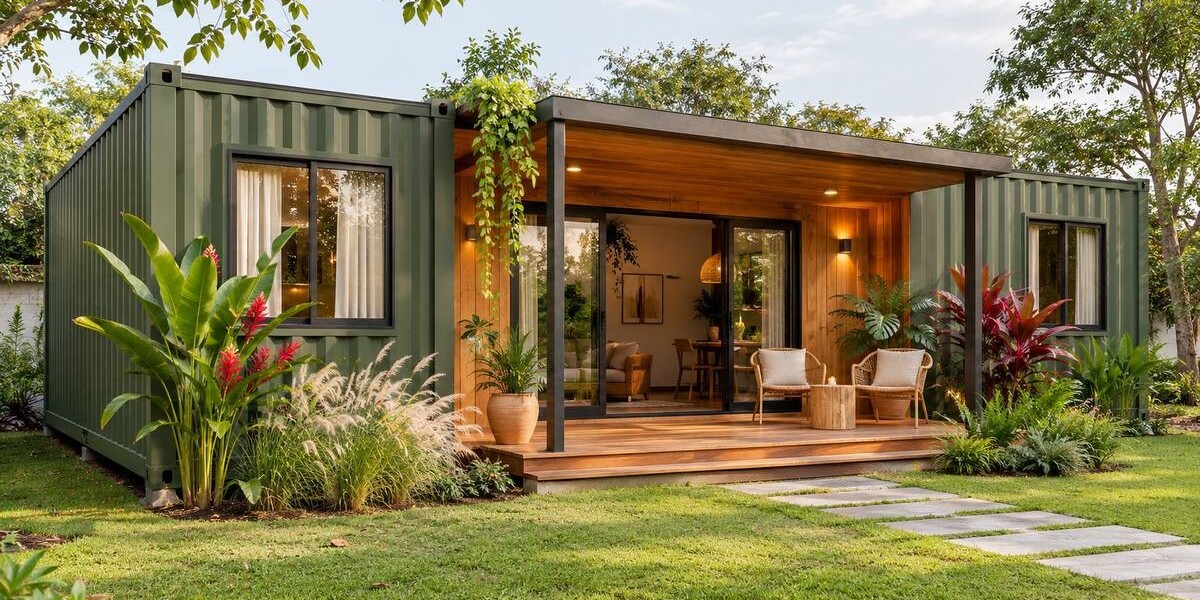

On Friday, you arrive to spend the weekend and want to find the coffee, books, and cushions where they always were. The following week, someone else will be using the house and needs space for their own things. If you're researching models on casacontainer.com.br and want to alternate between personal use and hosting, consider switching between these two routines. The house can remain yours without requiring you to take all your belongings away every time you have someone staying.
Decide what remains in the house during any given stay.
Make two lists: one for what you use when you're at home and another for what you'd like to find if you arrived as a guest. Some items fit into both lists, such as plates, cutlery, lamps, and the furniture on the porch. These can remain in the same places. If the table works for you and also accommodates guests, there's no reason to change the arrangement just because the house will have another occupant for a few days.
Next, look at what you want to keep there, but prefer to reserve for your own use. It could be a box with hobby supplies, your favorite bedding, or a book collection you don't want to leave out. Instead of collecting each item from a different room, gather what makes sense in one place that can be kept separate during your stay. This way, you can get the house ready in fewer steps and find your things together again.
Por fim, veja o que não precisa permanecer no imóvel. Se leva documentos ou equipamentos de trabalho, inclua esses itens na lista do que deve ir embora com você. Pense também nos objetos que aparecem sem que você perceba, como uma sacola deixada atrás da porta ou um carregador ligado perto da cama. Uma última volta pela casa ajuda a encontrar o que ficou fora do lugar antes da próxima chegada.
Reserve espaço para o hóspede sem guardar a casa inteira
Abra os armários como se estivesse chegando com uma mala. Onde colocaria as roupas? Em que lugar poderia deixar uma bolsa ou pendurar um casaco? Não é preciso esvaziar todos os móveis. Uma gaveta, uma parte livre do armário e um apoio para a bagagem podem atender bem, desde que esses espaços estejam claros e sejam fáceis de usar.
Na cozinha, confira se há onde pôr as compras de quem chega. Se todos os armários estão ocupados pelos seus mantimentos, o hóspede pode deixar os pacotes sobre a única bancada livre. Reserve uma prateleira ou um trecho do móvel para os alimentos que entram durante a estadia. Se você usa esse espaço quando está na casa, deixe para guardar ali apenas coisas que possam sair juntas, sem precisar reorganizar todo o armário.
Pense também no banheiro. Uma bancada pequena pode estar ótima para a sua rotina e parecer cheia para alguém que chega com uma nécessaire. Em vez de retirar todos os itens pessoais a cada saída, experimente mantê-los em uma caixa ou gaveta de uso próprio. Assim, o apoio ao lado da pia fica disponível sem que você tenha de juntar frascos um por um antes de fechar a porta.
Mantenha os móveis no arranjo que funciona para os dois usos
Se você sempre afasta a mesa para montar uma cama extra, marque na planta ou fotografe a posição em que os móveis devem ficar na hospedagem. Veja se, depois da mudança, ainda dá para abrir as portas e chegar ao banheiro. Se o arranjo exige carregar uma poltrona até a varanda e guardar a mesa atrás da geladeira, talvez seja melhor rever o número de lugares ou escolher um móvel que funcione nas duas situações.
Na varanda, deixe à disposição o que você também gosta de usar. Duas cadeiras confortáveis podem servir para o seu café e para a pausa de quem se hospeda. Se a família leva brinquedos, equipamento de praia ou objetos que ocupam o chão, dê a eles um lugar separado. Dessa forma, a varanda continua pronta para sentar mesmo quando não está montada para o seu fim de semana.
Use as fotos da casa para conferir o que o hóspede espera encontrar. Se a imagem mostra uma mesa para quatro pessoas, veja se os quatro assentos estarão disponíveis. Se um espaço aparece nas fotos, mas fica reservado para os proprietários, deixe isso claro na descrição. Mostrar o arranjo que a pessoa realmente vai usar evita que você precise explicar, na chegada, por que a casa está diferente.
Organize a troca na ordem em que ela acontece
Start by taking out what needs to go: personal belongings, bags, and food that won't be left in the house. Then, separate what needs to be cleaned or replaced. Finally, check what should be ready upon arrival: bedding, towels, utensils, and any empty spaces you've left. This order prevents you from tidying a closet and then having to open it again to get a bag.
If someone else is helping with the preparation, agree on which places need to be checked and which ones are reserved. A photo of the finished countertop or a short list per room can be more helpful than a long explanation. Also, specify where replacement parts are located so that no one has to search through all the cabinets. If a part is missing, you already know where to check and what to note for the next visit.
Reverse the process when you return to use the house. Open the designated space, remove what you need, and see if things can be put back in their place without taking up space from other furniture. If the first hour of your weekend turns into a complete house reorganization, perhaps too many items are being moved in and out. Figure out which ones can stay in the same spot in both situations.
Adjust what is most difficult to adjust with each change.
After alternating between personal use and hosting a few times, make a note of what always gets left until the last minute. It could be a drawer that needs emptying, a chair without a place, or bed linens stored far from where they're used. Deal with what takes the most time or causes the most uncertainty first. Sometimes, a free shelf is worth more than buying another wardrobe.
The repairs work when the guest finds space to settle in and you, upon returning, recognize your home without needing to set it up again. Keep what serves both purposes well and simplify the replacement of the rest. This way, preparing for the next stay ceases to be a minor change and becomes just another part of the household routine.