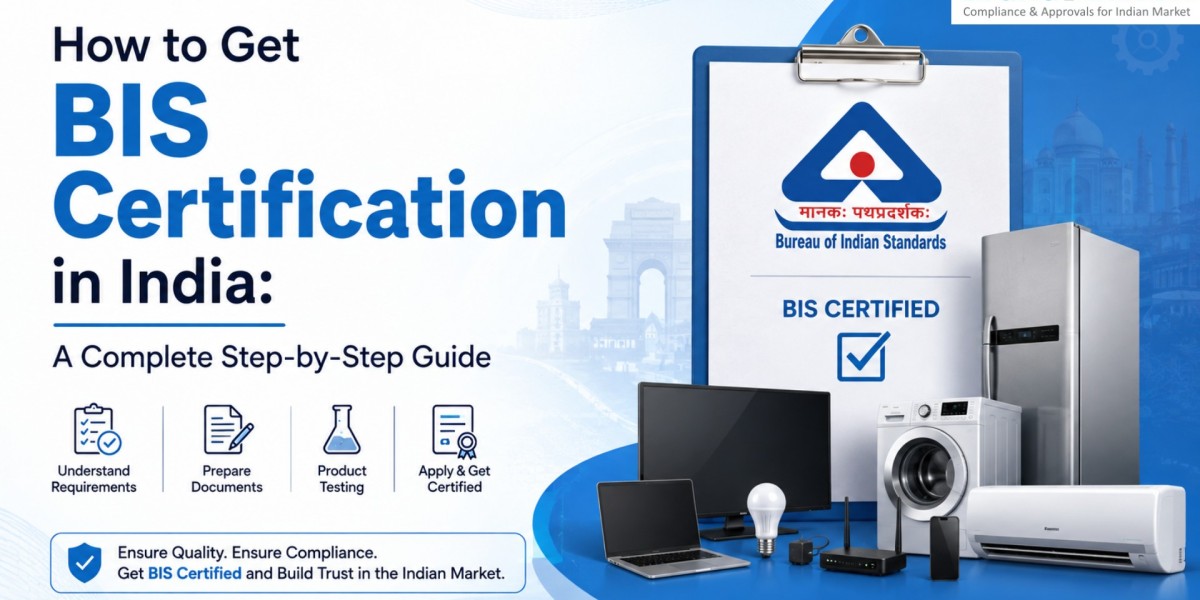

Are you planning to manufacture, import, or sell products in India? Before introducing certain products into the Indian market, manufacturers may need to obtain certification from the Bureau of Indian Standards (BIS). BIS certification helps ensure that products covered under applicable regulations meet the relevant Indian Standards for quality, safety, and performance.
However, the certification process involves several steps, including identifying the applicable standard, preparing documents, product testing, application filing, and factory inspection, where required.
In this guide, we explain how to get a BIS certificate in India, the different certification schemes, the application process, estimated timelines, costs, and how Brand Liaison can assist your business.
What Is BIS Certification?
The Bureau of Indian Standards (BIS) is India's national standards body responsible for developing standards and operating product conformity assessment schemes. Depending on the applicable Quality Control Order (QCO) or other government notification, certain products must obtain BIS certification before they can be manufactured, imported, distributed, or sold in India.
BIS operates different certification schemes depending on the product category and manufacturing location.
Types of BIS Certification Schemes
Before applying, it is important to identify the correct certification scheme for your product.
1. ISI Mark Certification – Scheme I
The ISI Mark scheme applies to products covered under the relevant Indian Standards and mandatory certification requirements. It generally involves product testing, factory assessment, and evaluation of the manufacturer's quality control arrangements.
2. Compulsory Registration Scheme (CRS) – Scheme II
BIS CRS applies to notified electronic and IT products. Manufacturers must get their products tested at a BIS-recognised laboratory and obtain BIS registration before selling products covered by the applicable order.
3. Foreign Manufacturers Certification Scheme (FMCS)
FMCS is designed for foreign manufacturers located outside India who want to sell products covered under the scheme in the Indian market. The process generally involves product testing, factory inspection, and appointment of an Authorised Indian Representative (AIR).
4. Scheme X Certification
BIS Scheme X applies to products covered under its applicable certification requirements and notifications. Depending on the product, manufacturers may need to fulfil technical documentation, testing, and assessment requirements.
Selecting the correct scheme is essential because the documentation, testing, inspection, and application procedures differ.
How to Get a BIS Certificate in India: Step-by-Step Process
The BIS certification process depends on the product category and applicable scheme. The following are the major steps involved.
1. Product and Scheme Identification
The first step is to identify whether your product falls under a mandatory Quality Control Order (QCO) or another applicable BIS certification requirement.
The applicable Indian Standard and certification scheme must be determined based on the product's specifications, intended use, and manufacturing location.
Depending on the product, the applicable route may be:
ISI Mark Certification (Scheme I)
Compulsory Registration Scheme (CRS)
Foreign Manufacturers Certification Scheme (FMCS)
Scheme X Certification
Correct product classification helps businesses avoid applying under the wrong certification scheme.
2. Documentation and Application Filing
After identifying the applicable certification scheme, the next step is preparing the required documents and submitting the application.
Common documents may include:
Company registration and manufacturing details
Factory address and manufacturing licence
Product specifications and technical details
Manufacturing process information
Factory layout and machinery details, where applicable
Quality control and testing arrangements
Brand or trademark-related documents, where required
Test requests and other scheme-specific forms
The exact documentation depends on the product and certification scheme. Technical files, factory layouts, and application details should be prepared according to the applicable BIS requirements.
3. Product Testing Coordination
Product testing is an important part of the BIS certification process. Depending on the applicable scheme, product samples must be tested against the relevant Indian Standard at a BIS-recognised laboratory.
The laboratory evaluates the product against the applicable technical and safety requirements. If the product does not meet the required specifications, corrective action and retesting may be necessary.
A BIS consultant can assist with laboratory coordination, sample submission, test requests, and follow-up on testing progress.
4. Factory Audits and Inspection
For certification schemes that require factory assessment, BIS officials may inspect the manufacturing facility to evaluate production facilities, quality control systems, testing arrangements, and compliance with applicable requirements.
The inspection may involve:
Reviewing manufacturing facilities and machinery
Checking quality control procedures
Evaluating in-house testing arrangements
Reviewing records and production processes
Assessing the manufacturer's ability to maintain consistent product quality
Consultant support may include factory inspection preparation, quality control setup guidance, documentation review, and coordination during the audit process.
Note: Factory inspection requirements vary by certification scheme. Not every BIS registration follows the same inspection procedure.
5. BIS Evaluation and Grant of Certificate
After the required documents, test reports, and inspection-related requirements are completed, BIS evaluates the application.
If the applicant fulfils the applicable requirements, BIS may grant the licence, registration, or certificate of conformity, as relevant to the scheme.
Only BIS has the authority to grant the applicable certification. A consultant can provide professional assistance but cannot independently issue or guarantee a BIS certificate.
6. Renewal and Post-Grant Compliance
Obtaining a BIS certificate is not the end of the compliance process. Manufacturers must continue to follow the applicable certification conditions.
Post-certification responsibilities may include:
Applying for licence renewal within the prescribed period
Maintaining product quality and conformity
Following the applicable Scheme of Inspection and Testing
Maintaining production and quality records
Cooperating with surveillance audits or inspections, where applicable
Applying for model or product scope changes when required
Proper renewal and compliance management help manufacturers maintain their certification and continue selling applicable products legally.
How Long Does It Take to Get a BIS Certificate in India?
The time required to obtain BIS certification depends on the product category, certification scheme, laboratory testing requirements, document readiness, and inspection scheduling.
For straightforward cases, an indicative planning estimate may be around 20 to 45 working days. However, this is not a universal BIS timeline. Applications involving factory inspections, foreign manufacturers under FMCS, complex products, testing delays, or additional BIS queries can take considerably longer. BIS's FMCS guidance, for example, indicates that the average process can take around six months after receipt and recording of a complete application.
Working with an experienced BIS consultant may help organise documentation, testing coordination, and application follow-ups, but the final timeline depends on the applicable BIS procedure and authorities involved.
How Much Does BIS Certification Cost in India?
The cost of obtaining a BIS certificate varies according to the product, applicable Indian Standard, certification scheme, testing requirements, and manufacturing location.
For planning purposes, consulting fees may range from approximately ₹25,000 to ₹1,10,000 or more, depending on product complexity and the scope of professional assistance. This is an indicative consultancy estimate, not an official BIS fee structure or a fixed market rate.
The overall certification cost may include:
BIS application and processing fees
Product testing and laboratory charges
Inspection and travel-related expenses, where applicable
Certification or licence fees
Professional consultancy fees
Additional costs for testing, retesting, or other requirements, where applicable
Always request a detailed quotation that clearly separates government fees, laboratory charges, inspection expenses, and consultancy fees before starting the process.
How Can a BIS Consultant Help You Get a BIS Certificate?
Getting a BIS certificate involves several steps, from identifying the applicable Indian Standard to completing product testing, documentation, and application procedures. A professional BIS consultant can guide manufacturers, importers, and foreign businesses through these requirements and help manage the certification process more efficiently.
Here is how a BIS consultant can assist:
Product & Scheme Identification: Identify the applicable Indian Standard, Quality Control Order (QCO), and BIS certification scheme for your product.
Documentation Support: Help prepare and review technical documents, factory details, test requests, and other application-related paperwork.
Application Filing: Assist with completing and submitting the BIS application through the relevant online portal.
Laboratory Testing Coordination: Coordinate product sample testing with BIS-recognised laboratories and help track testing progress.
Factory Inspection Guidance: Help manufacturers prepare for factory inspections, organise quality control documentation, and understand inspection requirements.
Query Resolution & Follow-up: Assist with responding to BIS queries and following up on application progress.
Renewal & Compliance Support: Guide businesses with licence renewal, surveillance requirements, and post-certification compliance.
Choosing an experienced BIS consultant can help businesses understand their certification requirements, organise the necessary documentation, and avoid common application-related mistakes.
Why Choose Brand Liaison As Your BIS Consultant in India?
Getting BIS certification can be challenging without a clear understanding of the applicable standards, documentation, testing, and regulatory procedures. Brand Liaison is trusted BIS Consultant in Delhi, providing professional BIS certification assistance to manufacturers, importers, brand owners, and foreign businesses planning to enter the Indian market.
With over 10 years of industry experience, we assist businesses with different BIS certification requirements, including ISI Mark, CRS, FMCS, and Scheme X.
Our support includes:
Identification of applicable BIS standards and certification schemes
Guidance on QCO and product compliance requirements
Documentation preparation and application filing
Product testing coordination with BIS-recognised laboratories
Factory inspection and audit preparation guidance
Application follow-up and certification-related assistance
Renewal and post-certification compliance support
Apart from BIS certification, Brand Liaison also assists with BEE registration, WPC approval, TEC certification, EPR registration, and LMPC compliance.
Our objective is to make the certification process easier to understand and manage by providing businesses with professional guidance at different stages of regulatory compliance.
Frequently Asked Questions About BIS Certification
1. Is BIS certification mandatory for all products in India?
No. BIS certification is not mandatory for every product. It is compulsory for products covered under applicable Quality Control Orders or other mandatory government notifications. Businesses should check the latest requirements for their specific product.
2. Can an importer apply for a BIS certificate?
The eligibility and applicant requirements depend on the certification scheme. Under FMCS, the application is made by the foreign manufacturer. For other schemes, the relevant manufacturer and applicant requirements must be checked.
3. Is product testing required for BIS certification?
Product testing is required under several BIS certification schemes. The samples must be tested according to the applicable Indian Standard and relevant scheme requirements.
4. How long is a BIS certificate valid?
Validity depends on the applicable certification scheme and the terms of the licence or registration. Manufacturers should check their certificate conditions and apply for renewal as prescribed by BIS.
5. Can Brand Liaison help with BIS certification?
Yes. Brand Liaison provides assistance with product and scheme identification, documentation, testing coordination, application filing, factory inspection preparation, and renewal-related requirements for applicable BIS certification schemes.
Get Expert Assistance for BIS Certification in India
If you are planning to manufacture, import, or sell products in India, understanding the applicable BIS certification requirements is an important first step. From identifying the correct certification scheme to completing documentation, testing, application filing, and post-grant compliance, every stage needs proper attention.