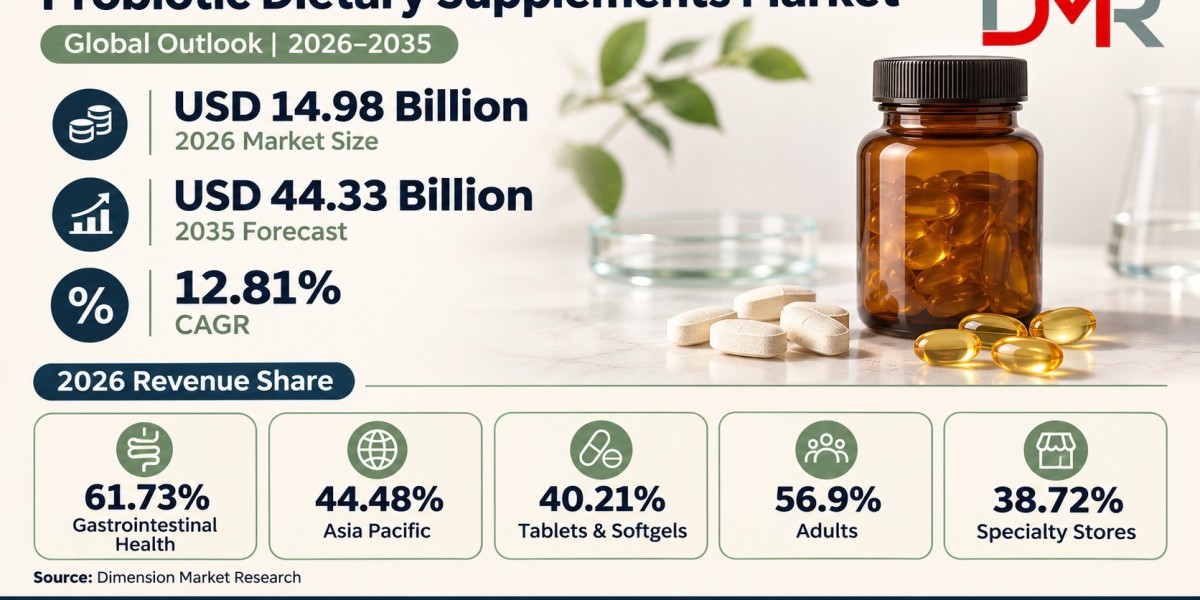

According to Dimension Market Research, the global Probiotic Dietary Supplements Market is estimated at USD 14.98 billion in 2026 and forecast to reach USD 44.33 billion by 2035, growing at a 12.81% CAGR from 2026 to 2035. Gastrointestinal health accounts for the largest projected share by application, and Asia Pacific leads by region. The forecast also tracks products positioned for more specific consumer needs, including women’s health and skin health.
What does the probiotic dietary supplements market cover?
The report covers probiotic products sold in supplement formats such as tablets, softgels, capsules, powders, gummies, drops, and liquids. It also examines how these products are positioned, who buys them, and where they are sold. This scope is useful when comparing market estimates. The broader probiotic market also includes products such as probiotic foods and beverages and animal feed. Its revenue therefore measures a wider set of products.
Get a Free Sample of the Probiotic Dietary Supplements Market Report
Review the sample for the report’s segmentation by form, application, end user, distribution channel, and region. It can help you identify which parts of the study are relevant to your product portfolio or sales strategy.
https://dimensionmarketresearch.com/request-sample/probiotic-dietary-supplements-market/
Which applications and formats lead the market?
Gastrointestinal health accounts for a projected 61.73% of 2026 revenue by application. Adults represent the largest end-user group with a projected 56.9% share. The figures describe two views of demand. A digestive health supplement marketed to adults contributes to both segments. For portfolio planning, the application share shows where products are positioned, while the end-user share helps identify the audience those products serve.
Tablets and softgels lead by form with a projected 40.21% share in 2026. The report also tracks alternatives such as gummies, powder stick packs, and drops. For a brand evaluating a new format, the commercial question is whether it fits the intended customer and sales channel. A drop, a gummy, and a tablet differ in how they are packaged, displayed, and used. Those differences matter when assessing an opportunity within the same product category.
Where are probiotic supplements sold, and which region leads?
Specialty stores are projected to account for 38.72% of distribution revenue in 2026. The report also covers pharmacies and health stores, supermarkets and hypermarkets, and online stores. For a supplier comparing channels, specialty retail share provides a benchmark for where sales are concentrated. A separate assessment of pharmacy, supermarket, and online demand can help determine where a specific format or price point fits.
Asia Pacific leads with a projected 44.48% share of global revenue in 2026. That regional share gives suppliers a starting point for comparing geographic demand. For a launch decision, it helps to examine the regional figure alongside the intended consumer group, product form, and retail channel. Each dimension answers a different commercial question, from the size of the opportunity to how a product would reach buyers.
How are companies differentiating their products?
The report tracks products positioned beyond digestive health, including women’s health, skin health, and mental wellness. It also examines delivery mechanisms, ingredient combinations, and interest in personalized product recommendations. These are areas of product development and market positioning. Evidence for a particular health claim should be assessed for the specific formulation and intended use. For brands entering a more specialized category, product positioning and evidence are both part of the commercial decision.
Companies and brands covered include Probi AB, BioGaia, Nestlé, Danone, Yakult Honsha, Culturelle, Lallemand, Kerry Group, and O Positiv Health. That coverage gives readers a starting point for benchmarking ingredient suppliers, consumer brands, and businesses with broader nutrition portfolios.
Explore the Complete Probiotic Dietary Supplements Market Analysis
Access the full report for revenue forecasts, product and application segments, distribution channels, regional analysis, and competitive coverage.
Proceed to Checkout
https://dimensionmarketresearch.com/checkout/probiotic-dietary-supplements-market/
Frequently Asked Questions
1. How large is the probiotic dietary supplements market in 2026?
DMR estimates global market revenue at USD 14.98 billion in 2026.
2. What is the market forecast for 2035?
DMR forecasts USD 44.33 billion by 2035, at a 12.81% CAGR from 2026 to 2035.
3. Which application has the largest projected share?
Gastrointestinal health leads with a projected 61.73% share in 2026.
4. Which supplement format leads the market?
Tablets and softgels lead by form with a projected 40.21% share in 2026.
5. Which region leads global sales?
Asia Pacific leads with a projected 44.48% share of global revenue in 2026.
Conclusion
Digestive health remains the largest application in DMR’s forecast. For brands and retailers assessing where to expand, the product decision comes down to which consumers they intend to serve, what format suits that audience, and which channel can reach it.
Related Reports
Dietary Supplements Market Size provides context on the wider supplement category, which DMR forecasts to reach USD 470.3 billion by 2034.
Veterinary Dietary Supplements Market Share examines animal nutrition supplements, including probiotics and prebiotics for companion animals and livestock.
Probiotic Market Growth tracks probiotics across foods and beverages, dietary supplements, and animal feed, providing a broader view of demand beyond supplement formats.